Oppo Find X5 Pro stands out from the rest
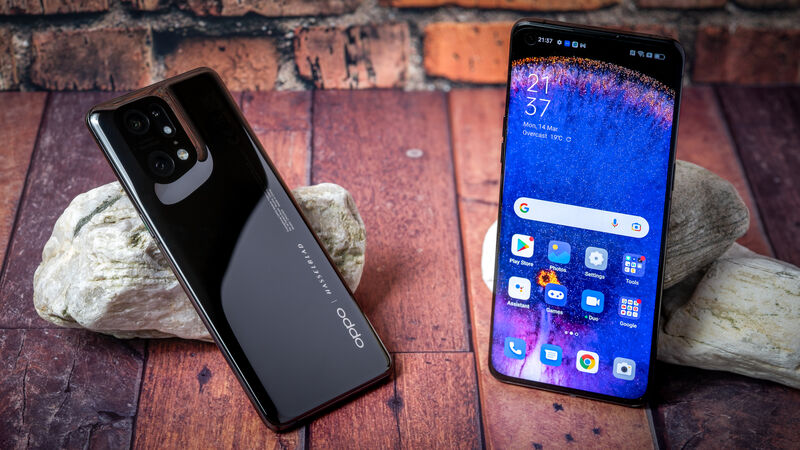
Oppo Find X5 Pro. Pic: Noel Campion.
I’ve been using the Find X5 Pro now for a couple of months for a long-term review which actually feels like a bit of a luxury. Often, I only get a few weeks with a phone before I have to return it and write up my review.
The Oppo Find X5 Pro is the update to last year’s excellent Find X3 Pro — for some reason Oppo skipped the Find X4 Pro.
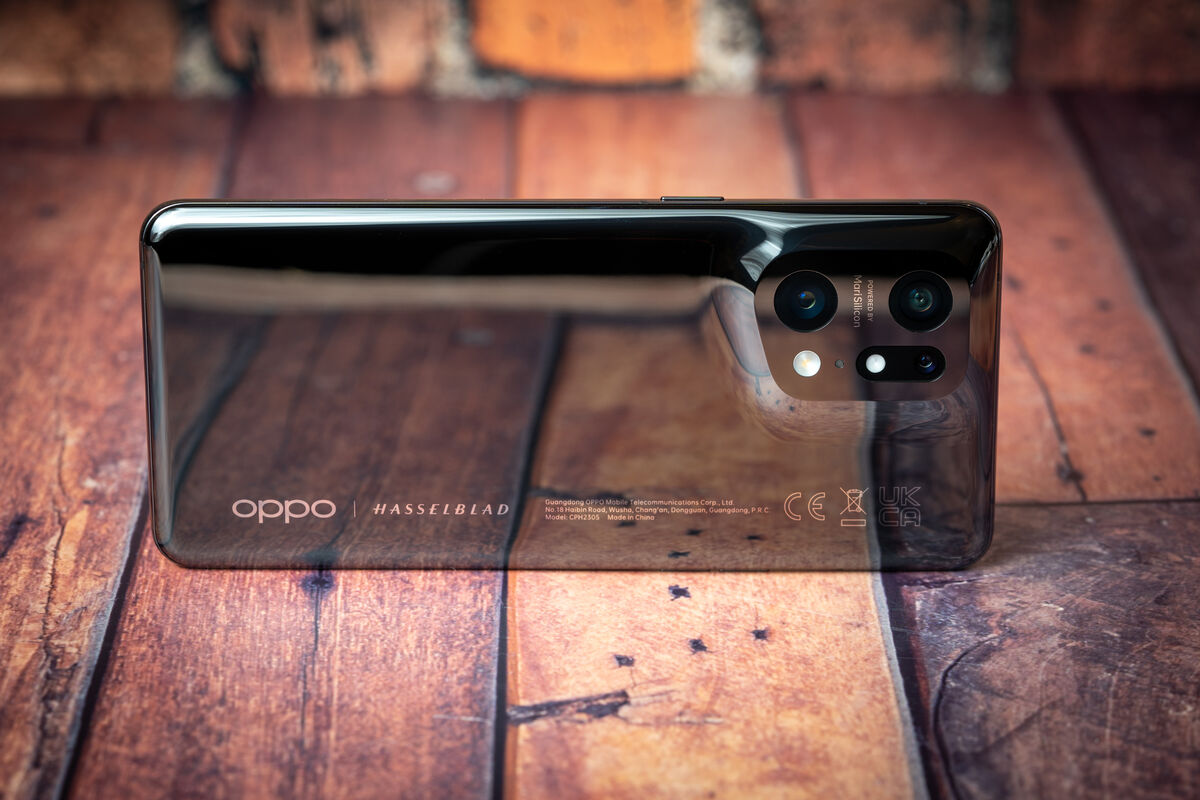
In a world full of ‘samey’ Android devices, the Oppo Find X5 Pro stands out with a distinctive rear camera module that resides in the top left corner of what I can only describe as a smokey mirror finish. Oppo says that to create its premium finish, the body is polished in 14 processes for over 269 minutes to capture the smoothness of a pebble.
It looks stunning and feels great in the hand whether naked or with the Kevlar Aramid case that’s part of the gift pack worth €449 for those who buy a Find X5 Pro during May or while stocks last.
While I understand why Oppo would want to promote their partnership with Hasselblad, I’m not a big fan of the large band of branding along the length of the right side on the back. This includes the Oppo and Hasselblad logos and the regulatory CE markings and Oppo’s address in China — it’s just too much information and dominates and detracts from what is otherwise a stunning design and finish.

The Find X5 Pro is only slightly heavier (2g) than the Find X3 Pro, but it feels balanced and the ceramic material makes it look and feel more premium. You get IP68 water and dust proofing which is always comforting on a flagship device as well as the latest Corning Victus glass protecting the front display.
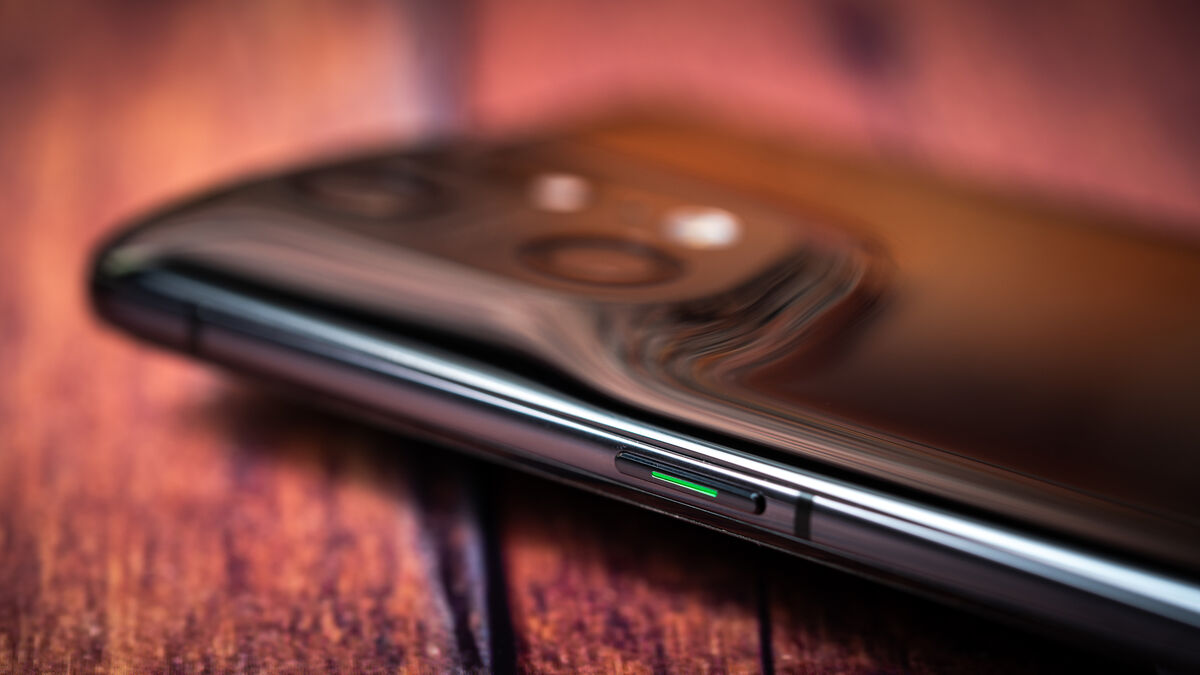
On the bottom edge are the USB-C port and the SIM tray which supports dual nano SIMs. There’s also a mic and speaker grille. On the right is the power button and on the left are the volume up and down buttons. On the top is another mic and where the top edge meets the screen is the second speaker grille that combines with the bottom grille to produce a powerful stereo sound system.
The camera bump rises from the rear of the ceramic back to meet the top of the camera module with a seamless slope. This has the visual effect of almost hiding the camera bump that contains three cameras, a flash, and a colour temperature sensor for more accurate colours in photos and video.
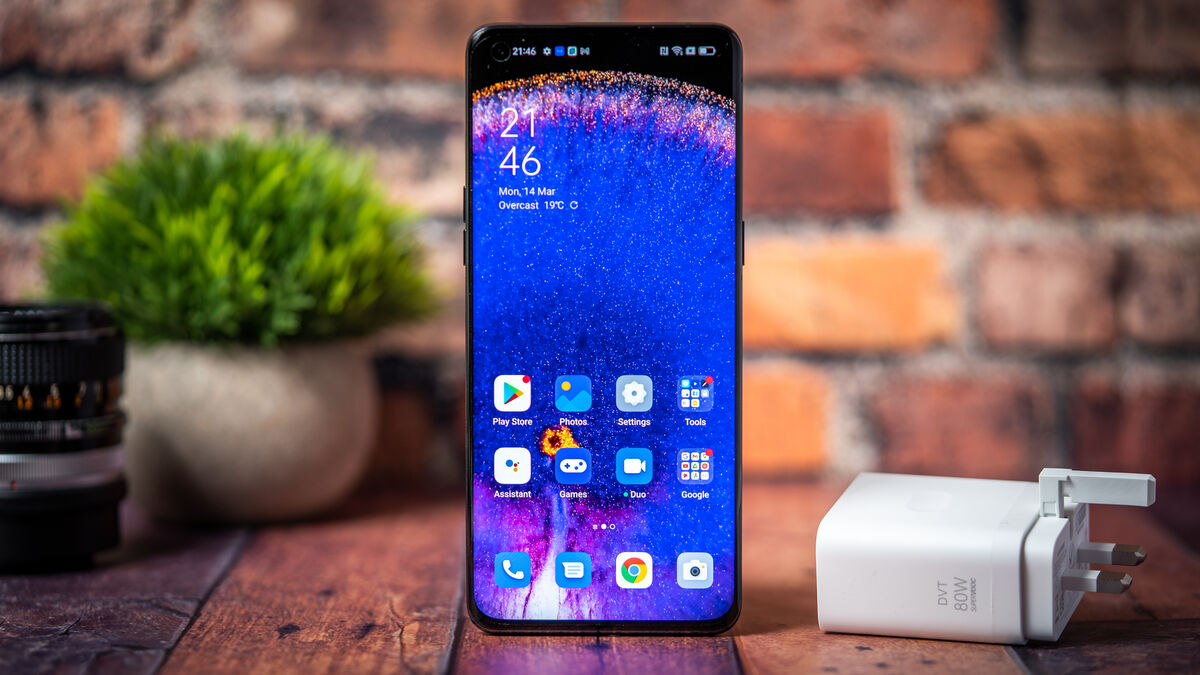
The 6.7-inch AMOLED display features a small punch-hole cut-out at the top-left for the front selfie camera. This is a top-notch display with impressive specifications including a 1,440px x 3,216px resolution, 120Hz refresh rate, 1,300 nits peak brightness and an aspect ratio of 20:9. It’s easily one of the best displays on a smartphone with near-infinite contrast, vibrant colours and the ability to get bright enough to be able to see it comfortably in direct sunlight.
If you don’t like vivid colours you can choose more natural tones in the display settings or go for one of the Pro colour modes for more faithful colour reproduction. There’s also a colour vision enhancement option to adjust the colour based on your colour vision for a more colour-blind-friend palette.
The side of the screen has slightly curved edges which some may not like but I never got any accidental touches like I’ve done on phones with more aggressive edge curves.
The optical in-screen fingerprint sensor is fast and responsive most of the time but you can choose to fall back on the less secure facial recognition and or a PIN.
The 120Hz refresh rate is now a prerequisite on any flagship and Oppo’s implementation is on par with the best. You can also choose 60Hz if you care more about battery life than screen scrolling smoothness. For the same reason, you can also choose to have the system auto select screen resolution or set it to QHD+ for the best sharpness or FHD+ for a balance between battery life and detail.
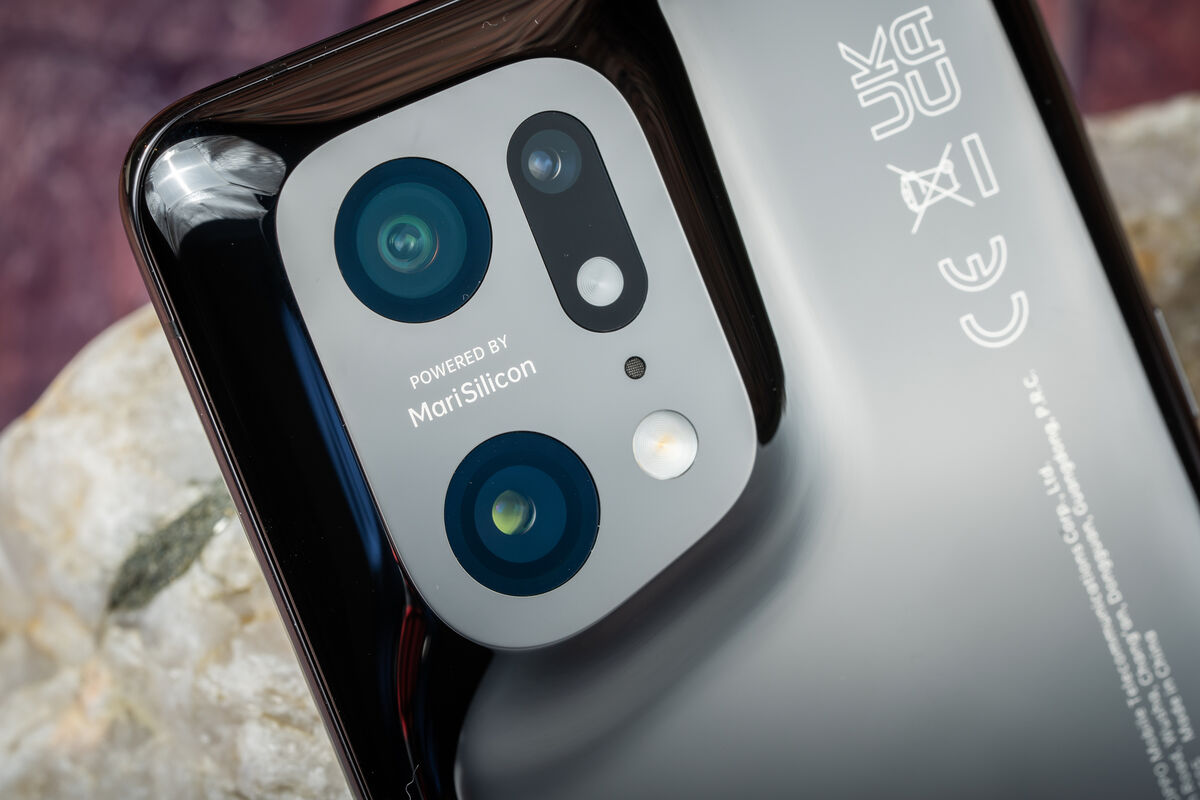
Like all flagships, Oppo has put a lot of emphasis on the Find X5 Pro camera setup. Some will lament that Oppo dropped the microlens camera from the Find X3 Pro while more will appreciate their partnership with Hasselblad, which adds certain software features.
So, instead of the four cameras, you get on the Find X3 Pro, the Find X5 Pro comprises a main wide-angle camera with a 50MP Sony IMX 766 sensor (1/1.56-in) f/1.7 aperture with 5-axis stabilisation and phase-detect autofocus (PDAF), a 50MP ultra-wide camera with a Sony IMX 766 sensor (1/1.56-in), f/2.2 aperture, a native 110.3° field of view and PDAF.
The third lens is a 13MP f/2.4 telephoto camera with PDAF and 2x optical zoom. This combination covers all the essentials but lacks the extra telephoto reach of many top-of-the-range cameras like the Samsung S22 Ultra.
There were times I would have appreciated a longer zoom range but they were few and far between. The digital zoom goes to 20X but anything past the 5x hybrid optical zoom isn’t usable and should only be used in good light.

The two main cameras are really good and produce excellent edge-to-edge sharpness. This is in part thanks to glass, rather than plastic lens elements which produce better sharpness with less lens flare overall.
A lot of kudos has to be given to the Oppo/Hasselblad partnership for the excellent camera app. One simple feature that all cameras should have is a visual level guide. Enabling this ensures you get level horizons — I hate seeing or taking photos that have crooked horizons. The app feels snappy and is intuitive with lots of good options and features and the Pro mode is brilliant.

Image quality is excellent from both the wide and ultra-wide camera but there is a noticeable drop in quality when using the telephoto camera. It’s still good but the extra resolution from the two main cameras does make a difference.
Software features are plentiful, and practical with pleasing results most of the time but I did find the HDR produced unnatural results at times by trying to fill highlights with weird colours. This didn’t happen all of the time and should improve with future updates.
You get all the usual modes including Night, Portrait and Pro. Additional modes include dual-video, film, pano and a long exposure mode for things like light trails and water or moving vehicles.
Hasselblad brings their natural colours along with the iconic leaf shutter sound and the Xpan mode. The latter is supposed to simulate the original Hasselblad Xpan film camera from the late 1990s. This was a dual 35mm film camera that was capable of shooting in standard 3:2 and also 24x65 panoramic mode.
While this all sounds cool, in reality, it’s just a mode that takes a photo with the ultra-wide camera and automatically crops the top and bottom of the frame to produce a panoramic photo. It does provide uniqueness to certain compositions and in particular, I really liked the film look from the Xpan black and white filter.

Perhaps I’m missing something, but I preferred using the standard pano mode to produce higher resolution files with a wider field of view.
Still images can be captured in 10-bit colour and the HEIF file format is also supported if you choose to enable it in the camera settings menu. The HEVC video format is also supported as is LOG or HDR when using the video pro mode.
The MariSilicon X neural processing chip uses machine learning to ensure a fast and responsive user experience in the camera app. It does a lot of the heavy lifting on the computational photography as well as the enhanced night videos that are bright and rich in detail and colour.
Video quality is excellent with the two main lenses using 2x optical lens stabilisation combined with a 3-axis sensor-shift stabilisation. This works brilliantly up to 4K 60fps but to use the ultra steady pro mode you’ll have to drop the resolution down to 1080p.
The front camera is 32MP f/2.4 and can capture stunning selfies and group shots. I was impressed with the image detail and colours but I did think there could have been more contrast. This is easily fixed later and it’s not as flat as portraits taken with an iPhone.
The Oppo Find X5 Pro uses the latest Snapdragon 8 Gen 1 that’s found in the majority of Android flagships. It comes with 12GB of RAM and 256GB of storage with no microSD expansion slot.
I ran a lot of benchmarks, as I do with all the phones I test, but I always take the results with a pinch of salt. One interesting titbit is that Oppo turn down the performance by default and as a result, I was seeing slightly lower scores compared to other 8 Gen 1 phones I’d tested previously. To enable the full speed of the device, you have to turn on performance mode. I couldn’t tell the difference between this being on or off in real-world use, but there is a hit to battery performance and heat with it enabled, so I just left it off.
The Find X5 Pro is a powerhouse in terms of performance. However, I have had occasional overheating issues. To be fair this was during a trip to Australia in high temperatures with lots of camera use, GPS and other intensive activities being thrown at it.
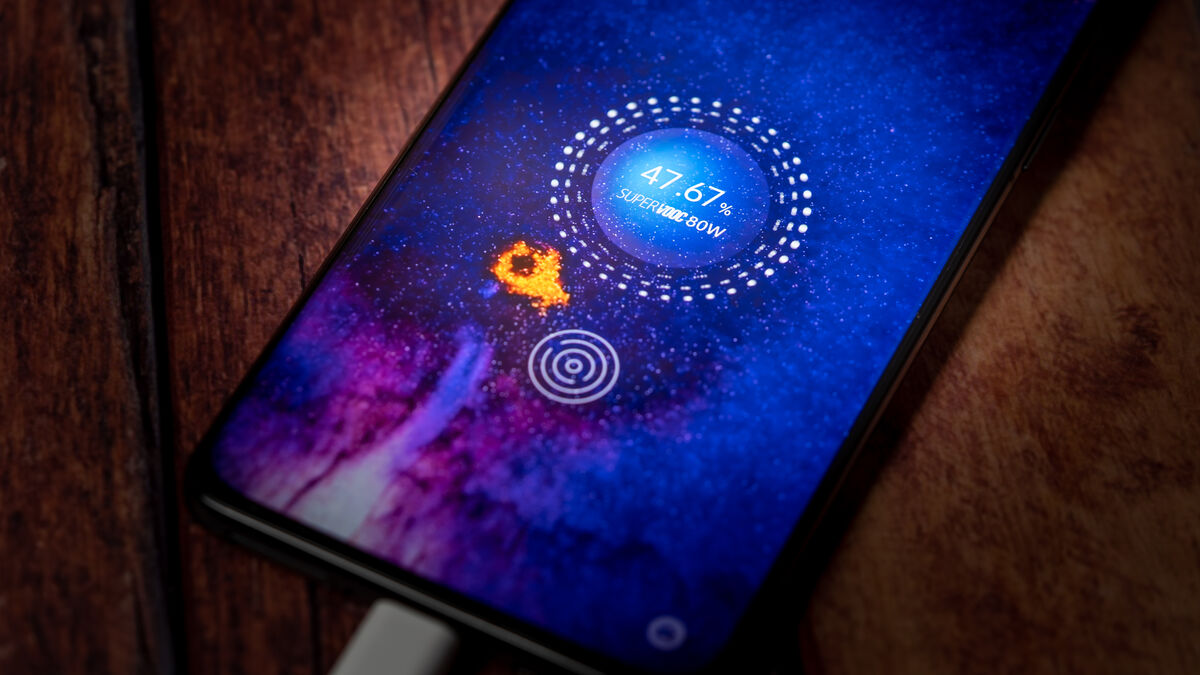
The Find X5 Pro comes with a 5,000mAh battery that usually saw me through a typical day of use with more than 30% by the end of the day. There were a few days when I managed to almost kill the battery before bedtime but thanks to the excellent 80W charger that comes in the box, you can go from flat to 50% in just 12 minutes.
That’s a game-changer. What’s even more impressive is the ability to wirelessly charge the Find X5 Pro at 50W. Using the Oppo AirVooc charger that also comes in the Oppo gift pack it takes just 45 minutes for a full charge which is a lot faster than most phones can charge wired.
The Find X5 Pro also features 10W reverse wireless charging, which is ideal for charging devices like wireless earphones or smartwatches in a pinch.
The Oppo Find X5 Pro is beautifully crafted and engineered with premium materials and build quality. It comes with all the bells and whistles we’ve come to expect from high-end flagship smartphones including a class-leading display, stunning performance, and a brilliant user experience thanks to Android 12 and ColorOS 12 — in particular, I love the always-on display options which are second to none.
Battery performance is excellent and the 80W wired and 50W wireless charging are game-changers. While the 2X optical zoom may turn some users off, the two main cameras are top-notch with superb image quality and a camera app that's a joy to use.
Oppo Find X5 Pro 5G from Eir

CONNECT WITH US TODAY



Be the first to know the latest news and updates