From floors to pools: Roborock’s expands its range from inside to out at IFA Berlin
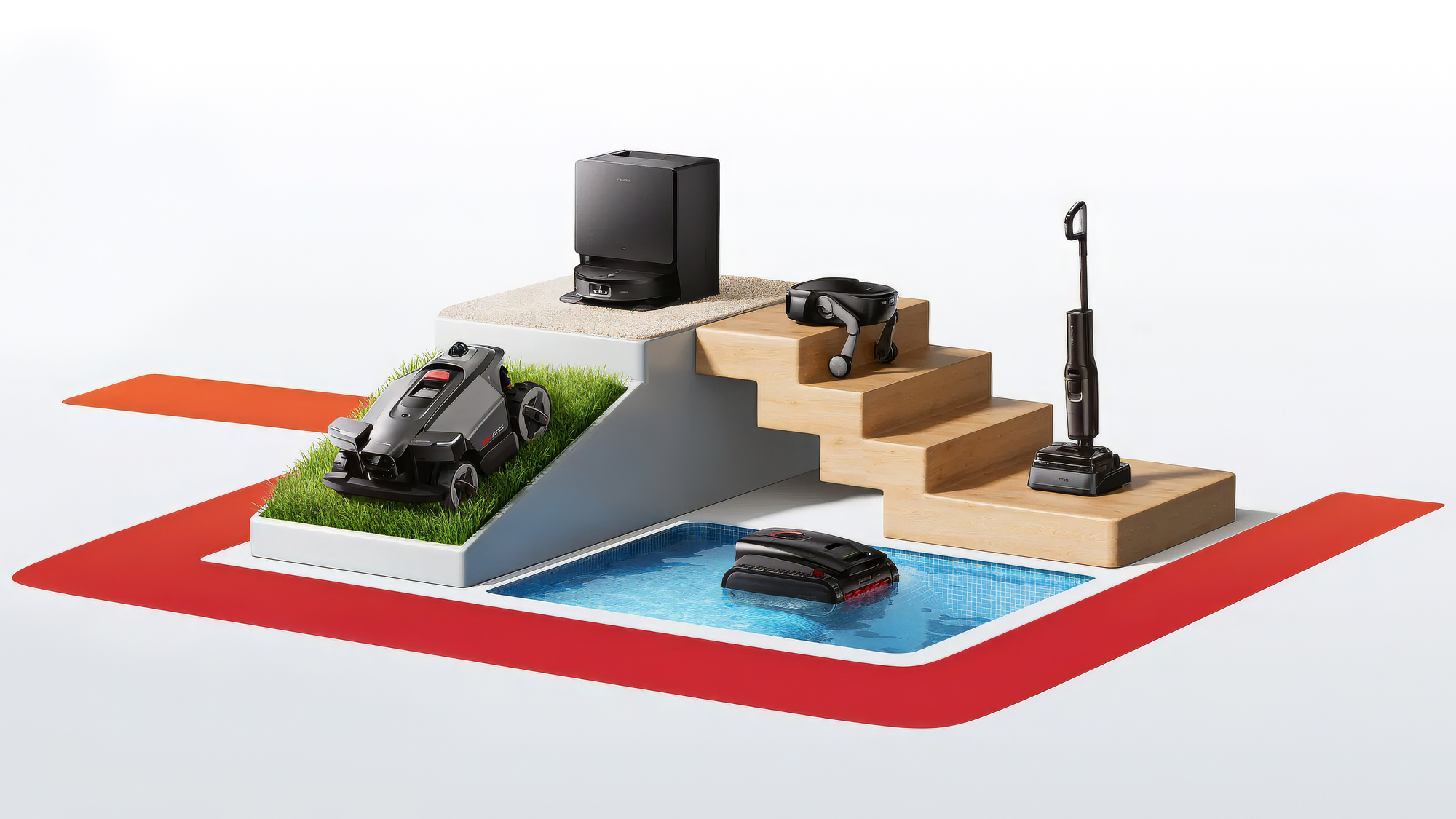
The new Roborock range, displayed at IFA, marks a significant shift toward a complete home and garden cleaning ecosystem. Picture: Roborock
Last year at IFA in Berlin, Roborock made a significant pivot by introducing its robot lawnmower range. It was a move that many of us watched closely to see if they could translate their indoor success to the garden, and after fully testing the Roborock Z120 LiDAR, I can say from personal experience that it worked. This year, the company is pushing that boundary even further. They are moving from the lawn to the swimming pool while simultaneously refining their indoor cleaning lineup, with a heavy focus on hygiene and specialised surfaces.
“Our mission is to give people more time for what matters by making everyday maintenance simpler and more autonomous,” said Ricky Ma, President of Europe and Americas at Roborock.


The newest addition to the outdoor lineup is the RockAqua P1, a pool robot designed to solve the headache of cleaning the waterline and shallow areas. Apparently, most pool cleaners struggle at the edges, but the Aqua P1 is designed to handle floors, walls, and the waterline. It can clean surfaces as shallow as 15cm.
The machine uses a high-flow pump that moves over 25,000 litres of water per hour. To prevent the usual nuisance of clogged filters, it employs a dual-layer system. One layer catches large debris, such as leaves, while the finer 70-micrometre filter handles sand. Because it uses the same navigation logic found in their vacuums, it can prioritise areas with heavier debris rather than wander aimlessly.

The Saros Rover is perhaps the most radical concept I saw this year. It’s making its European debut at IFA Berlin and introduces a wheel-leg architecture that allows it to do something other robots can’t. The legs are independently adjustable, which allows the robot to raise and lower its body, navigate slopes, or even make small jumps to clear obstacles.
The real interest lies in how it handles multi-storey homes. Using advanced motion sensors and 3D spatial data, the Saros Rover can actually move between floors by cleaning individual stair steps. It’s a clever way to move automation beyond just flat surfaces, finally addressing one of the biggest hurdles for home robotics. Of all the new products on display at the show, the Rover is the one I'm most interested in testing in real-world use to see if it can live up to the performance the marketing claims.
For those who found the initial lawnmower range a bit complex to set up, the RockNeo Q2 is a step forward for lawns up to 800m². Instead of relying on RTK antennas or GPS, which can be finicky when your signal is weak, this model uses LiDAR and dual-camera vision, features usually found on more expensive models. This makes it much easier to deploy in gardens that have plenty of trees or furniture.
I have found that LiDAR is perfect for more complex layouts, whereas GPS is better for massive, open fields with no landmarks. The RockNeo Q2 maps the lawn as it works, meaning you do not need to bury any wires. They have also included a Wi-Fi amplifier module to ensure the docking station stays connected even when placed at the far edge of a large property.

Turning back to the indoors, the Saros 20 Flow Complete is the flagship for heavy-duty cleaning. It boasts a suction power of 36,000 Pa, which should be practical for thick, high-pile carpets where you need that extra pull to lift dirt from the base of the fibres.
One thing I particularly appreciate is the design of the brushes. I have a dog that sheds hair for fun, which usually means a weekly battle with tangled bristles. The dual brushes here are designed to prevent that, and they have even been TÜV-certified for zero hair tangling. To keep the unit slim, the LiDAR tower actually retracts, allowing it to slide under furniture as low as 8.98cm. And it can cross double-layer thresholds of up to 8.8cm.
It also washes its own mops at 100°C, which is a necessary feature if you want to avoid cross-contamination between your kitchen and bathroom.

If the Flow Complete is a bit much for your space, the Saros 20 Neo is a more compact, highly capable alternative. It manages to go even lower than its bigger sibling, sliding under furniture as low as 7.95cm. The AdaptiLift Chassis 3.0, which allows it to climb thresholds up to 8.8cm, is a massive improvement for homes with uneven flooring or high door saddles.
Despite its smaller footprint, it does not skimp on power. It carries the same 36,000 Pa suction as the flagship and pairs it with a Dual Anti-Tangle System that should handle pet hair without much fuss. The navigation is also quite sophisticated. Using RetractSense LiDAR and Reactive AI, it can recognise over 300 different objects and navigate through both bright rooms and dark hallways. For mopping, it uses warm water and applies 14N of pressure to tackle stains, while the dock cleans the mop with 100°C water. On a single charge, it can cover about 350m², which is plenty for most standard houses.

For those who prefer a manual wet-and-dry cleaner, the F25 Ultra Steam Gen 2 is a serious dirt buster. It uses a stable steam output at 108°C to tackle stains. The Sense Edge robotic arm allows the machine to clean right up to the edge of a surface, effectively achieving a 0mm gap. It’s a much more thorough way to handle hard floors than a standard mop.
Finally, for the person who wants one tool to do everything, the F25 Turbo Pro Turbo Combo is a five-in-one system. You get the wet and dry cleaner, a cordless stick vacuum, and several attachments for furniture or tight corners. I liked the "deep scrub" feature, which lets you tap a button to instantly increase water delivery and suction to tackle stubborn stains. It’s a versatile setup that replaces several different appliances.
Beyond the hardware, Roborock is also working with the ECARF Foundation. This collaboration focuses on allergy research, ensuring their devices are tested to actually improve the air and surface quality for people with respiratory sensitivities.