Apple Watch Series 10 vs Apple Watch Ultra 2: Which should you buy?
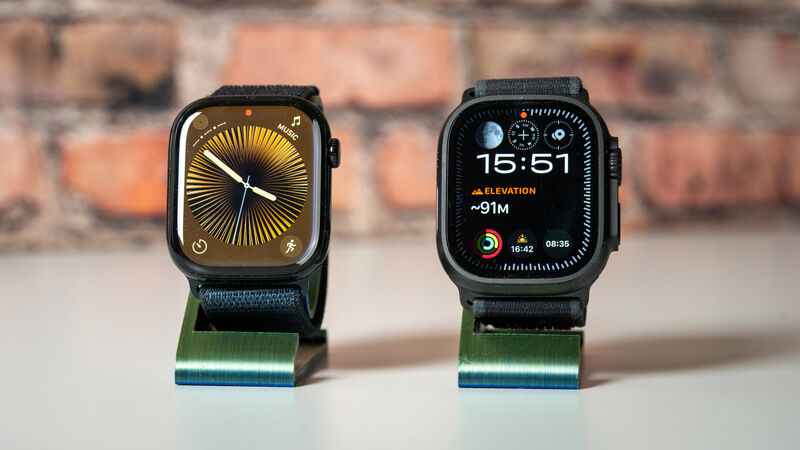
Apple Watch Series 10 v Apple Watch Ultra 2. Picture: Noel Campion.
After two months of switching between the Apple Watch Series 10 and the Apple Watch Ultra 2, I’ve had enough hands-on experience to highlight their strengths and weaknesses. Apple’s latest smartwatches offer cutting-edge features but cater to different users. While you can't go wrong with either, it’s important to understand their differences to decide which is right for you.


One of the first things you’ll notice when comparing these watches is the weight difference. The Apple Watch Ultra 2 is significantly heavier than the Series 10. The Ultra 2 weighs 61 grams, while the 46mm Series 10 (aluminium, GPS + Cellular) comes at just 35.3 grams. The smaller 42mm Series 10 is even lighter, at 29.3 grams.
You’d think the weight difference would be evident if you wear the watch for sleep tracking or extended workouts, but to be honest, I can’t say I perceived any difference while using them for sleep tracking. I’m not an elite athlete, so I couldn’t test them to their full extent for extreme workouts where I’m sure the size and weight would play a more significant role.

The Ultra 2’s rugged titanium case and flat sapphire glass screen make it more durable. After two months, there are no visible scratches on the glass or case. The Series 10 feels more like a traditional smartwatch — light, comfortable, and easier to forget you’re even wearing it.
The Ultra 2, on the other hand, is designed to endure harsher conditions. It features a 49mm case with a raised bezel that protects the screen from impacts. The Series 10 offers more size options with 42mm and 46mm cases, giving users more flexibility to find their perfect fit.

If you like customisation, the Series 10 has more colour options. It’s available in Jet Black, Silver, Rose Gold, and Titanium finishes in Slate, Gold, and Natural. Meanwhile, the Ultra 2 uses Natural Titanium or a new Midnight Titanium colourway. The Ultra also retains its signature orange Action Button, which offers additional functionality and a touch of distinctive style.
It’s worth noting that LTE is standard on the Ultra 2, whereas you’ll need to pay an additional €120 for the cellular version of the aluminium-bodied Series 10. Only the titanium versions of the Series 10 come with LTE as standard.

Apple’s new S10 chip powers the Series 10, while the Ultra 2 has the S9. I found them equally snappy in performance. Apps load quickly, and menu navigation feels smooth. However, there are differences in battery life and efficiency.
Both watches easily last a full day in real-world use, with the Ultra 2 lasting two or even three days in low-power mode. By turning off the always-on display, I could get nearly three days. The Series 10, especially the 46mm version, can last a day and a half, but you’ll likely need to charge it nightly for peace of mind.
Both watches feature always-on displays, but the Ultra 2 has a brighter screen. It maxes out at 3,000 nits, compared to 2,000 nits on the Series 10. While the Series 10’s brightness is excellent, the Ultra 2’s extra brightness is noticeable outdoors in direct sunlight. The Ultra 2 is particularly useful for the flashlight mode, making it easier to see in dark environments.
One feature the Series 10 has over the Ultra 2 is its ability to lower the display's refresh rate to 1Hz. A few watch faces take advantage of this by displaying the seconds on the always-on display.

One of the Ultra 2’s unique features is its depth sensor, previously exclusive to the Ultra line. Series 10 and Ultra 2 now have this feature, automatically measuring your depth when submerged in water. However, the Ultra 2 is rated for 100 metres of water resistance, while the Series 10 can handle only 6 metres. If you’re into scuba diving or freediving, the Ultra 2 is the obvious choice. For casual swimmers, though, the Series 10 is more than capable.
The Ultra 2 also has dual-frequency GPS, which locks onto satellites faster and provides more accurate tracking in challenging environments like cities with tall buildings or dense forests. In my tests, the Ultra 2 consistently connected to GPS a few seconds faster than the Series 10.
Another unique feature of the Ultra 2 is its 86-decibel emergency siren, which can help attract attention if you’re lost or in trouble. The Series 10 lacks this feature but includes standard safety tools like fall detection and emergency SOS.

Both watches have 64GB of storage for apps, music, and podcasts. They can play music through their internal speakers and take calls without a paired iPhone nearby.
The Ultra 2 has superior microphone and speaker performance, particularly in windy conditions. Thanks to its wind noise reduction and three-microphone array, calls on the Ultra 2 sound clearer in outdoor settings. The Series 10 performs well, but the Ultra 2 takes it a step further.
Both watches have fitness-tracking features, including heart rate, blood oxygen monitoring, sleep tracking, and workout tracking. Apple’s algorithms are highly accurate, and both watches integrate seamlessly with the Health app.
The Ultra 2’s rugged design makes it better suited for extreme sports and outdoor activities. It’s built to withstand harsh environments, whereas the Series 10 feels more like a stylish everyday smartwatch.
Choosing between the Apple Watch Series 10 and the Ultra 2 ultimately depends on your priorities. If you need rugged durability, extended battery life, and adventure-focused features like depth tracking and dual-frequency GPS, go for the Ultra 2.
Pick the Series 10 if you want a lighter, more comfortable smartwatch with plenty of customisation options and excellent fitness tracking at a more affordable price.
Both watches deliver excellent performance, but the Ultra 2 is best for outdoor enthusiasts and those who need their watch to survive harsh conditions. The Series 10 is better for everyday users who prioritise comfort and style.
Apple Watch Series 10 from €449. Apple Watch Ultra 2 from €899