Quantum technology experts fighting against cyber-attacks meet in Waterford
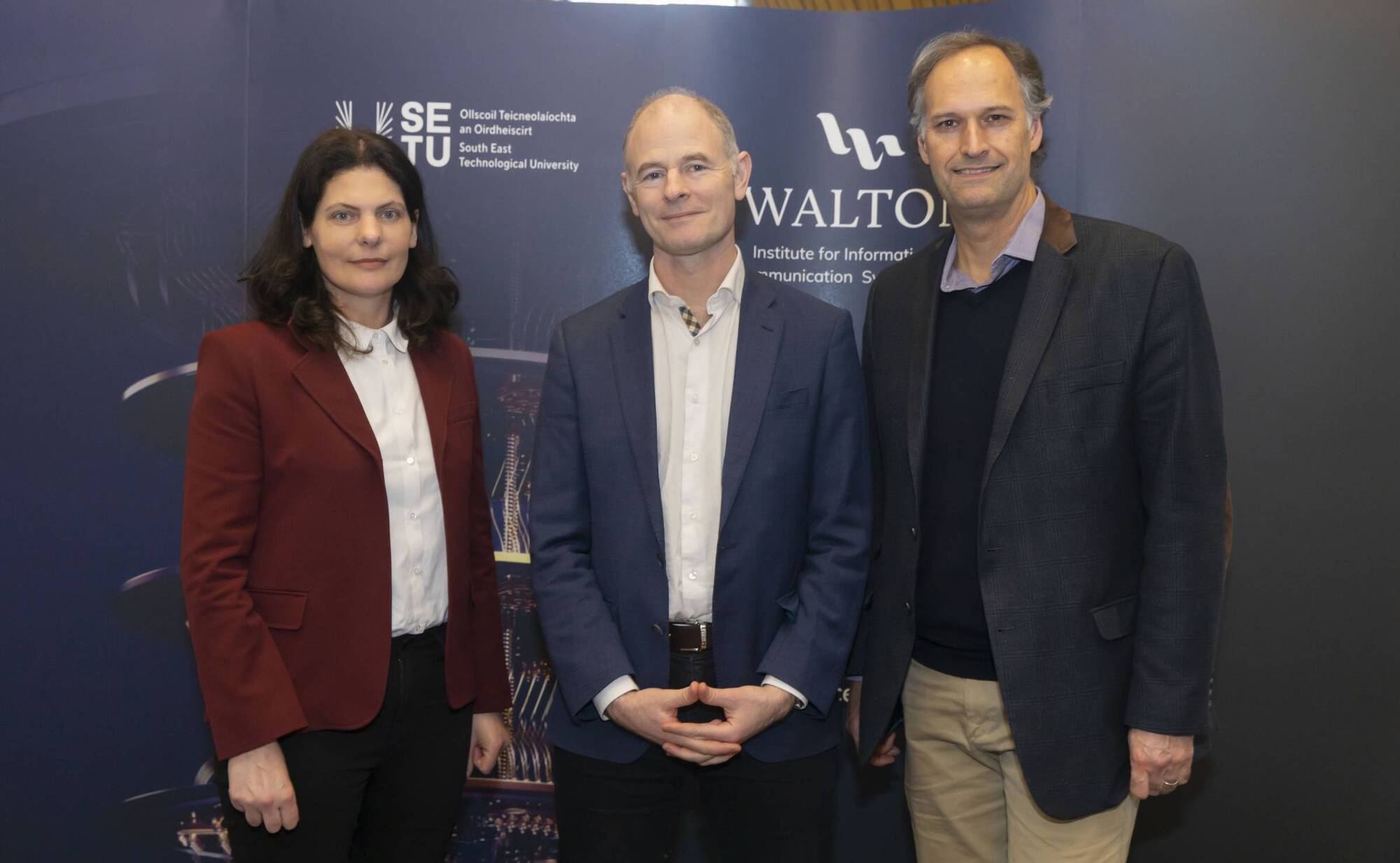
IrelandQCI Project Lead and SFI CONNECT PI, Dr. Deirdre Kilbane, pictured at the IrelandQCI opening meeting in Waterford with Minister of State at the Department of the Environment, Climate and Communications, Ossian Smyth T.D. and Trinity College Dublin Professor of Future Communications Networks, Prof. Dan Kilper. Photograph: Patrick Browne
Technology specialists across Irish and European universities have come together with industry leaders in Waterford to improve security across a range of devices.
The project team on the €10m Ireland Quantum Infrastructure (QCI) programme will trial 16 quantum security technology scenarios over the next two years as part of the Irish tranche of the EU-wide EuroQCI Programme.
Based on the applications of quantum theory, Quantum Technologies are set to add an extra security layer to prevent data and communications from the increasing risk of hacks.
The IrelandQCI team aim to create an ecosystem where they can develop devices in the quantum network. The team plans to educate people about the importance of quantum technology to everyday lives and build Ireland's quantum workforce through a series of lectures, training, and visits to laboratories.
The ultimate aim of Ireland QCI is to ensure the country's communications infrastructure is secure against the rising threat of cyber-attacks, similar to the HSE hack that caused IT systems nationwide to shut down.
Waterford’s Walton Institute, in South East Technological University (SETU), is leading the €10 million IrelandQCI project, on behalf of SFI CONNECT, within the EU-wide Quantum Communications Infrastructure programme.
Speaking at the event, Minister of State Ossian Smyth, said: “I am delighted to formally launch this extremely important project today. We must continually develop ways to ensure our networks are secure and safe from hackers.
"I welcome our expert community coming together to develop our quantum communication infrastructure which will play a huge part in keeping our networks safe.”
CONNECT WITH US TODAY



Be the first to know the latest news and updates