Google Pixel 7: the only Pixel you’ll need this year
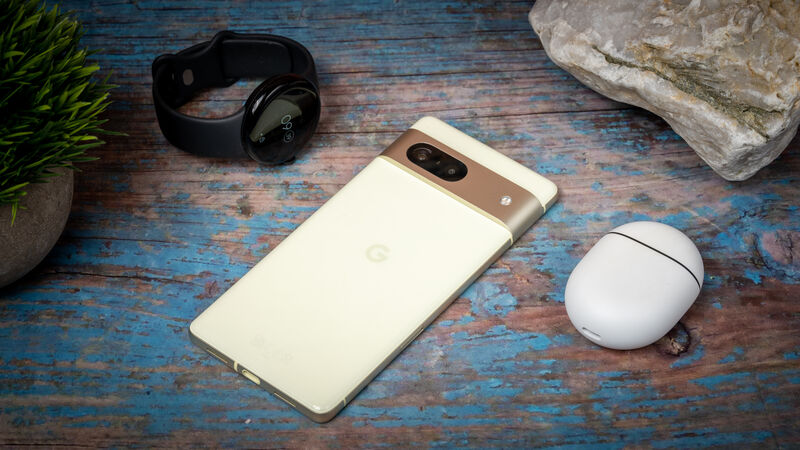
The Google Pixel 7. Picture: Noel Campion.
Google have a great lineup of phones this year including the three Pixel 6 phones and the Pixel 7 and the Pixel 7 Pro. The newer models have a fresh design and updated hardware specs that make them even more compelling. While the Pixel 6a offers excellent value for money the Pixel 7 Pro is Google’s flagship handset with the best camera system in their lineup. The standard Pixel 7 sits in the middle and is probably the best all-rounder in the range offering near ‘Pro’ features at a slightly more affordable price.
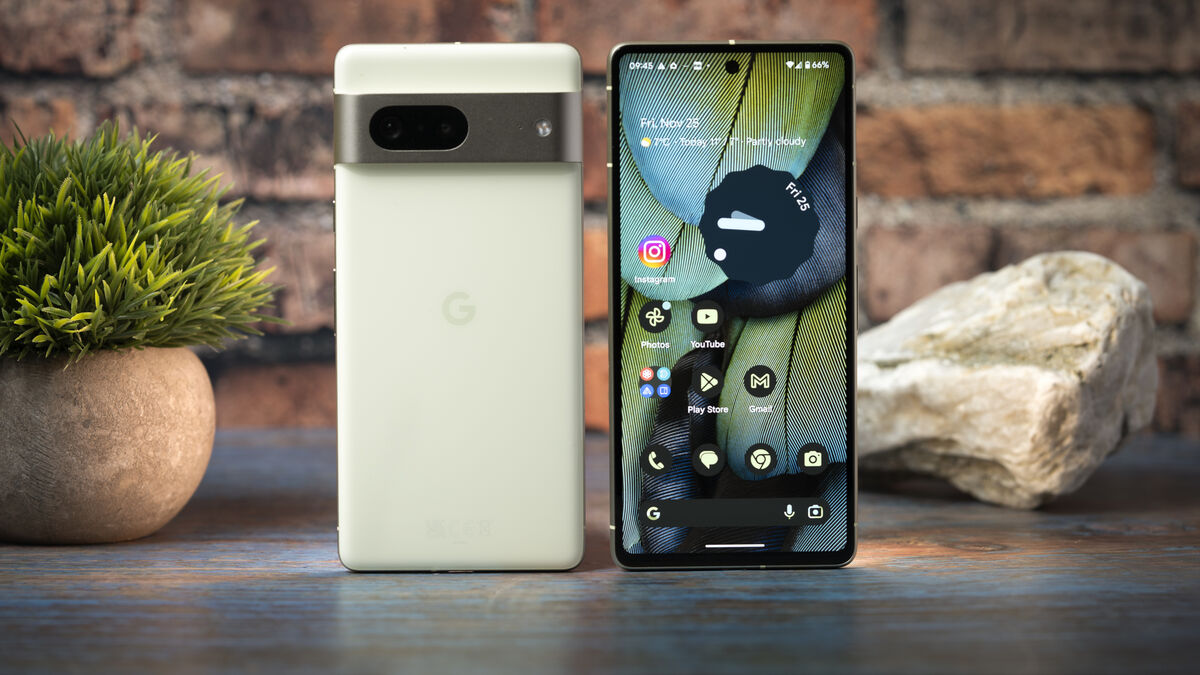
The refinements to the design of the Pixel 7 over the Pixel 6 are pleasing to the eye as well as an improvement in built quality. The camera visor on the back returns, but is now a single piece of metal that looks sleek and merges with the sides beautifully.
I love the rounded edges and matte texture along with the chrome-finished buttons on the right side for power and volume. The left side has the SIM tray and the bottom has a USB-C port with a speaker grille on either side.
The back is Gorilla Glass Victus and has a glossy finish that nicely contrasts with the matte texture of the camera visor. The design and build quality over last year’s model is a significant improvement.
My review unit was the lemongrass (pale green/yellow) colour, but two other options are available including obsidian (black) and snow (white).
The 197g Pixel 7 feels great in hand with smooth edges with a good balance to the weight. The display is flat, unlike the Pixel 7 Pro, but I’m not as big a fan of the large asymmetrical bezels — the bottom bezel is slightly larger than the sides and top.
The Pixel 7 comes with IP68 water and dust proofing, a feature we expect in this price range, but isn’t guaranteed.
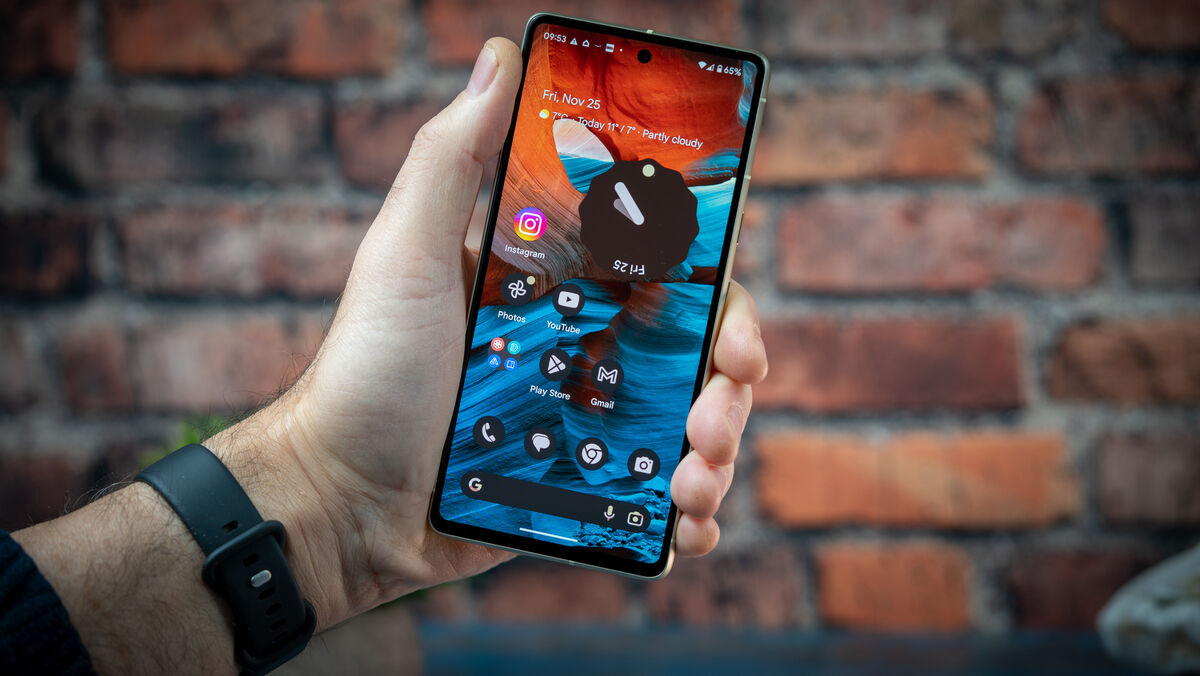
The 6.3-inch AMOLED display is gorgeous but tops out at a smooth 90Hz rather than the 120Hz found on the Pixel 7 Pro. The under-display optical fingerprint reader is well-position for easy access and is fast and reliable.
New this year is face unlocking, which is a welcome addition for added convenience, but it isn’t secure enough to use for contactless payments.
The display is 1080P and looks sharp with infinite contrast and vibrant colours. The peak brightness of 1,400 nits is bright enough for HDR content and viewing outdoors.
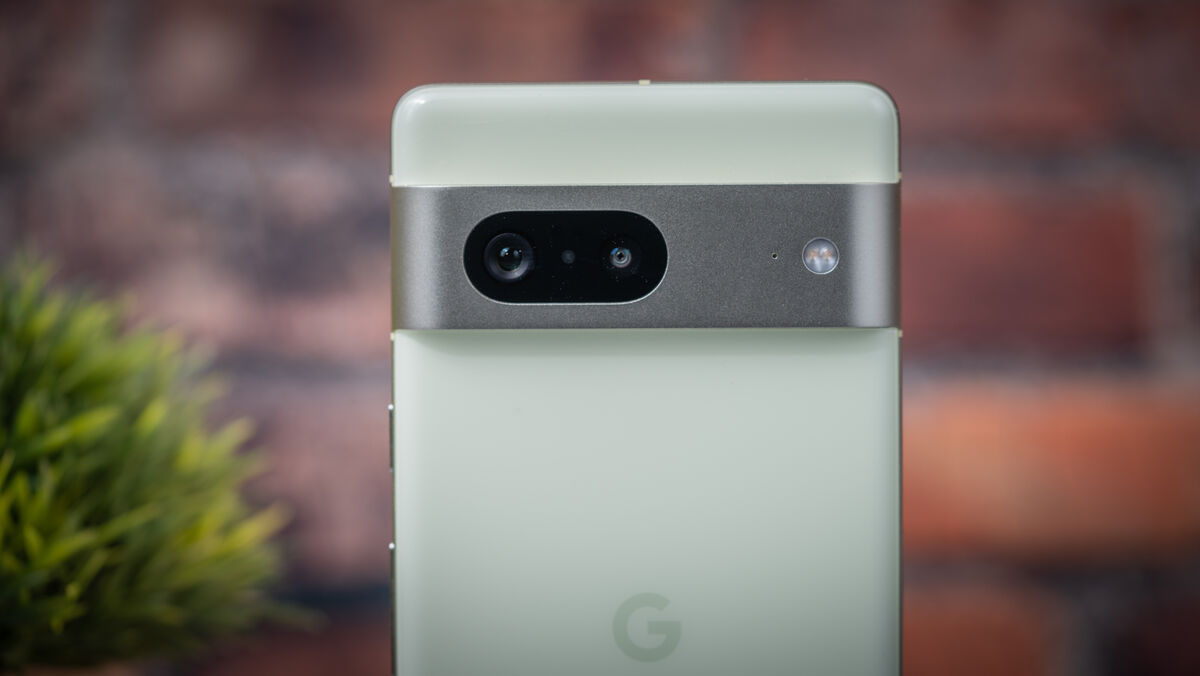
Pixel phones are renowned for their camera prowess and the Pixel 7 is a further evolution of Google’s hardware and software tech. Unfortunately, the Pixel 7 loses out on the Pixel 7 Pros zoom camera and instead has to rely on Super Res software magic for anything past 2x. It also doesn’t get the same autofocus for its 12MP ultrawide camera or close-focusing macro abilities.
The camera that you’ll take the majority of your photos with is a 50MP sensor that produces outstanding photos during daylight, with impressive dynamic range, Instagram-ready colours and pin-sharp details.
During low-light and even dark-as-night scenes, the Pixel 7s main camera can capture stunning images with well-controlled noise levels with minimum motion blur, something many other phones struggle with.
One of my favourite features is Night Sight and if you manage to find a dark part of the country on a clear night with no moon out, the Astro mode is incredible for capturing the stars. You need a tripod and it does take up to four minutes but the results are amazing. Night Sight captures photos faster now and you can manually adjust capture time from 1 to 6 seconds.
The lack of a zoom lens is somewhat acceptable by the inclusion of a sensor cropping feature that digitally crops to produce a 2x zoom. The results are impressive and often better than other 2x zooms I’ve used. If you need to go greater than 2x and all the way to 8x, there’s a diminishing return on image quality the more you zoom. If you’re one of those people who like to take a lot of zoom shots past 2x, consider taking a look at the Pixel 7 Pro, which has a 10x optical telephoto lens with Super Res zoom of up to 30x.
The ultrawide camera has a 12MP sensor with laser detect autofocus. Image quality is a slight step down from the main lens but not by much and I did miss the lack of a macro mode.
The Pixel 7 has improved its video capabilities over the Pixel 6. You can record up to 4K at 60fps and Google has introduced a new Cinematic mode that digitally blurs the background of subjects. The only problem with the feature is that it’s not great. Perhaps with software updates, this can improve but it’s certainly not a reason to upgrade. You can also record video in 10-bit HDR but only at 4K 30fps.
Other features include the long exposure and action pan modes as well as the new motion unblur. The latter will only work on the Pixel 7 and Pixel 7 Pro to digitally remove soft focus and motion blur from photos taken on the Pixel or even old photos in your photo library. When it works, it’s like magic but I found it a little hit or miss. I use software on my PC that does a much better job of this but it’s expensive and requires a Mac or PC to use it. The convenience of having this built into your phone is excellent. I found the Pixel 7 does such a great job of avoiding blurry photos you’ll rarely use unblur.
The front selfie shooter has a 10.8mp sensor and works great in good lighting but images start to soften in darker environments. You can capture video in 4K 60fps and there’s a cool timelapse feature.
The Google Tensor G2 chipset is what powers the Pixel 7 and offers speed and efficiency improvements over the original Tensor. It has 8GB of RAM, a hardware-level security chip called the Titan M2 and an AI-focused Tensor Processing Unit (TPU) that promises to process algorithms more quickly than the Pixel 6.
Performance is excellent overall with noticeable improvements in the camera app and image processing. The Android 13 interface feels snappy and even more demanding games perform great.
I found the battery life good with a full day of use expected even with heavy loads during a typical day. Of course, there’s no charger in the box and it only supports charging power up to 30W but it does support wireless charging.
Having lived with the Pixel 7 since its launch for this long-term review, I’ve loved the relatively compact size and how great it feels in the hand, even with the Google case wrapped around it. The Tensor G2 provides a stellar user experience and the cameras capture consistently excellent images and videos.
I’ve also loved using Android 13, which hasn’t made it to many phones yet. It’s clean and fast with lots of Google-exclusive features.
Google Pixel 7 from €649
CONNECT WITH US TODAY



Be the first to know the latest news and updates