Who Replaces Lagarde? The political chess behind the ECB's leadership shake-up
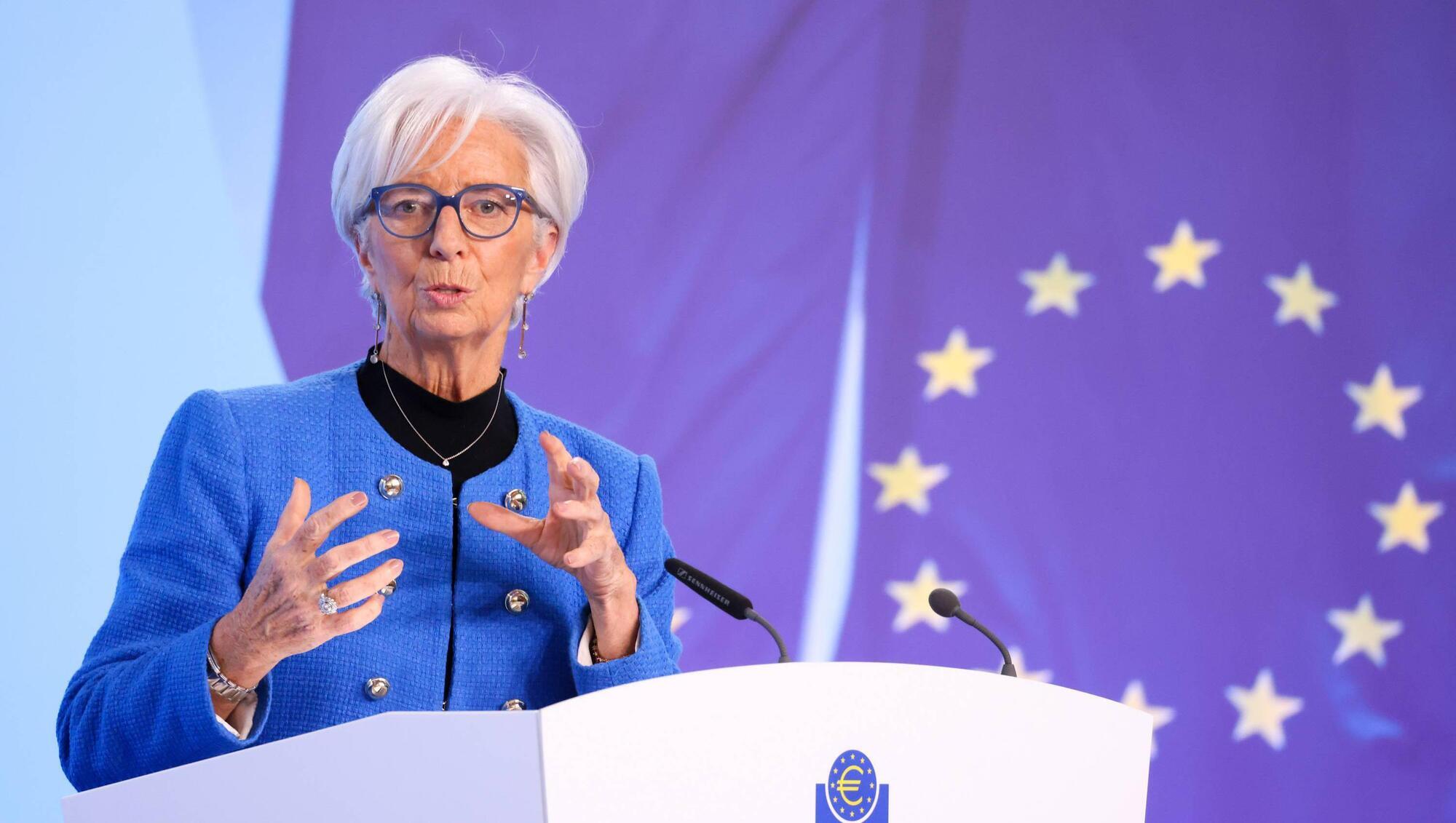
Christine Lagarde Photographer: Alex Kraus/Bloomberg
Euro zone leaders will choose a new European Central Bank president and a board member in the coming weeks, in a game of political chess among the bloc's 21 nations that will reshape how its most powerful financial institution functions.
The following explains who gets replaced, how and why this matters for the ECB, which has been fighting excessive inflation and now faces the test of rising longer-term borrowing costs.
ECB President Christine Lagarde and executive board member Isabel Schnabel have both resigned effective early next year, while the term of Ireland's Philip Lane, the ECB's chief economist, ends on May 31.
In addition, if EU leaders pick a Dutch candidate to replace Lagarde, fellow Dutchman Frank Elderson would have to resign, meaning that up to two-thirds of the six-person board could be turned over in the coming months.
Executive board members are appointed by leaders of the 21 euro zone countries, usually one at a time. But with several positions opening in quick succession, officials are more likely to negotiate a broader package of appointments.
Because the board is expected to maintain political and geographic balance, each appointment affects the others.
The process will thus begin with the presidency before moving to the remaining roles.
Frontrunners to succeed Lagarde are Bank for International Settlements General Manager Pablo Hernandez de Cos and former Dutch central bank chief Klaas Knot. However, ECB appointments are highly political and often form part of wider negotiations across European institutions, meaning other candidates could still emerge.
In theory, it should not. In practice, politics is a major factor.
France holds a presidential election next spring and far-right leader Marine Le Pen, a critic of European integration, is currently leading opinion polls. This may have played a part in Lagarde's early departure, partly so that she can weigh in on French politics and partly so President Emmanuel Macron will have a say in who replaces her.
In Germany, growing support for the far right has weakened Chancellor Friedrich Merz, potentially limiting the political capital he can devote to ECB negotiations.
Spain is also approaching a 2027 election and has made clear it will push for the ECB presidency.
EU leaders are already searching for Schnabel's replacement and will now widen that search to include the presidency.
The other positions will not become vacant until later, but discussions about a broader package are already underway, sources have said.
Because the appointments are interconnected, officials are expected to agree an overall framework first and then implement it as vacancies arise.
Any euro zone country can compete for one of the six executive board seats.
In practice, however, France, Germany and Italy have long held de facto permanent seats. Spain is also arguing it should have a permanent seat, suggesting that 17 euro zone members could be splitting the remaining two spots.
A country can have only one representative on the board. So, if Knot becomes president, fellow Dutch board member Elderson would need to step down, creating another vacancy.
Several scenarios are possible.
If the hawkish Knot becomes president, the chief economist role could go to a candidate from a country with a softer stance on public spending, such as France.
Germany could then seek Schnabel's market operations portfolio, while Spain could secure banking supervision after Elderson's departure.
Under a Spanish president, Germany would likely push for the chief economist job, with France potentially taking the market operations portfolio.
Yes, but not immediately.
Monetary policy is set by the ECB's 27-member Governing Council, so personnel changes alone are unlikely to alter the immediate policy path.
But the president's leadership style matters. Lagarde is widely seen as a consensus-builder who manages debate and seeks broad agreement, brokering political deals along the way. Supporters say this has helped keep the ECB united, although critics argue it can slow decision-making.
Her predecessor Mario Draghi took a more directive approach, often driving the debate and limiting room for compromise. Critics said that left smaller countries feeling marginalised and occasionally prompted public dissent from more conservative policymakers.
CONNECT WITH US TODAY



Be the first to know the latest news and updates