Ireland must cut its dependency on FDI, says Enterprise Ireland chief
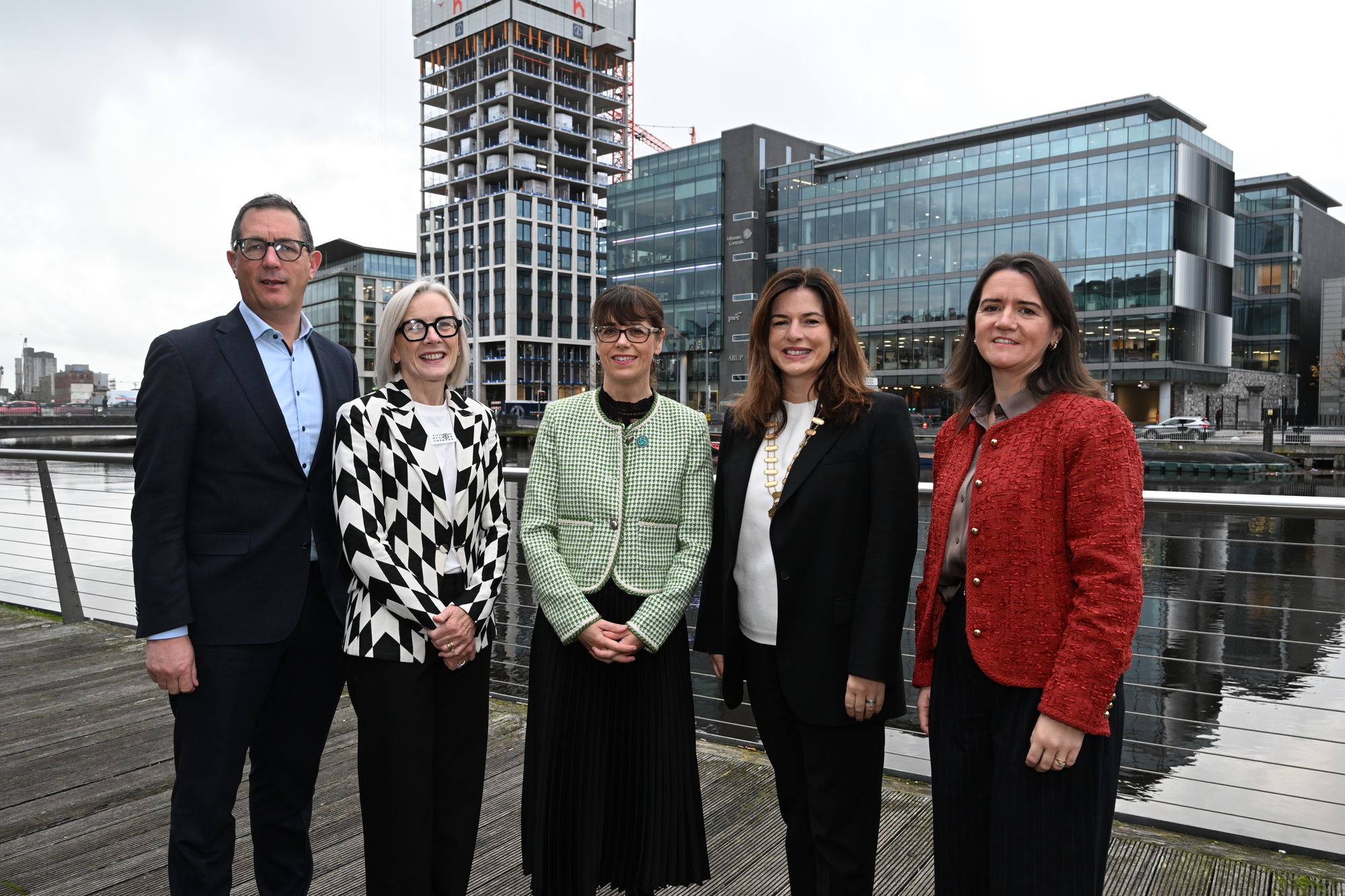
Conor Healy, CEO, Cork Chamber, Gillian Keating, Corporate and Commercial Partner, RDJ (LLP), guest speaker Jenny Melia , CEO, Enterprise Ireland, Susie Horgan, President, Cork Chamber, and Karen O'Donoghue, Managing Director, Irish Examiner/The Echo at the Cork Chamber Business Breakfast, in association with RDJ and media partner Irish Examiner at Clayton Hotel Cork City. Picture: Larry Cummins
Ireland must reduce its dependency on foreign multinationals and make homegrown exporters the main engine of the economy, the head of Enterprise Ireland has told business leaders in Cork.
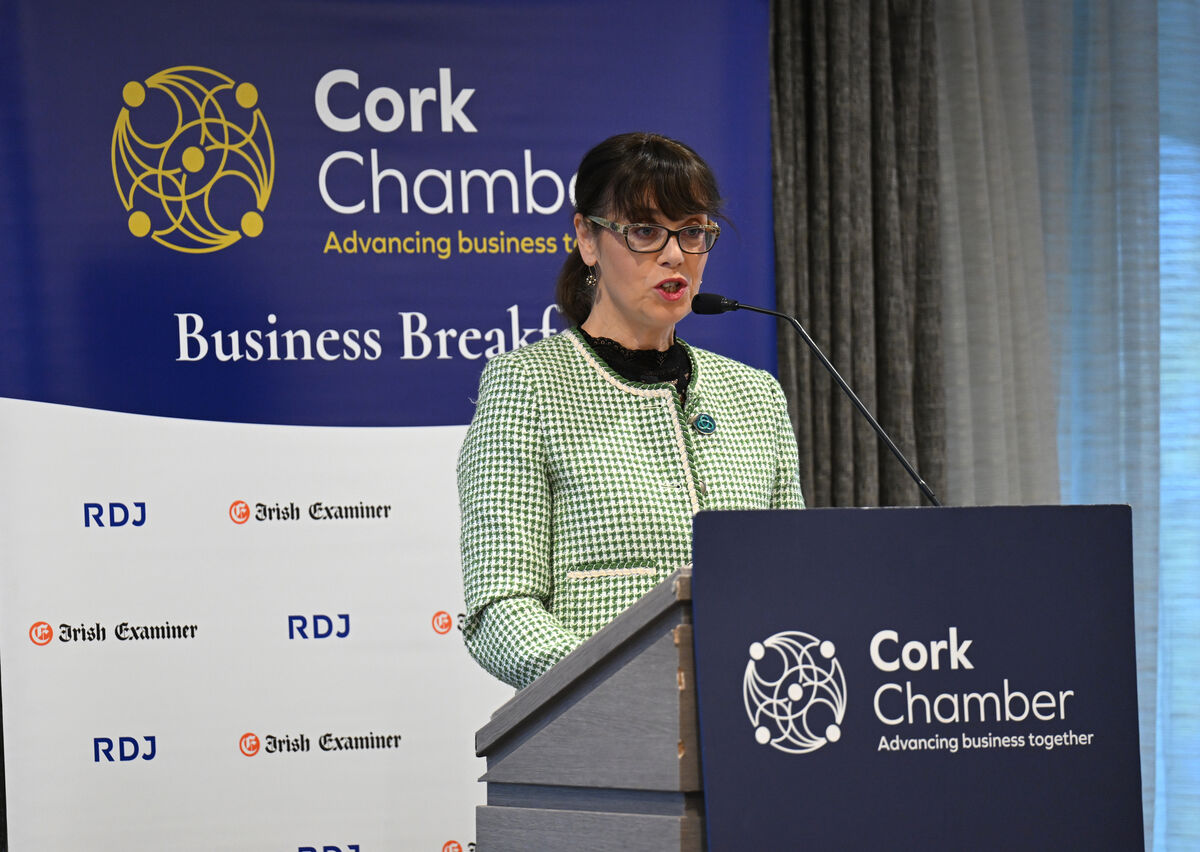
Speaking at the Cork Chamber breakfast, Enterprise Ireland chief executive Jenny Melia said the agency’s ambition was for Irish exporters to become “the primary driver of the Irish economy”.
“We are so fortunate in Ireland to have such a strong FDI footprint, but we have to reduce our dependency in Ireland on FDI,” she said. “It’s not about reducing our focus, it’s about reducing our dependency. We need a balanced and a diversified enterprise base.”
Enterprise Ireland’s clients spent €43.7bn in the Irish economy last year, just under €120m a day and an increase of €4bn in 24 months. The agency is targeting €55bn by the end of its current strategy in 2029.
Its client companies exported a record €38.8bn last year, up 8%. Ms Melia said exports have risen 89% since 2014 despite Brexit, covid, the war in Ukraine, the energy shock and US tariffs.
"If you think back to before the UK voted to leave the European Union, we were 35% dependent on the UK market. We made a conscious decision in Enterprise Ireland, not that we would reduce our focus on the UK, but that we would reduce our dependency. And on that basis, a new strategy was put in place to win business in Europe, and Europe is now on par with the UK. We are now 29% of our exports into Europe, 29% into the UK and 19% into the US."
Sales to the US rose last year despite tariffs and currency headwinds. A fall in food and drink exports there was offset by technology and services firms, whose US sales passed €3bn.
In Cork, Enterprise Ireland has just under 450 client companies employing 26,000 people. It backed them with just under €18.5m in support last year, up €2m on the previous year.
Nationally, client companies created about 12,600 jobs last year, with 69% of them outside Dublin.
Ms Melia said Irish companies should aim to be acquirers rather than acquired. She pointed to advanced construction, which serves data centres and pharma, where exports rose 24% last year. Irish firms had won early work from hyperscalers on specialism rather than scale and “grew with them”, she said.
Returning from a trade mission to Texas and California last week, she said US customers repeatedly told her that speed to market now matters more than price. Ireland’s top 10 companies now employ 125,000 people in the US, and 100 Enterprise Ireland clients set up a base there in 2024 and 2025.
On a trade visit to Washington in March, Ms Melia said she was asked why Irish businesses remained so focused on the US while other countries were retreating, and how a country of 5.5 million people had become the sixth-largest foreign investor there. “We are problem solvers in Ireland. We love to find a problem and then we love to fix it,” she said. “We’re innovators. We lean into challenges and we see so many opportunities to do business in the US.”
On scaling, she said Ireland and Europe share a lack of growth capital. Successful US start-ups “go on a different trajectory” at about five years old because of the financial firepower behind them. She described the €1bn scaling fund announced in the budget, to be delivered through the Ireland Strategic Investment Fund, as a catalyst to draw in “multiples” of that from international investors. Enterprise Ireland will also introduce a new scaling leadership programme.

CONNECT WITH US TODAY



Be the first to know the latest news and updates