Ireland’s heat network opportunity extends well beyond its cities
Channa Karunaratne of infrastructure provider AECOM says Ireland needs a more locally focused approach to heat network planning
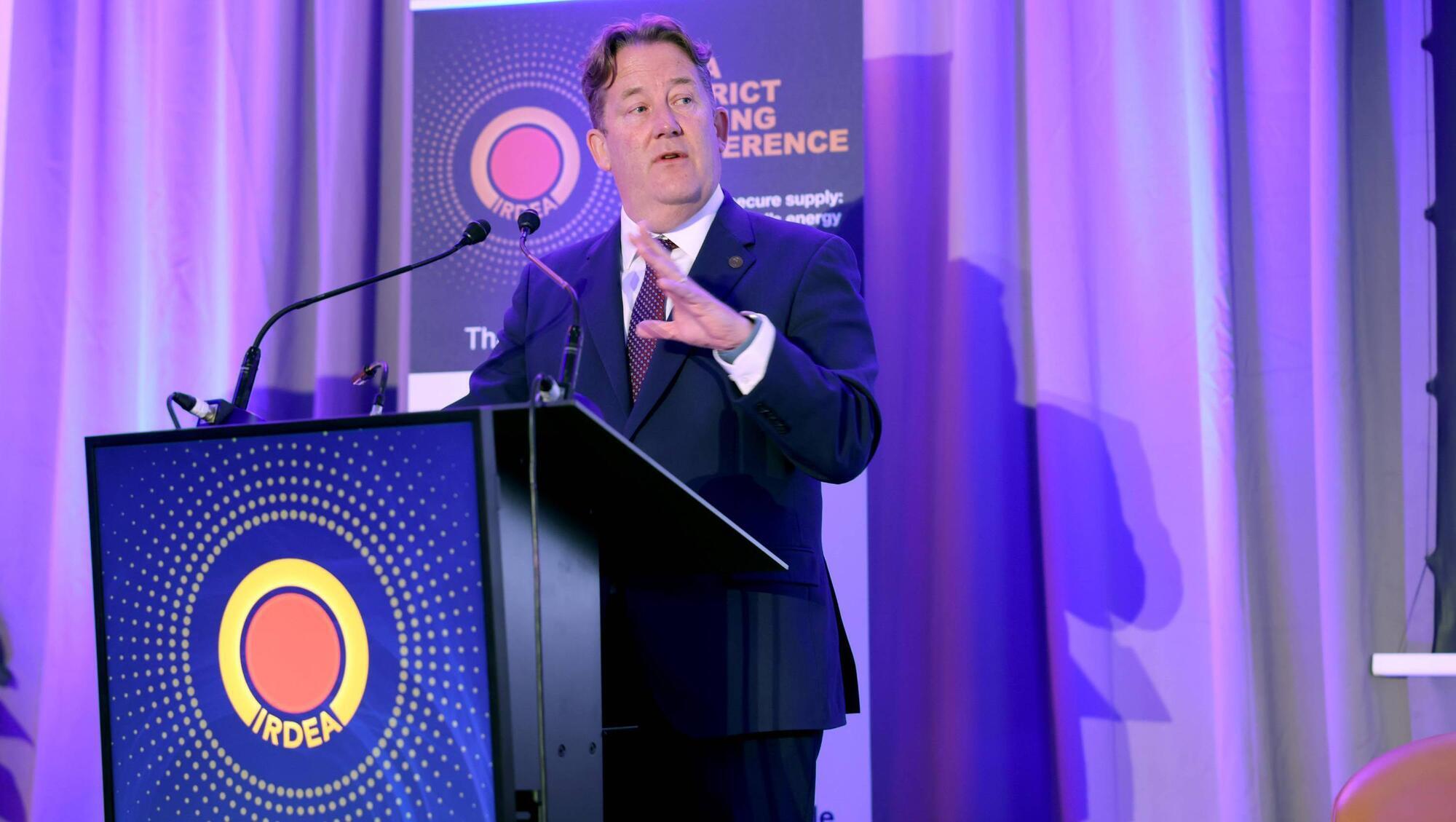
Climate, Energy and Environment minister Darragh O’Brien announced €5m in funding to support the pre-construction development costs of nine district heating projects across Ireland at the annual conference of the Irish District Energy Association (IrDEA) last month. Ireland's energy landscape prevents challenges - and opportunities, says AECOM's Channa Karunaratne. Picture: Jason Clarke.

Climate, Energy and Environment minister Darragh O’Brien announced €5m in funding to support the pre-construction development costs of nine district heating projects across Ireland at the annual conference of the Irish District Energy Association (IrDEA) last month. Ireland's energy landscape prevents challenges - and opportunities, says AECOM's Channa Karunaratne. Picture: Jason Clarke.

Ireland is transitioning from fossil fuels. With the provisions of the Heat Bill coming into effect next year, and with the nation still feeling the effects of volatile energy prices, how we heat our homes, workplaces, and public buildings is an issue.

The country is starting to embrace a potential solution: Networks that supply heat through underground pipes to nearby buildings, capturing otherwise wasted heat from industry and distributing it as a reliable, low-carbon, low-cost, local energy source.

The focus has been on Ireland’s cities, which have the highest concentration of buildings and the customers to make heating infrastructure financially viable.

However, if Ireland is serious about decarbonising and bolstering its energy security, it needs to look beyond its urban centres. The opportunity for heat networks extends to towns and villages, assuming the planning, investment, and local capacity are provided to bring them to fruition.

Ireland has begun to recognise this potential, with Darragh O’Brien, the minister for climate, energy, and environment, allocating €5m in September to support the delivery of nine district heating projects across seven counties — with AECOM having supported on the Monaghan project — and a further €100m of capital funding in the pipeline. This is a welcome start, but it should be seen as one of the first steps on Ireland’s heat network journey.

Ireland has challenges - and opportunities

Across Europe, heat networks are an established part of the energy landscape. By connecting multiple buildings to a shared heat source, they can make more efficient use of available energy.

However, there is no single European model that Ireland can straightforwardly copy. Its utilities landscape is more disparate than the UK’s, for example, while a far greater proportion of Ireland’s buildings rely on oil for heating, compared with the rest of Europe.

This presents challenges, but also creates opportunities. A locally focused approach could help identify where heat sources exist within reach of communities that could make use of it.

Some of Ireland’s most promising district heating opportunities lie in existing infrastructure. In particular, its 1,700 water and wastewater treatment plants could serve as the ideal starting point for the development of local heat networks.

For nearby towns and villages, this offers more than just an emissions reduction. It could provide access to locally sourced heat, reduce exposure to imported fossil-fuel prices, and support the development of new infrastructure.

At the same time, it could also help with demand flexibility and balancing the grid, while facilitating inward investment, jobs, and skills growth.

Other sources, including industrial processes, data centres, and large commercial facilities could also provide a starting point for local heat networks.

Laying the groundwork

Identifying opportunities is only the first step. The bigger one is turning them in to projects that can be financed, built, and operated.

Relatively few operational heat networks are in place in Ireland. Recent projects can help build the knowledge and confidence needed for the sector to grow: These include South Dublin Council’s pilot district heating scheme in Tallaght, which uses waste heat from a data centre; and major developments, such as the Poolbeg incinerator’s energy heating scheme.

We should be careful not to conflate the benefits of supplying large industrial or commercial ‘anchor loads’ with connecting homes and communities. A network serving a major heat user may have a different business case from one designed to supply households. Both can play a role, but they should be assessed on their own merits.

The Heat Bill provides an opportunity to establish a clear strategic direction for heat networks in Ireland. It should help create the certainty needed for public bodies, developers, energy companies, and investors to plan for the long term, while laying the foundation for a co-ordinated national approach.

Achieving this will also require close co-ordination with Ireland’s key utility providers, including ESB, EirGrid, and Uisce Éireann, as part of wider energy system planning.

As Ireland advances its heat network approach, strategic direction should recognise the diversity of the country’s energy landscape and the different needs of its communities.

Ireland has an opportunity to develop a heat network that reflects the diversity of its energy landscape: A mix of cities, towns, villages, industries, and public infrastructure, each with differing needs and potential.

A heat network will not always be the right solution. However, where a viable heat network can make use of locally available heat, support the decarbonisation of buildings, and deliver a long-term benefit to a community, we have the tools available to make it happen.

Channa Karunaratne is AECOM market sector lead for district energy, Europe and India.

More in this section

The Business Hub

Newsletter

News and analysis on business, money and jobs from Munster and beyond by our expert team of business writers.

Cookie Policy Privacy Policy Brand Safety FAQ Help Contact Us Terms and Conditions

© Examiner Echo Group Limited