How Northern Ireland is enjoying a Brexit boost 10 years after the vote
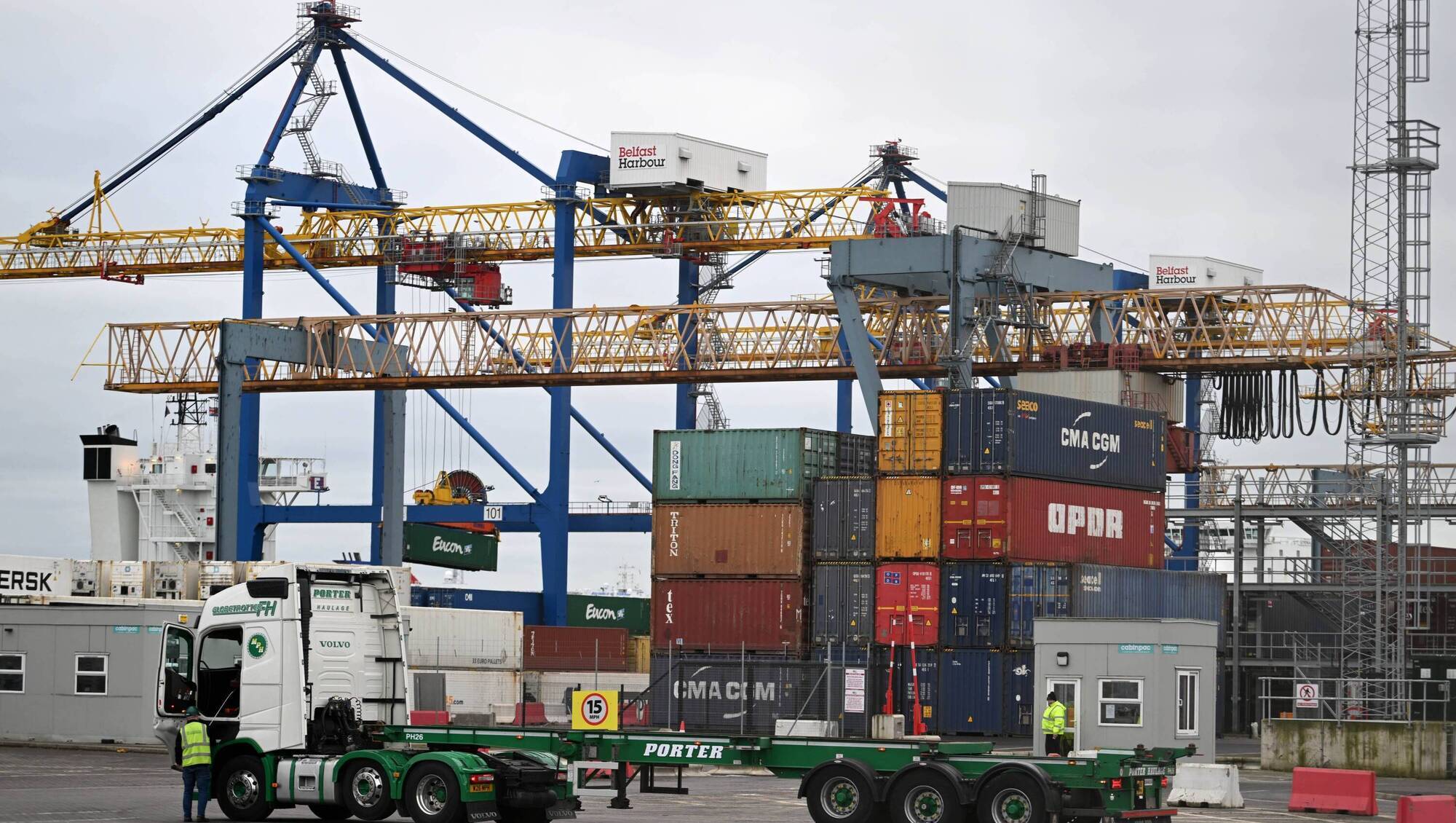
A report last year by ESRI found that 26% of Northern Irish exports in 2023 were sent to the Republic of Ireland, compared to 14.4% in 2015.
As Labour leadership contenders in the UK muse about rolling back Brexit, the one region that retained unfettered access to the European Union’s market for goods is thriving.
Northern Ireland has enjoyed bumper economic growth at twice the pace of the rest of the country in recent years, with many businesses getting the best of both worlds by having one foot in the British market and another in the EU one. And while violent protests over an asylum-seeker arrested in connection with a brutal stabbing attack in Belfast have prompted fresh criticism of the open border with the Republic of Ireland, there’s increasing evidence that the region’s special status is helping businesses there.
That’s the experience of Crushing Screening Parts Ltd in Maghera, which provides parts for rock-breaking equipment used in mining and quarrying. Ten years on from the seismic 2016 referendum on Britain’s EU membership, the local economy’s privileged access to EU goods markets has proved a boon.
“The Northern Irish economy is on the front foot for the first time in my lifetime,” said Michael McGrath, the company’s owner. “We’re in the world of machine breakdowns and people want machines fixed fast.”
McGrath said his company can deliver a hydraulic component to Berlin for 10am the next day with no paperwork, whereas rivals in Britain would have to use customs brokers and navigate bureaucracy in a process that might take them two days.
The Northern Irish statistics office estimates that economic output has grown 6% since 2022, more than double the 2.8% pace for the UK as a whole. The region has also seen bumper property price growth while the rest of the market stagnates, with house valuations up 7.4% in the year through February.
Meanwhile, consensus has grown among academics, politicians and voters that Brexit has damaged the UK. Bloomberg Economics has estimated that leaving the EU may have already cost the British economy between 2% and 4% of output over the long term.
With polls suggesting a majority of Britons want Brexit reversed, Labour politicians jostling to replace Keir Starmer as prime minister have talked up the prospect of much closer ties with the EU. Former health secretary Wes Streeting has argued for returning to the EU, calling Brexit a “catastrophic mistake.” Greater Manchester mayor Andy Burnham, who is seen as the front-runner to oust Starmer should he win a special election to re-enter parliament next week, has been more cautious, while conceding there is a case for it in the long run. Both men have said they’ll stand if a leadership contest is triggered.
Tax data suggest Northern Ireland is the only UK region to see an increase in the number of employees in the past 12 months, even as the wider labour market has weakened in response to a sluggish economy and tax hikes on businesses. McGrath said that when he speaks to investors, “one of the threats that I list out of my business is Britain getting back into Europe, which is a huge irony.”
Under the Brexit arrangements, goods produced in Northern Ireland that comply with EU rules can flow to Ireland and the wider 27-nation bloc without customs checks that have dogged businesses in the rest of the UK. The region was given special treatment in order to avoid jeopardising the Good Friday peace agreement that put an end to decades of sectarian violence in 1998.
The post-Brexit arrangements were controversial from the start, with Northern Ireland’s unionist parties baulking at the accommodation reached with the EU by then-prime minister Boris Johnson’s government, claiming it would effectively create a border in the Irish Sea. Even the Windsor framework, reached under his successor, Rishi Sunak, which eased some of those checks on goods between the region and the rest of the UK, failed to placate their concerns.
But the additional checks have also benefited some businesses in Northern Ireland, which have reaped work that would previously have gone to mainland Britain.
“That’s a lot of new manufacturing really has come in as a result of the barriers put up by the protocol,” said Roger Pollen, head of the Federation of Small Businesses in Northern Ireland. “Whereas in the past an awful lot of sandwiches that would been sold at supermarkets every day were made in Britain and shipped over, they’ve been won by a company in Northern Ireland.” Experts in the region stress other factors are at play, such as the catch-up effect after previously lagging the rest of the UK, as well as a booming Irish economy south of the border.
The shift has seen Ireland increasing in importance for Northern Irish firms. A report last year by ESRI found that 26% of Northern Irish exports in 2023 were sent to the Republic of Ireland, compared to 14.4% in 2015.
“The demand in Ireland is feeding into activity in Northern Ireland,” said Adele Bergin, associate research professor at the Economic and Social Research Institute in Dublin. “The recent performance in Northern Ireland I do think reflects catch up. It was very much starting from a lower base.”
On the flip side, firms have complained of lingering frictions in domestic trade, with the ESRI figures showing exports to Britain declining to a 51.4% share in 2023 from 59.3% in 2015. The FSB found 32% of businesses it polled in Britain had stopped trading with Northern Ireland due to the new trade burdens.
“One of the outworkings of Brexit has been trade diversion” benefiting Northern Ireland firms, said Richard Ramsey, professor at Queen’s Business School.
For now, business leaders believe the dual-market access is an opportunity that largely remains untapped by the government.
“The advantage that it could have created has not yet been capitalised upon,” Pollen said. While some existing businesses “are taking advantage of it, it’s not that it’s proved to be a great attractant for new businesses.”

CONNECT WITH US TODAY



Be the first to know the latest news and updates