Inflation could top 7% if Iran crisis deepens
AIB Economic Outlook Report expecting lower rate of 4% this year
Inflation could top 7% if Iran crisis deepens

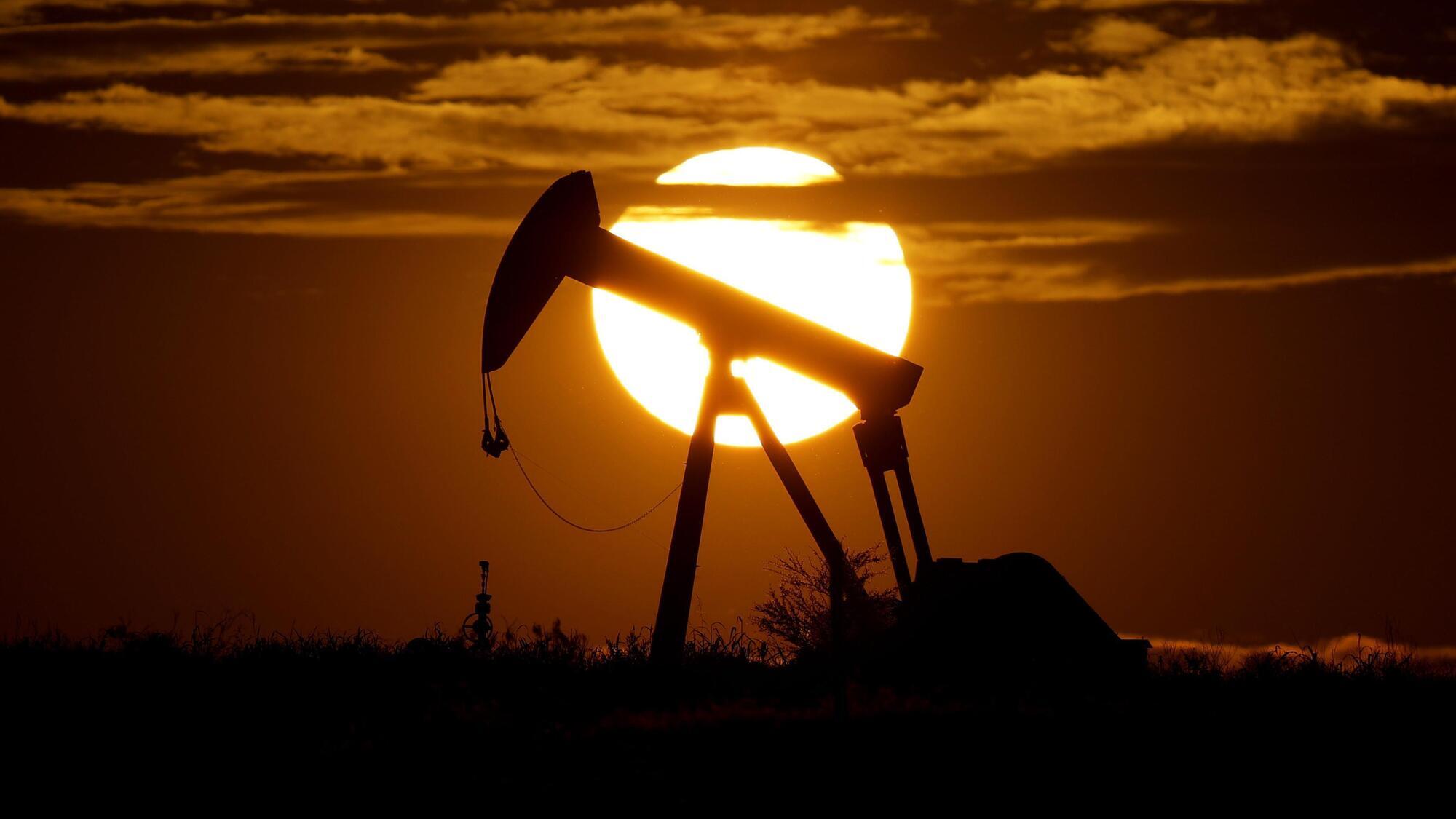
Ireland’s inflation rate could surpass 7% this year in a worst-case scenario if the oil crisis sparked by the war in the Middle East continues into the second half of 2026, a new report warns. Picture: AP Photo/Eric Gay

Ireland’s inflation rate could surpass 7% this year in a worst-case scenario if the oil crisis sparked by the war in the Middle East continues into the second half of 2026, a new report warns.

The AIB Economic Outlook Report for May published on Thursday said that geopolitical risks sparked by the conflict in the Middle East and the ensuing energy crisis are testing the Irish economy, with inflation continuing to rise. But the report does not believe the inflation shock sparked by the war in Ukraine in 2022 will be repeated, instead predicting oil prices to to fall steadily as the Strait of Hormuz slowly reopens in the coming months. 

"Our base case assumptions are for oil prices to peak in Q2 2026 and fall towards $85/barrel by end 2026 and around $70 by end-2027. We assume some modest second-round effects on core inflation and wages. However, in a scenario of a further surge in commodity prices from a longer lasting blockade on the Strait of Hormuz throughout the remainder of 2026, Irish inflation would peak at a much higher rate than our base case assumption of 4%," the report said.

"We consider a more severe scenario of oil prices reaching a peak of $150 per barrel, natural gas prices more than doubling to €100 per kwh; and non-energy prices, such as food and transport, reaching 6% by early 2027, from the current around 3% rate. This scenario would see Irish Harmonised Index of Consumer Price inflation reaching a peak of at least 6%-7% by end-2026, closer to the 2022 peak of 9.5%."

Irish grocery price inflation had stood at 6.5% over the 12 weeks to March 22, according to data published by Worldpanel by Numerator.

The report noted Government supports softening some of the inflationary shock, with “substantial fiscal buffers” built up to offset some of the impact of inflation. The report said in the longer term, Ireland has started to wean itself off fossil fuels but the economy remains highly exposed to price shocks. "Further progress in decarbonisation in Ireland could soften the blow of a future energy shock, leaving the economy less exposed to global market volatility," it said.

AIB chief economist David McNamara said the global macro backdrop has dimmed since the last Economic Outlook in November 2025. "The uncertainty created by the dramatic shift in US trade policy has eased for now, but the Middle East conflict threatens what has been a resilient growth picture,” said Mr McNamara. “Amid this volatility, the Irish economy has been robust, but we expect some cooling in growth in 2026 and 2027.

“For the domestic economy we expect an easing in growth next year, as ongoing uncertainty dampens both consumer spending and business investment growth. While the risks remain tilted to the downside, the Irish economy has shown remarkable resilience to global shocks in recent years, and the economy is still set to continue to outperform European peers.” 

Domestic economy still positioned for growth

Spending and investment are expected to slow down this year due to the Iran war but Ireland’s domestic economy remains positioned for growth. The AIB report predicts Irish modified domestic demand will grow by 2.7% this year, 2.6% in 2027, and 3.2% in 2028, a slight downgrade on the November 2025 report’s predictions.

The bank’s report says it expects that Irish households will ease their spending this year. However, it pointed to April 2026 data which showed that the number of transactions were up by 5% year-to-date in the first four months of 2026. 

The report expects some businesses may delay planned investments, particularly those in price-sensitive sectors. “Public and private sector balance sheets have low debt levels and high savings on aggregate. While economic risks are tilted to the downside, balance sheet resilience has continued to strengthen,” the report states.

It predicts the labour market will grow to 1.8% in 2026, 1.9% in 2027, and 2% in 2028, a slower growth than the 2.2% employment rise experienced in 2025. It acknowledged a sharp fall in tech sector employment, down 7% in the year to Q4 2025, could reflect AI-replacement in areas such as IT operations, coding, and software development.

"As the technology develops, there is a clearly a risk to an increasingly ‘white collar’ labour market in which nearly two-thirds of jobs could be disrupted to some extent by this emerging technology." 

x

More in this section

The Business Hub

Newsletter

News and analysis on business, money and jobs from Munster and beyond by our expert team of business writers.

Cookie Policy Privacy Policy Brand Safety FAQ Help Contact Us Terms and Conditions

© Examiner Echo Group Limited