UCC to build €60m University Business School on main Cork campus instead of city centre
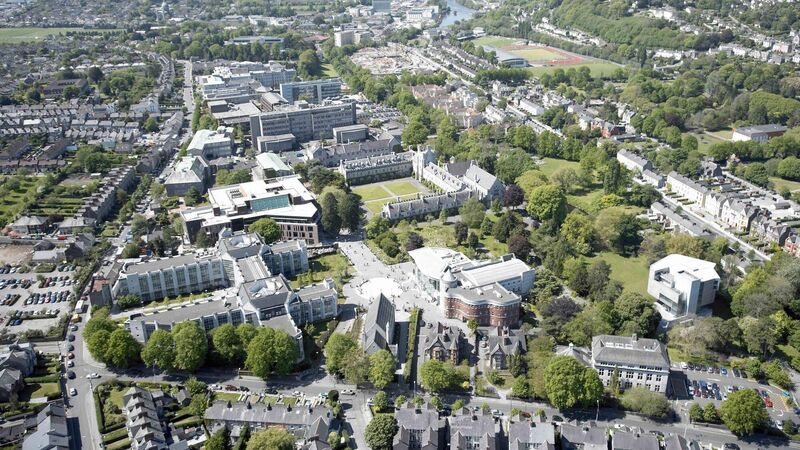
There are 2,500 trees across 42 acres on the UCC campus.
University College Cork (UCC) has announced that its new business school will be built on its main campus, with the chair of its governing authority, Sean O'Driscoll, confirming that it has stepped back from its initial plan to locate it in the city centre.
Launching its five-year capital development plan on Tuesday, Mr O'Driscoll said UCC will instead be investing €60m on its main campus for Cork University Business School (CUBS).
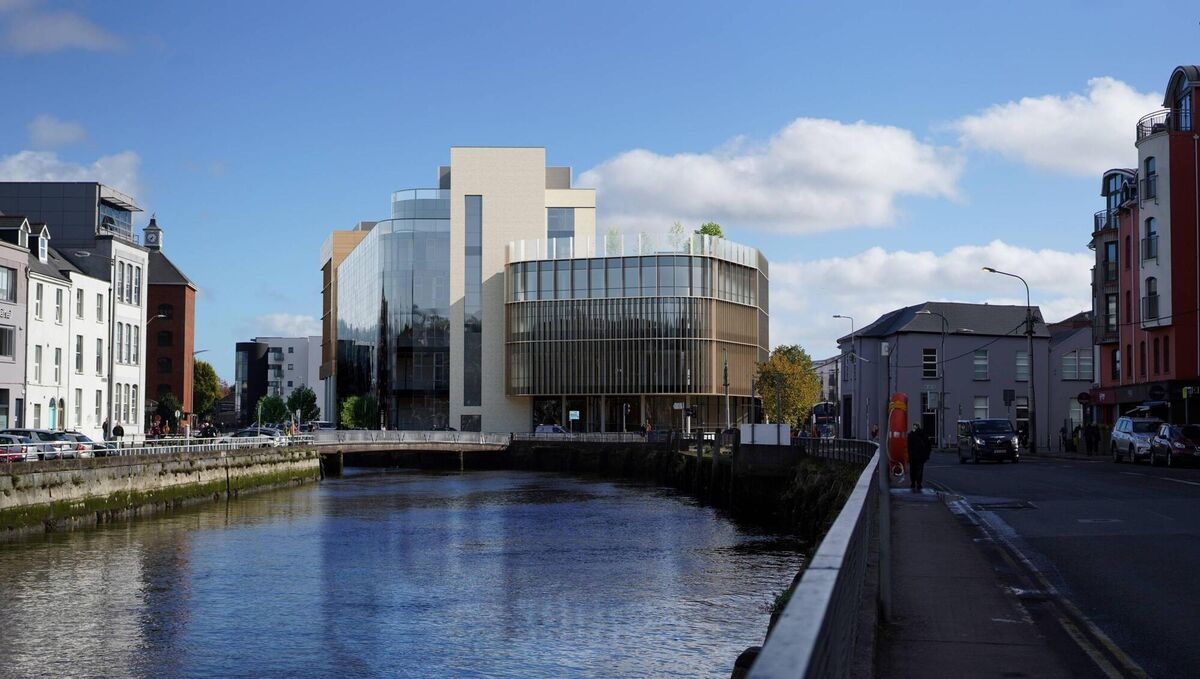
UCC was initially granted planning permission in April 2023 for a €106m business school on the old Brooks Haughton site on South Terrace. It would have seen around 4,000 students and 180 staff relocating to the city centre site from UCC main campus.
Speaking on the university's change of plan, Mr O'Driscoll told the "When we set out plans for the South Terrace site, it was aspirational.
"It was a very substantial monetary plan, a very ambitious plan, but it was aspirational because the money wasn't there for most of it.
"The concept of the business school was in a different time. The world has changed, the way teaching is delivered has changed, and inflation in the construction sector has been extremely high, particularly during and after the pandemic.
"If inflation runs at 7% every year, in a decade, that doubles the price of a project. The issue was not the business school itself; it was a cost issue that the university could not afford.
"Now, what's different about this plan is that all the funding is available. This is a business school that we can deliver."
CUBS is Ireland’s largest business education provider. In January, it obtained the “triple crown” of international business school accreditation, placing the school amongst the global elite in the top 1% of business schools worldwide.
Mr O'Driscoll said the feasibility study for the €60m new business school is currently underway, with several locations on main campus currently being looked at.
As for the South Terrace site, which UCC bought in 2019 for just over €17m, Mr O'Driscoll said the college was currently looking at all possibilities, including a potential sale of the site.
"Another option we are looking at is if it could be used for student accommodation. The university has 1,500 student bedrooms, and the strategic plan hopes to get that to 2,000.
"That site will be evaluated to see if it is feasible to deliver student accommodation. If not, it will be sold."
Mr O'Driscoll added that all options to increase its student beds by a further 500 are "actively being explored."
In addition to a new CUBS building, UCC's capital development plan also includes a €130m investment into the Tyndall National Institute, doubling its physical size and footprint. Mr O'Driscoll said this investment - €124m of which has come from a Government grant - represents the single largest investment in the history of the university.
UCC and the Tyndall Institute were granted planning permission in 2023 to redevelop the Distillery Fields site at Cork’s North Mall into a new purpose-built research facility, where the research centre's expansion will take place. It is understood that the expansion will ultimately cater for 250 postgraduate students and 750 staff.
The new development plan also includes a €60m investment to refurbish the Kane Science Building on the main campus, which originally opened in 1971.
UCC said that a full insulation wrap of the Kane will ensure it becomes more sustainable and energy efficient and "will serve as an exemplar of how retrofitting can be deployed in public buildings."
A further €20m will be invested into UCC's dentistry facilities, including the modernisation of the Cork University Dentistry School and Hospital, which sees over 23,000 patients a year.
Over €17m will also be invested in outdoor sports facilities, including a future sports park at Curraheen.
In addition, a joint UCC–HSE initiative will see the development of the UCC Clinical Medical School at Cork University Hospital (CUH), which the college said will address long-standing clinical education deficiencies while supporting national health system expansion.
As part of its digital strategy, UCC will also invest over €30m in digital infrastructure over the lifetime of the five-year plan, marking the largest capital investment in technology in the university's history.
"A strong and healthy UCC drives growth and this Capital Plan is tailored to recognise the significant rise in operating costs in recent years," Mr O'Driscoll said.
"Significant investment into Ireland’s future is been made through this plan."


CONNECT WITH US TODAY



Be the first to know the latest news and updates