Lagarde plays down impact of euro rally as ECB holds rates
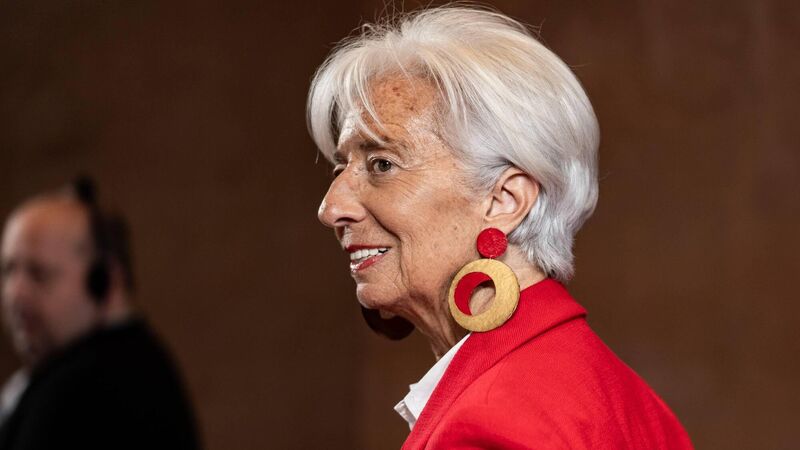
ECB president Christine Lagarde said the euro was in a 'good place'.
The European Central Bank kept interest rates unchanged, with president Christine Lagarde downplaying the recent euro rally and again describing inflation as being in a “good place”. The deposit rate was left at 2% on Thursday — as predicted by all economists in a Bloomberg survey.
The ECB called the economy “resilient” but did not offer guidance on future steps, reaffirming incoming data will steer decision-making.
Neither traders nor analysts see borrowing costs changing for the next two years. But heightened uncertainty over inflation and growth has returned of late as Donald Trump again wields the threat of tariffs and a firmer euro weighs on prices.
Ms Lagarde said officials discussed the common currency this week, reiterating they do not target a particular exchange rate. While acknowledging the stronger euro “could bring inflation down beyond current expectations”, she described risks to the inflation outlook as broadly balanced.
“The current range within which the euro relative to the dollar is evolving is very much in line with the overall average of that exchange rate between the euro and the dollar for as long as the euro has been around,” she told reporters in Frankfurt.
Other central banks are also on hold: The Bank of England kept its benchmark unchanged earlier on Thursday and the Federal Reserve sat tight last week. Both, though, are expected to cut rates further in the months ahead.
The euro steadied against the dollar around $1.1812. German bonds rose across the curve, following moves in treasuries and gilts, with yields on benchmark 10-year bonds down one basis point at 2.85%. Traders left bets on future ECB policy moves little changed, pricing about a 25% chance of a quarter-point cut by year-end.
The eurozone performed surprisingly well at the end of 2025 and should benefit from a spending splurge by Germany, as well as the region’s race to rearm. A retreat in inflation below the ECB’s 2% goal, meanwhile, is seen as only temporary.
Risks are mounting, however. The foggier outlook, particularly on tariffs, could curb investment and drag down growth, ECB executive board member Piero Cipollone cautioned last week.
That is one reason why policymakers need “full optionality” to react “quickly and decisively” if needed, Austrian central-bank chief Martin Kocher told Bloomberg TV.
Lagarde said while the region’s fiscal boost could fuel quicker-than-anticipated growth, challenges remain.
“The euro area continues to face a volatile global policy environment,” she said. “Further frictions in international trade could disrupt supply chains, reduce exports and weaken consumption and investment.”
CONNECT WITH US TODAY



Be the first to know the latest news and updates