Intriguing crossroads for the future of work, says Mac Giolla Phádraig
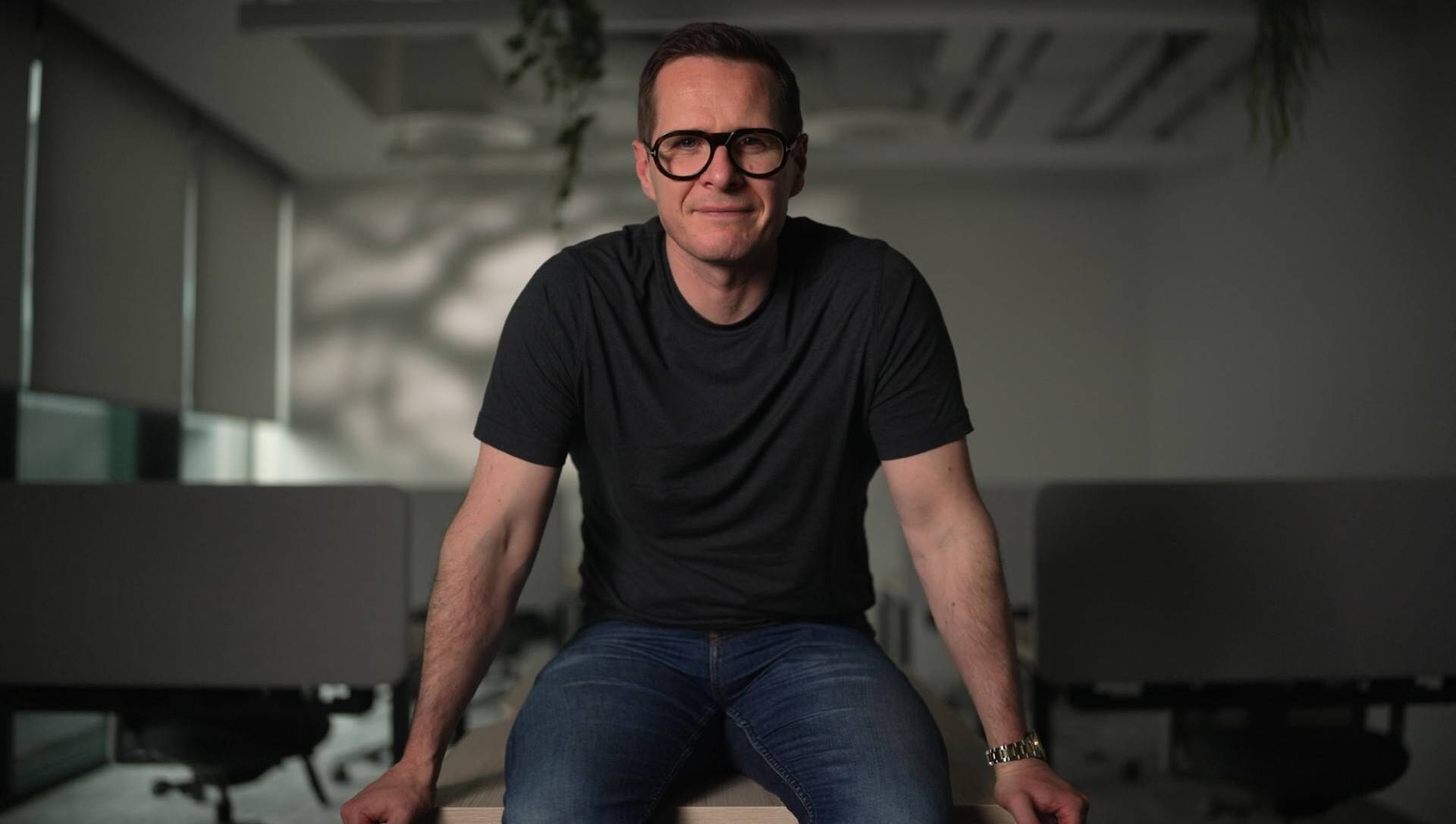
Robert Mac Giolla Phádraig, the founder of Talent Summit and former CCO of Sigmar Recruitment, says he has some concerns that the sheer urgency of the challenges that AI presents to the future of work may not be hitting home.
“There was a headline in Fortune Magazine recently,” says Robert MacGiolla Phadraig, in the tone of man who has been hoping for a while that the world might finally hear the penny drop.
“It said that since the launch of ChatGPT, new vacancies in the United States are down by 30%, yet the stock market is up by 70%. There is a nervousness in the market over who shares the value that AI creates, it’s a fundamental question for society; and, from that headline, it’s clear that it is shareholder value as opposed to employee value.
“I think there is a unique nervousness in the AI bubble, in the consumer bubble and mixed sentiment among employers about creating new jobs, because of the promise of productivity, even though it’s not been fully realised. We are at an interesting point.” The Fortune headline stands up to scrutiny. In early 2022 in there were over eleven million unfilled job openings in the United Sates and the Standard and Poor’s 500 stock market index was trading at around 3,800. By August of this year, job vacancies had declined to seven million while the S&P had climbed to almost 7000. These movements seem to representative of a global trend.
This stuff matters to MacGhiolla Phadraig, matters a lot. For most of his 25-year career has been an entrepreneur in the ‘employee’ space, careers were his product and many of his customers major multinationals and Fortune 500 companies.
And just like the rest of the world, he is currently spending much of his time currently gazing into a crystal ball and turning tarot cards, trying to predict an outcome to the ‘future of work’ conundrum. What new career and employment norms will emerge from the ongoing torrents of disruption caused by economic nationalism, artificial intelligence, and geopolitical tensions?
His career was built at one of the giants of Irish recruitment, who he joined in 2002 as a recruitment manager, was then part of the management buyout team (MBO) in 2009 and became the chief commercial officer of the new entity. Two years ago, he stepped aside to launch his latest venture, ‘Skill Stack,’ a skills and leadership development streaming platform.
During his Sigmar years he was at the pointy end of attracting FDI into Ireland, particularly from America and his approach could never be described as ‘passive.’ As well as doing the day job, Mac Ghiolla Phadraig led an annual Irish trade mission to the US, “Ireland, Gateway to Europe” which flies over one hundred domestic business leaders to the States to boost bilateral trade and investment. He co-founded the Boston College Ireland Business Council, one of the most respected transatlantic CEO networks, and then, in his spare time, founded the ‘Talent Summit,’ one of the largest HR Leadership conference series there is.
Given the growing imbalance in the allocation of new productivity value between capital and employee, what does he feel are the medium and long-term ramifications for the recruitment industry in Ireland?
“Recruitment is an essential industry for the economy,” he replies, unhesitatingly. “There is something very, very clean about the transaction and the problem that recruitment companies solve is a very acute need. It’s a painkiller for the companies. Talent has been a top priority for every CEO for the last 25 years and with low barriers to entry it can be very easy to stand apart. It’s a cash generative business with a real purpose but people used say to me that it’s only a ‘transactional service’ as if that was a bad thing.
“We create value-add for a client and they share that value-add through paying a fee. To be paid for the value, you can show you created is a good thing. We have created wonderful players in the Irish recruitment market and I’d do it all again in the blink of an eye.”
Although now at arm’s length now from the day-to-day recruitment business, he still feels a chill breeze blowing through his old stomping grounds. He acknowledges that while there is good GDP growth and strong business sentiment among the investment community, on the ground, there are serious challenges.
“There are less job placements happening and there is hesitancy in the sectors where people feel there are high levels of automation possible,” he says. “I think much of the nervousness is among current ‘in-role’ employees. With less job churn, revenues are less certain. When barrel-making was automated it was said to be a good thing for brewers, but that didn’t matter to the coopers. There are employees whose jobs will be impacted and there is no certainty that they can reskill in a timely fashion to do tomorrow’s work.”
In times like this, you can shine a beam or curse the darkness and Mac Ghiolla Phadraig has chosen to reach for a light switch. His latest venture, Skill Stack, which he describes as “a place where learning meets entertainment”, curates blended leadership development skills in impactful short-form video storytelling.
“When I left Sigmar, I felt like I was leaving a great band to record a solo album, but I’m excited to do it,” he continues. “Transformation is the only certainty we know, but with this level of transformation, people feel that there is a fine line between trust and transformation. It’s a leadership question and the micro skills needed for decision-making.
“Understanding that leadership is an action not a function or a job title. To understand that goal-setting is an adventure and not just something that’s forced upon us. How are leaders making legitimate decisions and how are those decisions impacting the stakeholders around them?”
The new solo album is full of new songs on old themes, but he is determined to reach the top of the charts. Asked to feed forward ten years and look back, what does Mac Ghoilla Phadraig feel are the key skills needed now to prepare leaders for an upcoming decade of monumental change?
“I’d start with commercial acumen. Everyone will need to create value and share that value with customers, this is an example of an evergreen skillset. Another is the ability to think. Creative thinking is the root of all innovation and critical thinking which combines a deep understanding of the power of questioning. How to question is the root of all understanding, the root of problem-solving, the root of curiosity. Then decision making. How do we achieve legitimacy in all our decisions and how does that decision impact those around us? Decisions have outputs and we often rush them.”
He has some concerns that the sheer urgency of the challenge may not be hitting home, particularly with younger entrants to the workplace. He references Denis O’Brien ruffling some feathers recently when remarking at a conference that ‘one of the troubling issues we face is a decline in our work ethic and ensuing lower productivity and that we are fast reaching a situation where Irish graduates have become entitled in the way they dictate their work practices to employers.
O’Brien also returned to his constant bugbear, remote and hybrid working: “Everyone knows it was a mistake but won’t admit that the system is mostly being gamed,’ he said.
Mac Goilla Phadraig can see his point of view and chuckles as he recounts a discussion panel he attended with new and recent graduates.
“One of them said they like to go out for a drink on Thursday and have Friday off,” he recalls, eyebrows arched. “I was shocked, but in another way, not shocked at all. I asked them what they thought of O’Brien’s comments about the new entitlement of graduates. The answer I got was that they believed that he was 100% right. That what he said was exactly what graduates want. And that employers need to get with it and understand what this generation wants.
“I was shocked, honestly. You might say it is confidence or maybe you might say that it might even be arrogance. There are some definite intergenerational challenges, but they need to be careful. The primary intent of AI is not to create a better work-life balance for graduates.”
Or, to put it another way, they need to create some silence where they can hear a penny drop.
CONNECT WITH US TODAY



Be the first to know the latest news and updates