Job interviews: Pros and cons of in-person versus video
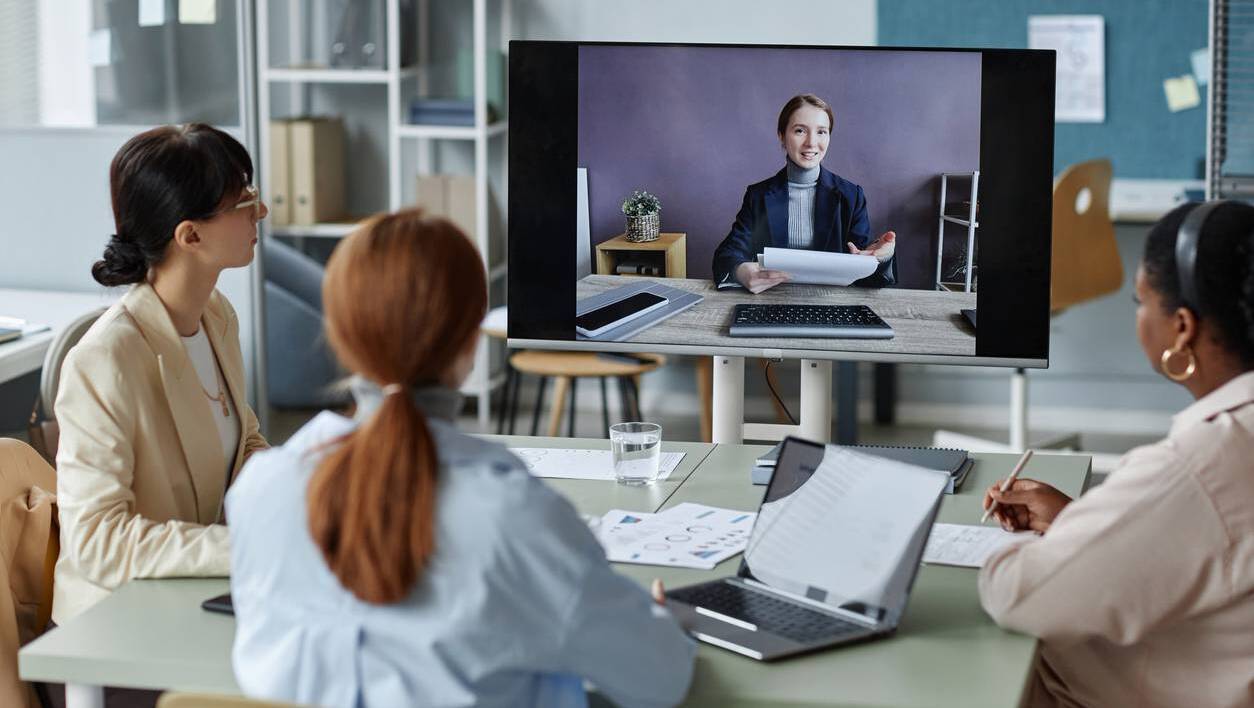
Video vs in-person interviews: “Much depends on the role. If someone is being recruited for a very technical position, then Zoom or Teams can be brilliantly efficient. But if they are being hired to work in a team, then in-person is ideal.”
“Get a job.” It’s a phrase many a young person hears echoing around the walls at home. Usually, it’s levelled in their direction by parents worn down by incessant requests for funds.
As demands go, it’s reasonable enough. But it might be harder to achieve now than it was a year ago, given that November CSO figures confirmed unemployment at 5.3%, the highest level in four years.
Job searching is best not done in a vacuum. Those registering with recruitment agencies receive specialist advice on roles and career progression, insights on the salary package to aim for, and personalised support to improve their CV and interview performance.
According to Niall Murray, managing director at Collins McNicholas, candidates regularly underestimate how much preparation matters. “Tailoring your application, understanding the company culture, and being ready for interview questions can transform your chances of success,” he says.
In a tightening labour market, it’s crucial for jobseekers to do everything they can to get themselves an invitation to interview. Only there can they look their potential employers in the eye and gauge on an intuitive level if they’re people they’d enjoy working for.
Getting that far is no mean feat in a world in which the AI doom loop sees candidates using machine intelligence to mass-apply for jobs, and companies using the same thing to mass reject applicants without human review.

In the UK, the Tribepad platform received 48 applications per job last November, a 286% rise on the previous year. Here, recently published IrishJobs research indicates that the average number of incoming applications per role – for most companies – is a modest 20, with 12 of those progressing to screening stage and five to interview.
Of those eliminated at screening stage, lack made all the difference. For 68% that factor was skills. For 55% it was relevant experience. These are valid reasons for exclusion and beyond the jobseeker’s control. The same can’t be said of the 22% screened out due to unexplained gaps in their employment history, or the 21% who submitted applications that were poorly formatted – clarity and careful presentation being factors every candidate can make time for.
They might do that by meticulously crafting their cover letter and CV themselves, or by leaving it to AI. Either way, Niall Murray would be neither phased nor surprised.
“AI impacts every business,” he says. In recruitment, we see new AI tools every week that are designed to cut down on administrative tasks. Some look good. Some are yet to be proven. But it’s impacting our industry and if it can help with repetitive tasks – and it can – then it’s useful, as that leaves us with more time to meet with people.”
Murray has encountered candidates who read text off screens during the online interview process. Of that he says: “Don’t do it. If you are not prepared, don’t imagine that reading content off another screen won’t be distracting. It will be and because it can be confusing and the interview will notice, it’s guaranteed that if you do this, you will lose far more than anything you can gain.”
On the vexed question of whether a cover letter is necessary, he says: “It’s a necessary evil. But you have to have one.”
Research from online career platform Zety supports his point: The vast majority of recruiters expect a cover letter and frequently reject candidates when theirs falls short of professional standards.
As for cover letter content, a Zety spokesperson recently told Forbes that recruiters are looking for relevant experience and communication style. This is only to be expected. But the third factor sought is somewhat surprising: A referral mention or some other sign of personal connection.
Length matters as well. Almost half the recruiters polled in the Zety survey said their preference was for letters half a page in length.
According to CSO figures released in July, approximately 18.7% of people aged 18 years and over reported being diagnosed with a specific neurodiverse condition, or suspected they were neurodiverse. With this in mind, how can interviewers best accommodate the needs of those sitting opposite them.
“Organisations are making allowances,” says Murray. “Many are inviting applicants with additional needs to let them know.”
Does he believe invitations of that sort are indicative that the company genuinely welcomes diversity? “It’s good if the organisation asks,” he replies, “and because it’s happening more, it shows organisations are becoming more open to accommodating neurodiversity.”
This is welcome news indeed, particularly for the many who feel uncomfortable sitting across a table from an interview panel. Of the methods of accommodation being used by more progressive companies, Murray says some arrange ‘walking interviews’ on the factory floor.
“This is a great idea, particularly if the new hire will be working in that space, and if they might be uncomfortable at a desk meeting. Instead, the interviewer and the candidate can point out and talk machines as, walking side-by-side they pass them by.
Of course the benefits of these sorts of meetings extend beyond accommodating neurodiversity. In Murray’s opinion for anyone looking to hire an engineer, a walking interview around their factory is always a good idea.
“I know of a recent interview of that nature which went on for 45 minutes and was followed by a sit down informal chat,” he says. “That combination proved successful for both the employer and the candidate.”
Referencing an interview for a creative marketing role that took place during the course of a walk around a park, he says: “In my view, a combination of online and in-person interviews is best practice.”
As for the order, he says if the role is very detailed, it’s good to go with in-person initially. “Later, if someone else in the organisation wants to ‘rubber stamp’ the preferred candidate, an online interview can be arranged for that,” he says.
On the benefits of online versus in-person interviews, he says: “Much depends on the role. If someone is being recruited for a very technical position, then Zoom or Teams can be brilliantly efficient. But if they are being hired to work in a team, then in-person is ideal.”
How many interviews are too many?
“Anything beyond three,” he replies. “I don’t see the logic in having five or six. That’s not an efficient use of anyone’s time. But it happens nonetheless.”
With nearly thirty years as a highly respected recruiter, and a clutch of business, CIPD and psychology qualifications to his name, it’s no surprise that Murray’s focus remains on his team and the service they provide. “What sets us apart,” he says, “is our ability to source talent that’s hard to find.”


CONNECT WITH US TODAY



Be the first to know the latest news and updates