How Gen Z is redefining workplace wellbeing
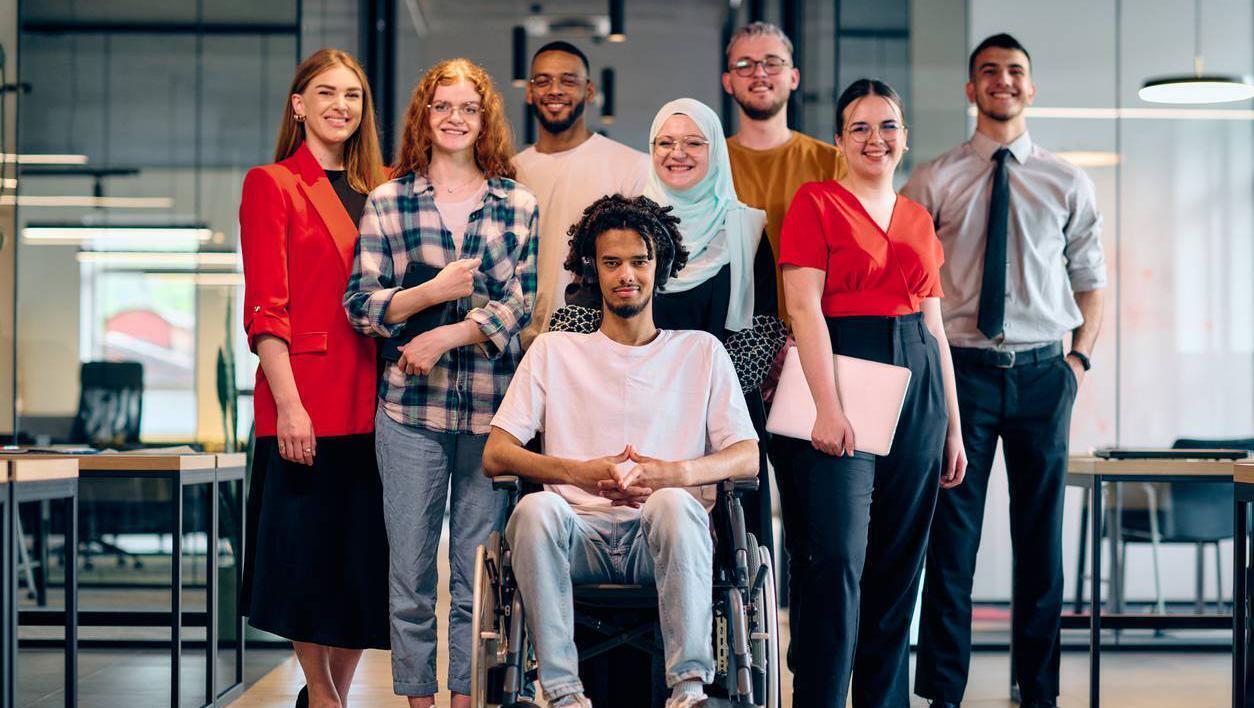
Workplace priorities: Research shows that the current generation of workers want an inclusive, welcome workplace, with flexibility around hybrid working. Four in five employees prioritise work-life balance. Autonomy and flexibility are now valued as highly as an 8% pay rise.
As Gen Z enters the workforce, this digital savvy, environmental and diversity conscious generation is driving change in workplace values and culture and pushing organisations to keep up.
To do that, Sandra Healy, founder and CEO of inclusio – a gamified platform capturing people and culture data – says to attract the next generation, leaders need to move beyond slogans and focus on evidence.
“Young talent wants flexibility, belonging, clear career progression and leaders who role-model trust and accountability,” she says. “They expect organisations to measure culture and to be authentic about it by addressing issues openly and showing the impact of their actions.”
One in five employees are walking away from their jobs because of poor workplace culture.
Of this, Healy says: “That is an enormous loss of talent, institutional knowledge and productivity and it is entirely preventable. In times of uncertainty, culture becomes the anchor. But right now employee sentiment is shifting fast and expectations have fundamentally changed.”

Noting that flexibility is now a core cultural expectation, she says: “The ongoing push-and-pull around hybrid and remote working is eroding trust on both sides. Lack of flexibility is repeatedly cited as a major driver of disengagement. Gallup’s latest global report shows that in the UK, only one in 10 workers feel engaged. This is one of the lowest rates worldwide.”
According to a large-scale survey by Randstad, work-life balance has become the top motivator for employees globally, surpassing pay for the first time. Trust between employers, managers and talent remains in contention, with one in three employees not trusting their managers to have their best interests in mind.
Employees are increasingly refusing to tolerate toxic workplaces. Workmonitor 2025 shows that 44% have quit for that reason, reflecting a 33% increase on the previous year.
“Research shows that four in five employees prioritise work-life balance,” says Healy. “Autonomy and flexibility are now valued as highly as an 8% pay rise.”
According to Deloitte research, while Gen Z and millennials value career growth, they’re often less motivated to pursue leadership roles, choosing instead to focus on work-life balance and on learning and development opportunities. While earning is important to them, so too is wellbeing and meaningful work. They’re searching for careers with the right balance of these factors, a ‘trifecta’ that can be hard to find.
Healy says Gen Z is reshaping workplace culture in a very intentional way. They are clear about boundaries, wellbeing, and purpose, and they expect organisations and leaders to uphold their values. In her view, they will not tolerate poor culture or rigid ways of working.
Quoting inclusio data, she notes: “Gen Z wants transparency, psychological safety and workplaces that genuinely support balance and belonging. Right now, only 72% of employees say they see a clear and fair career path ahead. This gap is even more pronounced for this generation who expect visible progression and fair promotion decisions.”
Their influence extends to education. As Healy says: “Our Insurance 2025 sector benchmarks found that while four in ten employees are first-generation university graduates, that figure rises to close to five in ten among Gen Z.”
Advising that this cohort also stands out in terms of neurodiversity, with one in four identifying as neurodivergent, she says: "This reflects a growing openness and a need for cultures that prioritise psychological safety, inclusion and supportive team dynamics.
“Overall, Gen Z is accelerating a shift toward workplace cultures that are inclusive and trust-based. inclusio findings indicate that career development conversations, planning and opportunities are critical for retaining this group.”
Irish poet and philosopher, John O’Donohue, wrote that the hunger to belong is at the heart of our nature. His insight is now playing out in the workplace, with a feeling of belonging being one of the strongest predictors of retention.
“Half of employees say they would consider leaving if they don’t feel they belong,” says Healy. “inclusio data confirms that belonging is deeply tied to team dynamics, manager quality and wellbeing and that it has a direct impact on team collaboration, innovation and productivity.”
Acknowledging that neurodivergent employees report much lower levels of belonging and wellbeing, she says: “For this cohort, psychological safety and strong manager relationships are critical for performance and retention.”
Elaborating on the theme of psychological safety, Healy says that while it may be deemed by some to be a soft concept, it’s anything but. “It’s a proven driver of productivity, performance and innovation,” she says.
Findings by the McKinsey Health Institute, published in the World Economic Forum’s Thriving Workplaces report, suggest that investing in employee wellbeing could boost the global economy by $11.7 trillion.
“Wellbeing is deteriorating and culture is the cause,” says Healy. “Globally, only 22% of workers say they are thriving. Stress, loss of purpose and declining satisfaction are dragging wellbeing down. Leadership behaviours and day-to-day culture determine whether employees feel safe, trusted and able to perform at their best.”
These trends don’t exist in isolation. Wider generational divides in society are now increasingly reflected within workplaces. Recently published European Consortium for Political Research (ECPR) findings show that in Europe, the difference in far-right support between young men and women is roughly double that of middle-aged and older cohorts.
In 2024, 21% of young men expressed support for far-right parties. For women of the same age group, that figure was just 14%. Their research shows that the growing gap in far-right support between young men and women appears to be a distinct, generational phenomenon, one that is most pronounced among Gen Z.
This shift is being felt in workplaces across Ireland, with one in four employees reporting increased far-right sentiment and three in four observing discrimination. “These dynamics fracture trust, damage psychological safety and accelerate attrition,” says Healy.
As for culture being a business-critical factor, Healy says: “Financial regulators are no longer treating this factor as a ‘soft’ concept, but as a core indicator of organisational risk, performance and employee trust. Unless organisations actively measure and address their challenges in this area, they will continue to lose one in five employees. Not because people want to leave, but because the culture gives them no reason to stay.”
As for why she founded inclusio, Healy says: “For years, leaders told me, ‘We can’t measure culture, so it isn’t a priority.’ But culture can be measured, scientifically, consistently and at scale. I founded inclusio specifically to solve this gap."


CONNECT WITH US TODAY



Be the first to know the latest news and updates