Davy: Tariff threats will slow Irish economy but not derail it
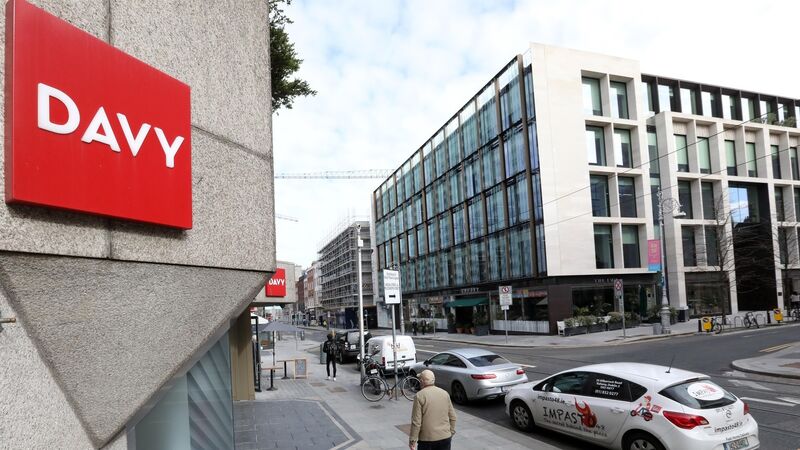
A report by Davy said that the Irish economy has proven itself very resilient throughout numerous economic shocks over recent years. Picture: Sasko Lazarov/RollingNews.ie
It is unlikely that the new US tariffs will derail the Irish economy as it has proven to be “adept and agile at navigating external shocks” in recent years but a temporary slowdown in growth is expected, a new report by Davy has found.
On Wednesday evening, US president Donald Trump outlined the tariffs he would be implementing on countries around the world with the EU being hit by a 20% tariff. As a small open economy which depends heavily on trade between the EU and the US, Ireland is very exposed to a potential trade war between the two major economies.
The EU is expected to outline their retaliatory tariffs later this month.
The report, authored by the company’s chief economist Kevin Timoney, said the tariff developments “will potentially lead” to a recession in the US and a slowdown in the global economy which “had been expected to grow by about 3% in real terms this year”.
The Irish economy is expected to slow down as a result of these tariffs but it has a “number of favourable structural advantages” which positions it “well to navigate a very challenging global economic backdrop in 2025”.
“These include a very well-educated workforce, EU single-market access, a business-friendly environment and a strong and improving financial balance sheet,” the report said.
The report added that any slowdown is also likely to be temporary.
This assessment was based on the economy’s resilience when faced with several economic shocks over the last few years including Brexit, the pandemic, and the cost-of-living crisis.
However, a downside risk is that slower global economic growth and profitability could mean smaller tax liabilities for the handful of companies paying a large majority of Ireland’s corporation tax.
The report noted that the main risk to the Irish economy continues to be internal challenges such as the housing crisis and infrastructure shortfalls.
While the report is buoyant on the prospects for the Irish economy, considering the negative impact of the tariffs, it does say the pharmaceutical sector and the food sector are most at risk from tariffs.
The report assessed the risk that pharmaceutical operations might be reshored to the US. Mr Trump’s tariffs excluded pharmaceutical products but these could be implemented in a sector-specific tariff in the near future.
“To help avoid US tariffs, pharmaceutical companies could seek to rearrange their production process somewhat such that more profit accrues to their US-based operations,” the report said, adding that these companies are unlikely to cease their Irish operations entirely.
“Overall, it looks challenging for the US economy to sustain a re-shoring of operations in a lasting way. This is mainly because of its considerably higher labour cost base for the US compared to Ireland. We estimate a like-for-like measure for this that ranges from 50-60%,” the report said.
“Furthermore, Ireland’s very high share of employment with third-level education is considerably above the equivalent level in the US and the EU.”
Davy added that a loss of corporation tax paid by pharmaceutical companies in Ireland looks increasingly likely but this will not necessarily have a corresponding effect on the real economy, measured by national income.
CONNECT WITH US TODAY



Be the first to know the latest news and updates