Inflated debt ratings ‘costing African countries billions’
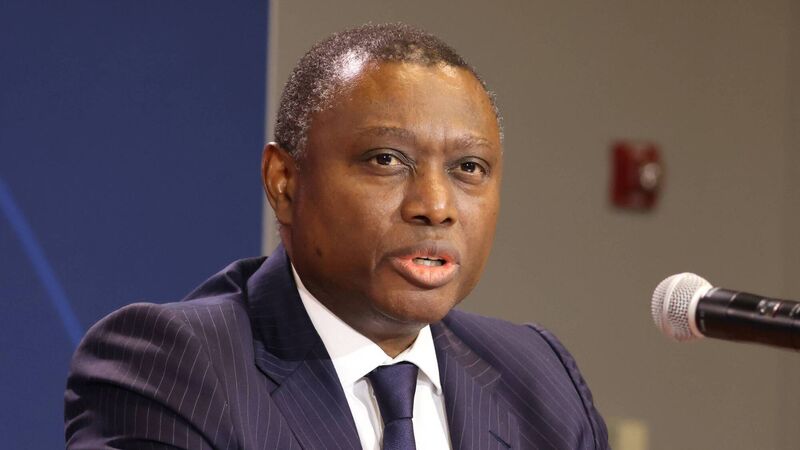
Bank Group Ltd chief executive officer Sim Tshabalala described the added costs as 'preposterous' and 'unconscionable'. Picture: Tasos Katopodis/Getty Images for Prosper Africa

Limited-time offer
SUBSCRIBEAfrican countries face higher costs of financing because of inflated risk perceptions from credit-ratings companies, the head of the continent’s biggest bank said.
A United Nations Development Programme study last year showed that subjective risk assessments by ratings companies resulted in $75bn (€69.4bn) of added costs and foregone revenue by African countries, Standard Bank Group Ltd chief executive officer Sim Tshabalala said at a Future Investment Initiative Institute conference in Riyadh yesterday.
He described the added costs as “preposterous” and “unconscionable”.
“This perception issue does make a massive difference and needs to be addressed,” he said.
Mr Tshabalala’s remarks echo growing calls in Africa for changes to the way credit-rating companies assess risk on the continent, with leaders including Senegal’s former president and Zimbabwe’s finance minister calling for the creation of a pan-African agency.
The African Peer Review Mechanism, African Development Bank, African Export-Import Bank, and African Union Commission have announced plans to ensure such an entity is rolled out next year.
Even when African countries have similar ratings to countries elsewhere, they end up paying more for debt, with loans subjected to credit spreads that are much wider than warranted, said former Senegalese economy minister Amadou Hott.
In some instances, African nations pay as much as 500 basis points more for debt than other sovereigns that have the same rating, he said, citing an unspecified study of 15 countries on the continent.
“When the other country pays 5% on a bond, African governments pay 10% on the bond,” he said.
“500 basis points over 20 years on a $1bn loan is another $1bn of extra cost”, which can increase countries’ debt vulnerability if left unaddressed, Mr Hott said.
Mr Tshabalala cited the examples of South Africa and Denmark, which he said have divergent ratings despite having similar institutions, policies, and processes; while the Nordic country is rated AAA, South Africa has a full house of junk ratings.

Unlock unlimited access and exclusive benefits
Already a subscriber? Sign in
Cancel anytime
CONNECT WITH US TODAY
Be the first to know the latest news and updates

Newsletter
News and analysis on business, money and jobs from Munster and beyond by our expert team of business writers.
Newsletter
News and analysis on business, money and jobs from Munster and beyond by our expert team of business writers.
Newsletter
Keep up with stories of the day with our lunchtime news wrap and important breaking news alerts.
Newsletter
Sign up to the best reads of the week from irishexaminer.com selected just for you.
Friday, April 3, 2026 - 7:00 AM
Thursday, April 2, 2026 - 10:00 PM
© Examiner Echo Group Limited