Eurozone consumer prices ease slightly but Lagarde says ECB's work 'is not done'
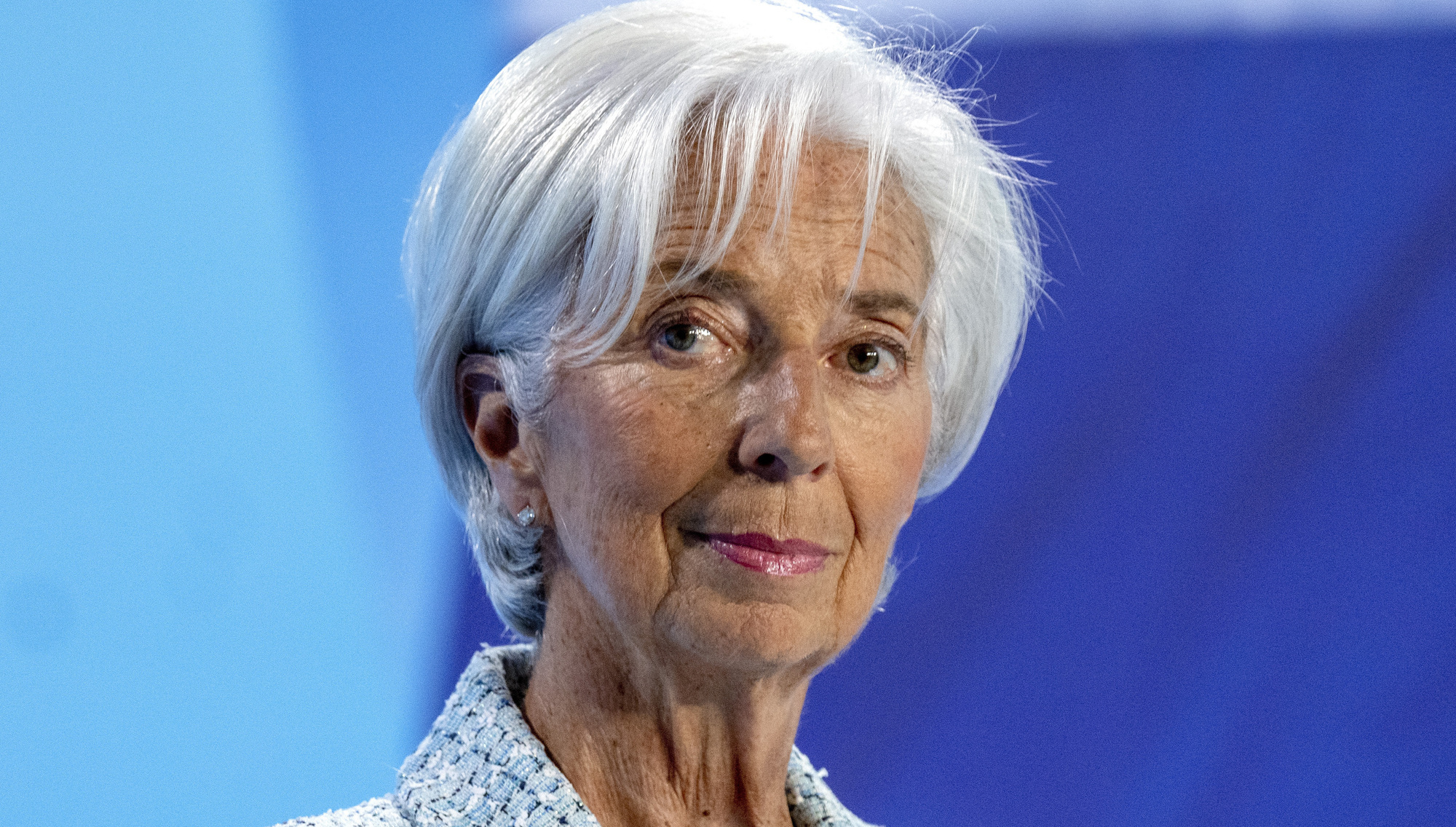
ECB president Christine Lagarde: 'We need to remain vigilant.' Picture: AP/Michael Probst
The European Central Bank (ECB) doesn’t yet have sufficient evidence that inflation threats have passed, president Christine Lagarde and her top economist said — feeding expectations that officials will take a break from cutting interest rates this month.
With the eurozone job market robust, the ECB has time to assess incoming information, Ms Lagarde said Monday in Sintra, Portugal, where she opened the ECB’s annual central-banking forum.

Speaking to Bloomberg the next day, ECB chief economist Philip Lane said June’s inflation reading won’t be enough to fully evaluate closely watched services prices.
“We are still facing several uncertainties regarding future inflation, especially in terms of how the nexus of profits, wages and productivity will evolve and whether the economy will be hit by new supply-side shocks,” Ms Lagarde said. “It will take time for us to gather sufficient data to be certain that the risks of above-target inflation have passed.”Â
The remarks suggest a preference for keeping borrowing costs unchanged when the ECB meets later this month. Since June’s initial cut, investors have been looking to Ms Lagarde for indications of how quickly rates will be lowered — and whether the political drama in her homeland will sway monetary policy in any way.
Monday’s speech doesn’t mention France — nor does it offer specific guidance on the ECB’s path ahead, with Lagarde reiterating her commitment to making decisions as data arrive.
“The strong labour market means that we can take time to gather new information, but we also need to be mindful of the fact that the growth outlook remains uncertain,” she said.Â
Ms Lagarde said officials’ assessment of the inflation outlook is “informed by, but not limited to, our projections” — pushing back against speculation among analysts that the ECB will only consider changing rates at the quarterly meetings when new forecasts are available.
She also stressed that policymakers won’t be thrown off course by any one particular piece of information, having highlighted in the past that the road back to 2% will be bumpy and may include temporary setbacks.
“While the flow of new information constantly adds to and improves our picture of medium-term inflation, we are not pushed around by any specific data point,” Ms Lagarde said. “Data dependence does not mean data-point dependence.”Â
The Bank for International Settlements warned Sunday that central banks should be cautious in lowering rates too rapidly, to avoid inflation flaring up again. Ms Lagarde agrees. “Our work is not done,” she said. “We need to remain vigilant.”Â
Meanwhile, eurozone inflation slowed in June — adding to evidence that price pressures are gradually moving toward the ECB’s 2% target.
Also, consumer prices rose an annual 2.5% last month, down from 2.6% in May and in line with the median estimate in a Bloomberg survey of economists. A measure excluding volatile items such as food and energy unexpectedly remained unchanged at 2.9%.
After trimming interest rates by a quarter point in June, officials are determining whether inflation for the 20-nation currency bloc is moderating enough to allow further cuts.Â
“What we definitely know is that the last mile — or kilometre, here in Europe — is going to be bumpy and difficult,” ECB Governing Council member Gediminas Simkus told CNBC on Tuesday.Â
“We had an increase in May of inflation. Now it dropped a little bit.” The ECB predicts inflation will move sideways for most of the rest of 2024 as base effects wash out of the statistics. It sees more meaningful moves toward the target next year, with the goal reached by end-2025.
Bloomberg Economics’ Nowcast for July points to a reading of 2.3%, taking the latest data into account. It correctly predicted June’s outcome.
Ms Lagarde will get another opportunity to comment on price trends and the path for monetary policy during a panel discussion, which included Federal Reserve chair Jerome Powell and Roberto Campos Neto, who heads Brazil’s central bank.
Elsewhere, global policymakers aren’t about to let the Federal Reserve’s delay in cutting interest rates distract them too much from their own easing efforts.
Among the 23 of the world’s top central banks featured in Bloomberg’s quarterly guide, only the Bank of Japan won’t end up lowering borrowing costs within the next 18 months. Most are already set to do so this year.
-