House price pain set to continue but incomes to rise in real terms
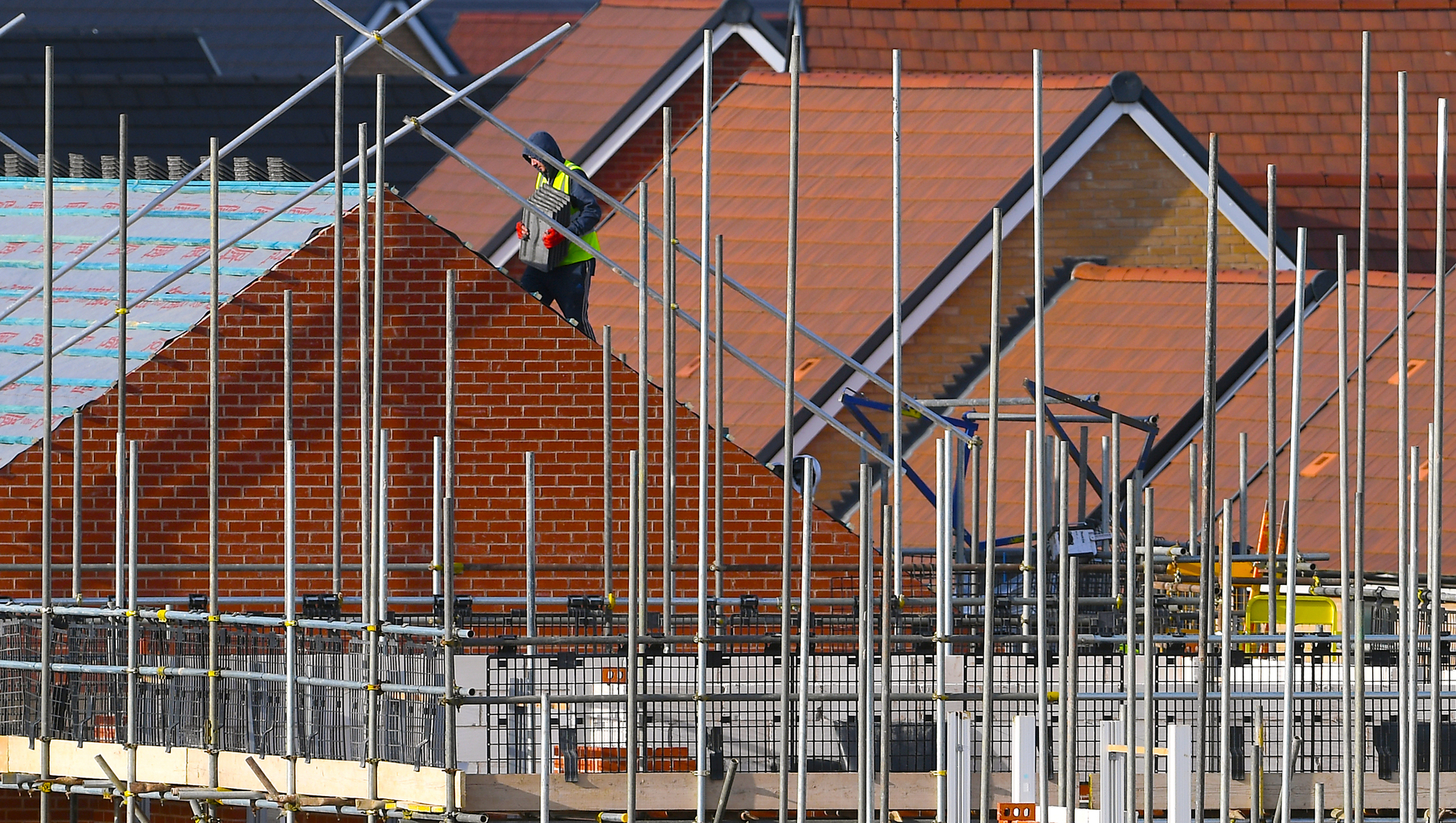
ECB rate reduction will provide welcome relief to mortgage customers, especially tracker holders, but are likely to drive house prices higher for first-time buyers.
First-time home buyers are unlikely to find relief anytime soon from eye-watering house prices, which have surpassed their peak reached during the Celtic Tiger era.
Figures released from the Central Statistics Office (CSO) this week showed house prices in April this year were 10% above than their highest point in May 2007, however times have become considerably tougher for consumers since the "boom".

A perfect storm has led to house prices spinning out of control for most young people trying to get a foot on the property ladder and while mortgage holders — particularly tracker mortgages customers — are set to benefit from interest rate reductions by the European Central Bank this year, these cuts could push house prices further skyward as they will improve affordability.
“This would drive the demand and keep upward pressure on house prices,” research professor at the Economic and Social Research Institute (ESRI) Kieran McQuinn said, adding that residential prices will “continue to grow in the medium term”.
“The pace of housing supply has picked up in the last number of years, but it’s still somewhat below the structural demand level. Basically, demand is exceeding supply," Mr McQuinn said.
The ESRI is set to release estimates that the economy will experience real income growth for the first time this year and next year amid falling inflation, in addition to a robust economy and unemployment levels remaining at record lows, in its latest economic commentary set to be published this week.
A separate report by Davy Stockbrokers released in recent days suggested the Government’s updated housing targets may not be sufficient to support foreign direct investment in the Republic and job growth this year.
In its economic report, Davy said around 85,000 residential units need to be delivered annually up to 2030 to address Ireland’s per-adult housing shortfall compared to other European countries.

This is well above the Government’s delivery target of approximately 50,000 homes this year and almost three times higher than the 2023 level of completions.
Davy predicted job creation in the multinational sector will gain momentum this year, but a lack of housing supply could “threaten” Ireland’s attractiveness as a place to do business for global firms as there may not be enough houses for staff and the expensive existing stock could force wages higher.
In addition to the rise in residential building activity, there have been strides made in land regulation — which the ESRI suggested will add units to the market and eventually lead to lower prices.
“The residential zone property tax is clearly a progressive step,” Mr McQuinn said, as “it encourages people who have land to use it rather than just sit on it and watch it go up in value year-on-year without building a house on it”.
Mr McQuinn indicated the next step would be regulation in relation to how land is used, who gets it, and how much they get it for.
These include the State-owned Land Development Agency, approved housing bodies, private sector groups, and the local authorities which could create competition and fuel house prices.
“What you don’t want to see is competition particularly among State agencies driving up the price of land because that’s ultimately going to be bid into house prices,” Mr McQuinn said.
Meanwhile, Goodbody Stockbroker chief economist Dermot O’Leary argued “price growth is not excessive” as , in the three months to April, residential prices rose at an annualised pace of 5.3%, which is in line Goodbody’s forecast for the year as a whole and is roughly in line with the growth in nominal incomes.
The national price of a home was up almost 8% in annual terms by the end of April, according to figures from the CSO.
In April, 3,572 dwelling purchases by households at market prices were filed with the Revenue commissioners, up by 9.5% when compared with the 3,262 purchases in April 2023.
The median price of a dwelling purchased in the period was €335,000, while at the lower end of this spectrum a house was bought for €169,000 in Longford. The highest median price was €624,999 in Dún Laoghaire-Rathdown.
In recent weeks, the ESRI criticised a move by the European Central Bank which may have also driven house inflation in the residential market.
In the first six months of 2023, 25% of first-time buyers had loan to income ratios just below the regulatory threshold, versus just 6% before the central bank loosened its mortgage lending rules at the end of 2022.
European Central Bank governor Gabriel Makhlouf told reporters at the time that the changes to its mortgage lending limits could lead to a "modest" rise in house prices.
The ESRI said the decision by the financial regulator to ease lending rules — when the upper limit on the loan to income ratio was raised from 3.5 to 4 for first-time buyers — was “premature”.