Moderate pace of economic growth will not hit employment levels, AIB predicts
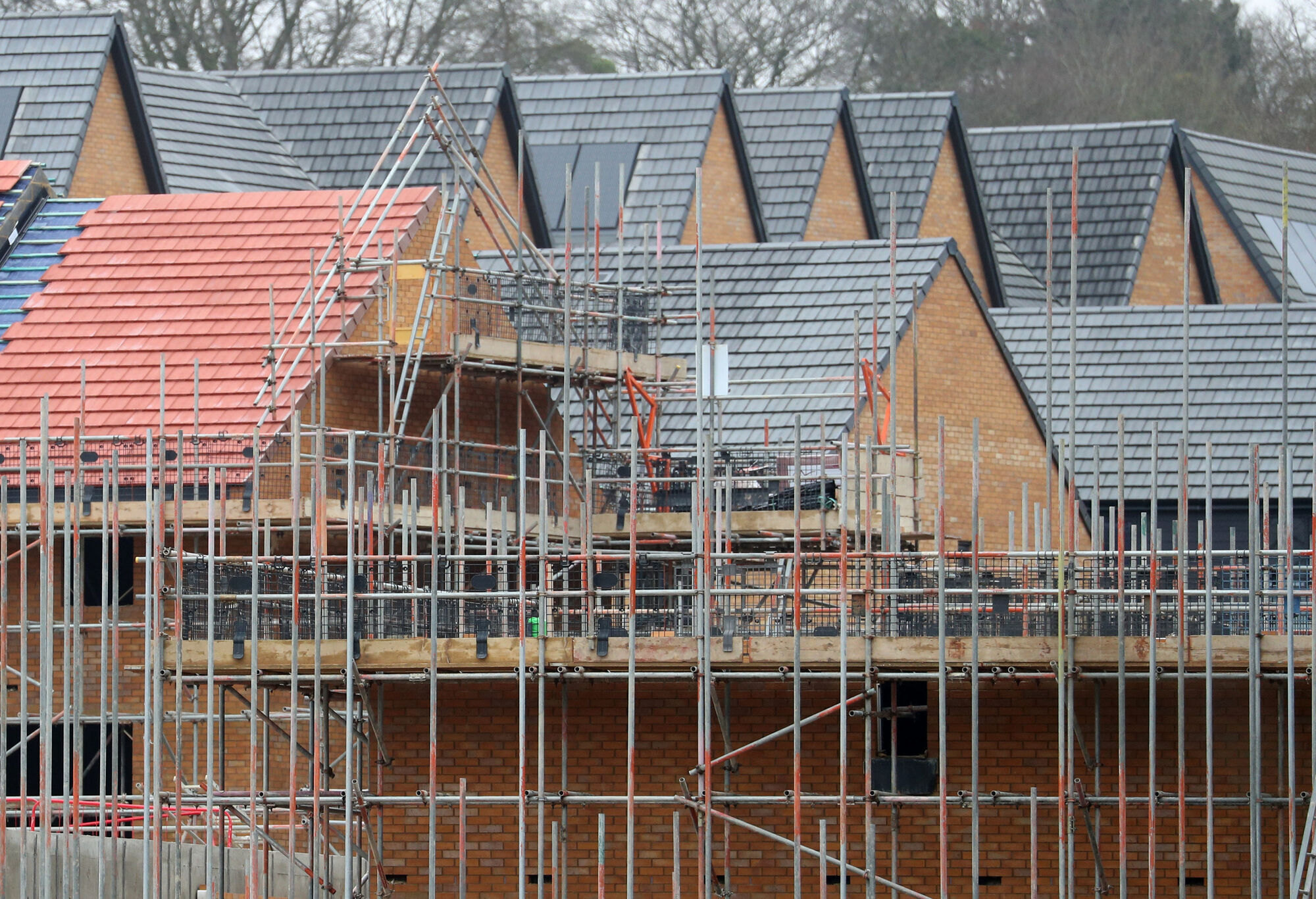
House prices are unlikely to fall this year despite economic growth. Picture: Andrew Matthews/PA
AIB has forecast modest enough economic growth this year but Irish employment is set to maintain momentum nonetheless.
Gross domestic product (GDP), which measures output from multinationals, is expected to expand "moderately" by 2.4% this year following years of outperformance, according to AIB’s latest Economic Outlook Report.
In addition, AIB predicted 2.2% growth in modified domestic demand (MDD), a less volatile gauge of economic activity.
In its report, the lender said the domestic economy is set to grow at “a robust pace” and will be driven by employment growth, while lowering inflation will trickle down to positively impact wages.
AIB estimated that around 2.8m people will be employed in the Irish labour market by 2026, underpinned by population growth and flexible working, leading to an increase in women in employment post-pandemic.
There are some signs this rapid growth will cool as the labour market nears full capacity, AIB said.
Inflation has eased since Russia invaded Ukraine and put pressure on prices and markets across Europe, with the annual harmonised index (HICP) of consumer prices in the Republic of Ireland expected to fall to 2.2% for 2024 from 5.2% last year, and to 1.9% and 2% in 2025 and 2026.

AIB chief economist David McNamara said "the globalised nature of the Irish economy" makes it exposed to international events, which impacts the outlook for the year.
“Ireland remains exposed to movements in international commodity prices and domestic price pressures in capacity-constrained domestic services sectors,” the report said.
Meanwhile, house prices are unlikely to fall this year despite economic growth and high employment.
Credit rating agency Morningstar DBRS said it believes house prices in the Republic of Ireland will creep further upwards this year.
The agency said long-term mortgage rates already reflect the planned interest rate cuts, therefore, even if interest rates stay high for longer than expected, they are past the peak and house prices could continue on an upwards trajectory.
Meanwhile, the current lack of housing supply on the market is also fuelling higher prices.
Elsewhere, the European Central Bank (ECB) is poised to announce its first interest rate cut next week since it began its aggressive campaign of increases in July 2022 to drive down inflation since.
However, further cuts have already ignited debate among European policymakers over wage growth in the eurozone, despite inflation still lingering above the 2% target.
ECB chief economist Philip Lane kept a lid on whether the regulator will implement further cuts after its meeting on June 6.
Speaking to the earlier this week, Mr Lane indicated that policymakers continue to keep a sharp eye on wage growth across the eurozone.
Markets have rethought the three reductions they had been betting on in 2024 as recently as last week. They now fully price just two.
However, governing council member Francois Villeroy de Galhau said the ECB should not rule out lowering borrowing costs at both its June and July meetings, pushing back against fellow monetary officials who are uncomfortable at the idea of consecutive cuts.