Gaza puts Ireland's public investments in the occupied territories under scrutiny  

The State is investing millions in companies engaged across illegal Israeli settlements and profiting from their operations through a key public investment fund, writes Emer Walsh
Gaza puts Ireland's public investments in the occupied territories under scrutiny  

Through the Ireland Strategic Investment Fund, the State is investing in several companies engaged across illegal Israeli settlements.

The crisis in Palestine has left Ireland’s politicians in a tricky position when it comes to where the State invests its money. As clashing parties debate the extent of Ireland’s response to the devastation in Gaza, Government politicians have walked a tightrope.

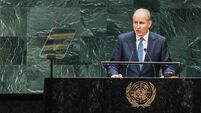
From the Taoiseach down, politicians here have been vocal about the actions of Israel. In recent weeks, Leo Varadkar labelled the Israeli government as “blinded by rage”, adding that what it is doing “resembles something more approaching revenge” than self-defence.

Last month, Tánaiste Micheál Martin warned that Israel was behaving like a “monster”, with the country’s actions described as “without a doubt, a violation of international humanitarian law”.

The status of the Israeli ambassador to Ireland remains a controversial issue, as does the extent of Ireland’s response.

Still, despite the Government’s internal struggles, Ireland has remained one of the few outliers on the European stage, showing continued opposition to Israeli leaders despite conflicting sentiments elsewhere, and lending among some of the strongest calls in support of a Palestinian state.

Conflicting position

However, Ireland now finds itself in a conflicting position, with criticism around events in Gaza bringing issues across other Palestinian regions to the forefront.

While Ireland’s parallel history with the people of Palestine has informed its stance as one of its international supporters, the Irish State is simultaneously investing millions in companies engaged across illegal Israeli settlements, and profiting from their operations through a key public investment fund.

Just as private investors put money into stock market investments or other financial assets, the Government does something similar, investing taxpayer money in stock market companies, mostly indirectly, across the world to “support economic activity and employment in Ireland”.

The country’s main fund is the Ireland Strategic Investment Fund (ISIF). Established in 2014, ISIF is managed by the National Treasury Management Agency (NTMA) with total funds in 2022 standing at just over €15bn. The fund is divided into two portfolios, a directed portfolio held within ISIF under direction from the finance minister, and a discretionary portfolio which is outsourced to a private investment manager.

As of 2022, the fund’s directed portfolio comprised €6.3bn, while its discretionary portfolio totalled €8.7bn. The discretionary portfolio is managed by a third party, EOS at Federated Hermes, a US-headquartered stewardship service provider.

According to its website, EOS is an “industry leader” in working with investors “to change companies for good, from within” and “continues to evolve best-practice stewardship”. Founded in 2004, EOS currently has €1.3trn in assets under management across the world.

Like any other diversified portfolio, ISIF’s discretionary fund comprises securities spanning myriad industries and multiple countries. This has left Ireland’s portfolio invested in several Israeli firms and other global companies that operate within occupied Palestine territory, as defined by a United Nations database which tracks the activities of such firms.

In 2016, the UN Human Rights Council adopted a resolution called ‘Israeli settlements in the Occupied Palestinian Territory, including East Jerusalem, and in the occupied Syrian Golan’.

UN database

As part of the resolution, it was requested that the UN High Commissioner for Human Rights produce a database of all business enterprises engaged “in certain Israeli settlement activity in the occupied Palestinian territory”.

The database was last updated in June 2023 and listed 79 business enterprises engaged in the settlements, 17 businesses involved as parent companies, and one enterprise involved as licensors or franchisors.

A spokesperson for the Department of Finance confirmed to the Irish Examiner that “at year end 2022 ISIF had direct holdings as defined by the updated UN database of June 30, 2023, of circa €4.1m across 11 companies”.

The NTMA’s most recent annual report shows that the 11 companies include four Israeli commercial banks, Bank Leumi Le-Israel, Bank Hapoalim, Israel Discount Bank, and Mizrahi Tefahot Bank, which are all listed in the database for three separate activities.

The activities include the provision of services and utilities supporting the maintenance and existence of settlements, including transport; banking and financial operations helping to develop, expand, or maintain settlements and their activities, including loans for housing and the development of businesses; the use of natural resources, in particular water and land, for business purposes.

Israeli telecoms firm Bezeq is another company in which ISIF has direct holdings. It was added to the UN database also for the provision of services and utilities supporting the maintenance and existence of settlements, including transport, and the use of natural resources, in particular water and land, for business purposes.

The remaining six companies on the UN database are non-Israeli businesses, many of which are involved in tourism and travel, including Airbnb, Booking Holdings, Expedia, Tripadvisor, Alstom, and Motorola Solutions.

Proposed legislation

Sinn Féin proposed new legislation last year called the Illegal Israeli Settlements Divestment Bill which would force ISIF to divest from companies operating within occupied Palestinian territory.
However, the proposed bill has been paused for several months while the Government debates the best way to move forward, with the key issue relating to the use of the UN’s database.

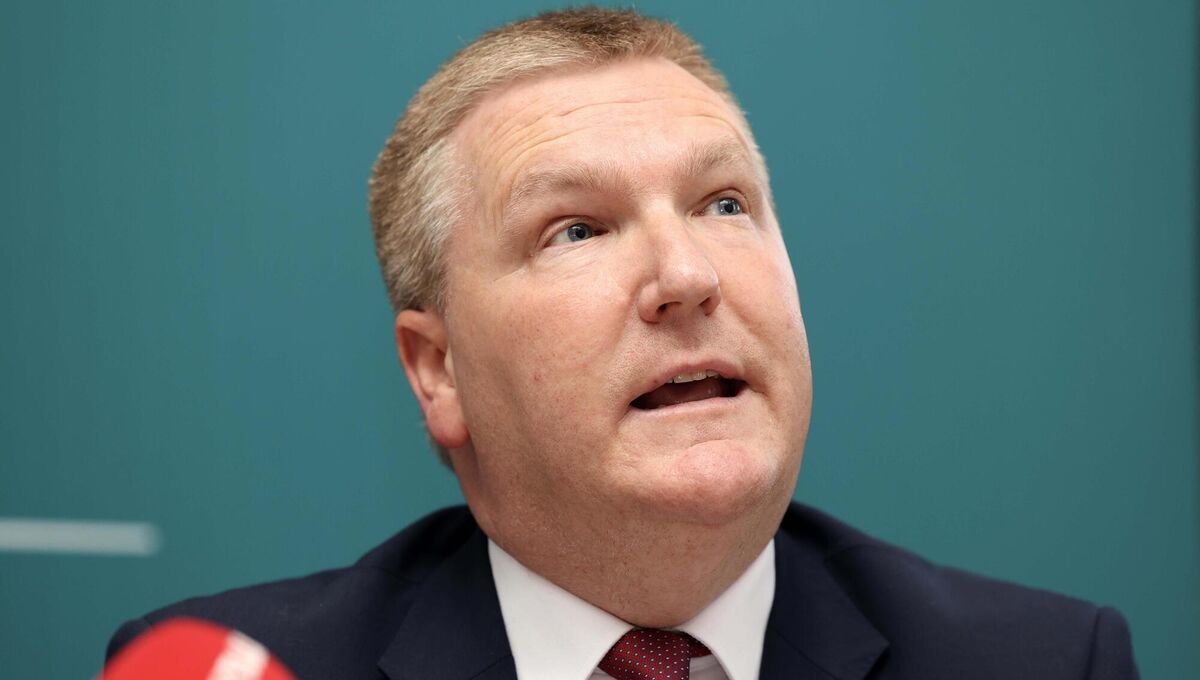
Finance Minister Michael McGrath had requested the Oireachtas joint committee on foreign affairs and defence to explore the best ways to advance the legislation.

The foreign affairs committee report showed that ISIF had said that, regarding eight of the 11 companies engaged in illegal Israeli settlements, its “partner organisation” had “engaged with the companies in question, including by meeting the management teams to highlight concerns”.

However, the report said that “the official acknowledged that none of the companies in question has ceased their operations in the illegal settlements as a result of these engagements”.

The foreign affairs committee failed to reach a consensus. It said that the committee on finance, public expenditure and reform, and taoiseach may be better placed to advise on the issues as they related to financial investment decisions and to their legal implications rather than to foreign policy.

The Illegal Israeli Settlements Divestment Bill is expected to go to the next stage in the Oireachtas later this month. Government politicians have raised concerns about the complexities involved.

Finance Minister Michael McGrath had requested the Oireachtas joint committee on foreign affairs and defence to explore the best ways to advance the Illegal Israeli Settlements Divestment Bill, which would force the Ireland Strategic Investment Fund to divest from companies operating in occupied Palestinian territories.	Picture: Leah Farrell/ RollingNews.ie
Finance Minister Michael McGrath had requested the Oireachtas joint committee on foreign affairs and defence to explore the best ways to advance the Illegal Israeli Settlements Divestment Bill, which would force the Ireland Strategic Investment Fund to divest from companies operating in occupied Palestinian territories. Picture: Leah Farrell/ RollingNews.ie

Asked by the Irish Examiner if the finance minister was concerned about ISIF’s portfolio, a department spokesperson said it was “constructed within the legislative framework set for it by the Oireachtas”.

The spokesperson said that ISIF and its assets “have to be considered in a wider context”.

Some of the firms listed offered digital services and that it was a “complex issue”, and that the database, by the UN’s own definition, was “not comprehensive”, said the spokesperson.

“The minister of finance is continuing to examine and seek advice in relation to this issue while also engaging across Government.”

However, opposition TDs have pushed for much quicker calls to action. Last month, Labour’s Ged Nash and Sinn Féin’s Matt Carthy submitted questions to the finance minister regarding his engagements with ISIF and fellow ministers on the issue. Sinn Féin has pressed for a quick resolution.

The issue here is not conflicting opinions, as there is a broad consensus across the Government that something should be done.

However, the differences appear to involve the time that politicians want to consider the matters at hand.

More in this section

The Business Hub

Newsletter

News and analysis on business, money and jobs from Munster and beyond by our expert team of business writers.

Cookie Policy Privacy Policy Brand Safety FAQ Help Contact Us Terms and Conditions

© Examiner Echo Group Limited