UK cuts personal taxes as Tories seek election year lift
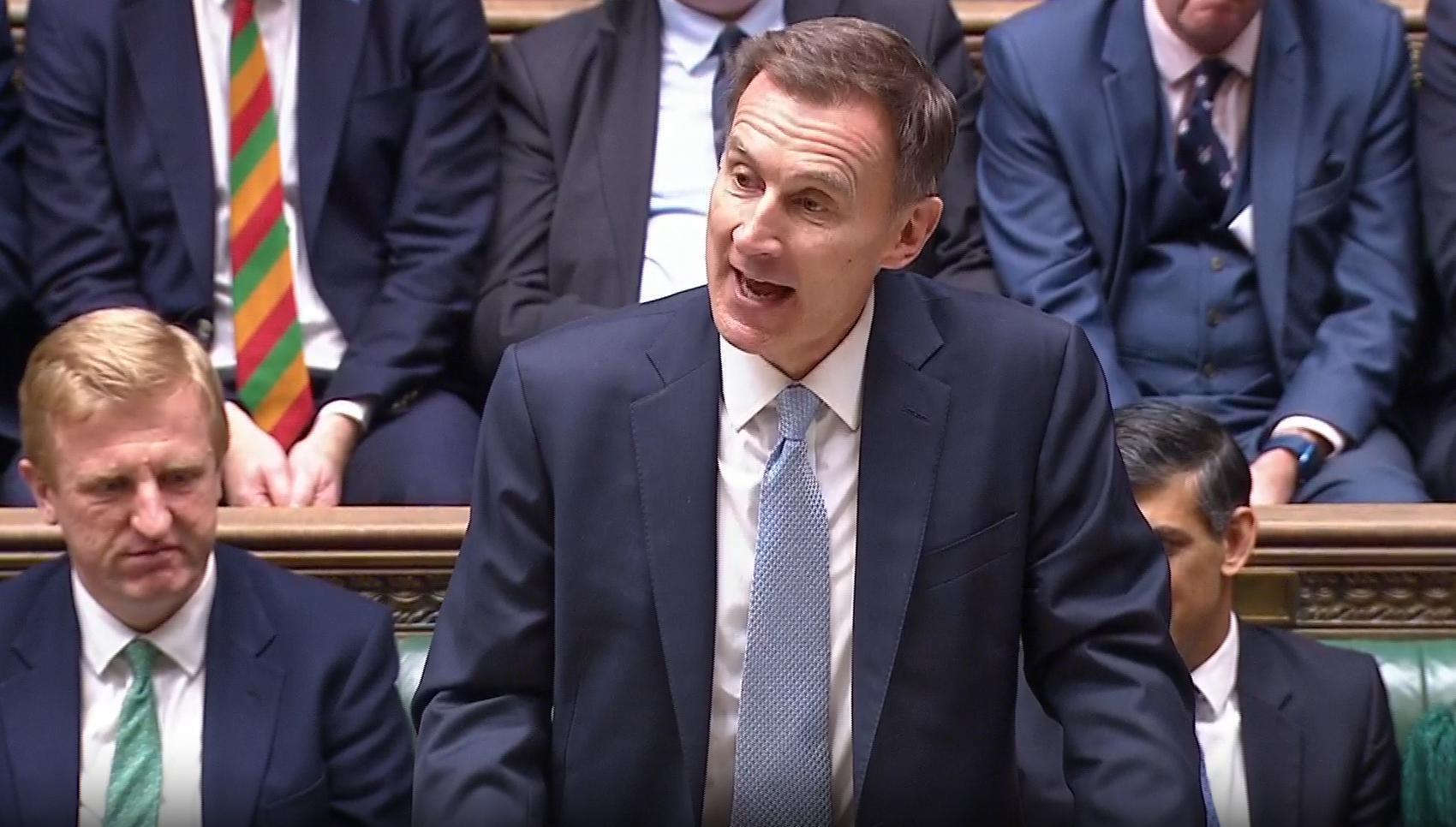
Chancellor of the Exchequer Jeremy Hunt delivering his Budget to the House of Commons in London. Picture: PA Wire
The UK's Minister for Finance Jeremy Hunt cut personal taxes as the Conservative Party tries to win back voters ahead of a nationwide election expected later this year.
Delivering his budget, the Chancellor of the Exchequer announced another 2 percentage-point cut to the national insurance payroll tax, following a similar move in November. Taken together, he said, 27 million employees will get an average tax cut of £900 (€1,052) a year. He also said the UK’s budget watchdog had upgraded the country’s growth prospects for this year and next.
“We know that lower-taxed economies have more energy, more dynamism, and more innovation,” Hunt said in the House of Commons on Wednesday. “We have today put this country back on the path to lower taxes.”
The tax cut is a central part of the Tories’ strategy to close a 20-point gap to the opposition Labour Party in national polls, prior to an election that Prime Minister Rishi Sunak must call by January 25 at the latest. But Hunt was constrained by fragile public finances with the UK entering a recession last year, and the chancellor went into his budget with just £12.2bn (€14.26bn) of breathing space against his key fiscal rule, a margin near historic lows.
Hunt barely kept his budget within the self-imposed rule to have the ratio of borrowing to GDP falling in the final year of his five-year forecast period. He did so by raising taxes by extending a windfall tax on the profits of oil and gas companies and overhauling a tax break for foreigners moving to the UK.
After the change, foreigners arriving in the UK will have a four-year hiatus on tax on their overseas assets, before paying the same rate as Britons. The current non-dom regime lasts for 15 years but with an annual fee.
In a move that appeared designed to get more houses onto the market, Hunt announced a reduction in property capital gains tax and the end of a tax break for people renting out second homes as short-term lets for tourists. Hunt also said the threshold at which families start to lose child benefits will rise by £10,000 in April.
Other budget measures included a freeze on fuel and alcohol duty, a new tax on vaping, and a hike in air passenger duty on business travel.
The Conservatives were given a boost by the rosier growth forecasts from the OBR: Hunt said growth is now due to be 0.8% in 2024, up from the previous estimate of 0.7%. The watchdog is now predicting 1.9% growth for 2025, compared to a previous reading of 1.4%, Hunt said.
Hunt also said he wouldn’t be reducing future public spending plans, an option he’d been considering to help finance his tax cuts. Still, critics have said the 1% increase in spending Hunt is baking in — which involves real terms cuts for unprotected departments — would be politically unsustainable. Hunt didn’t detail his plans, but said boosting public sector productivity would be a key priority.
The budget measures will increase the UK tax burden by 1.1 percentage points, the OBR said.
“The hidden sting in the tail is the continued frozen tax thresholds which will eat into any savings” from the national insurance cut, Christine Cairns, tax partner at PwC, said in an emailed statement.
CONNECT WITH US TODAY



Be the first to know the latest news and updates