Multinational sectors see contraction in 2023 leading to a decline in GDP
Exports have dropped 4.8%
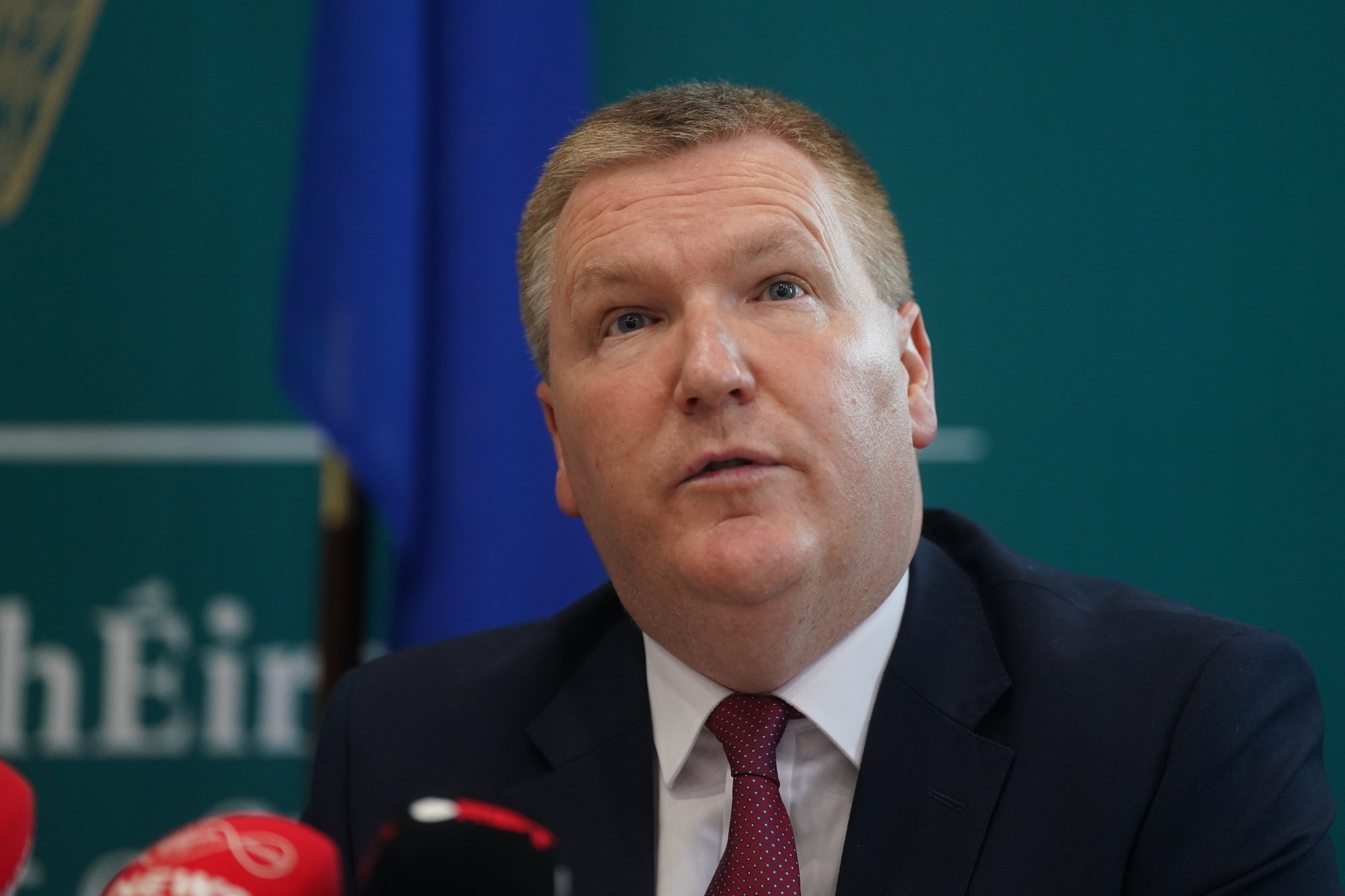
Finance Minister Michael McGrath said the decline in exports and the industry sector reflects a 're-normalisation', mainly in pharmaceuticals, following a surge in demand during the pandemic.

Finance Minister Michael McGrath said the decline in exports and the industry sector reflects a 're-normalisation', mainly in pharmaceuticals, following a surge in demand during the pandemic.

Multinational-dominated sectors of the economy saw a large contraction during 2023 leading the country’s gross domestic product (GDP) to shrink by 3.2%, new data from the CSO shows.

While this means Ireland is technically in a recession, the large presence of numerous multinational companies here means that GDP is not the most reliable indicator of the health of the economy as they contribute such a large proportion of value added to it.

According to the CSO, during last year, GDP declined by 3.2% driven largely by a drop of 4.8% in exports.

One of the preferred measures of the economy is gross national product — a measure of economic activity that excludes the profits of multinationals — which increased by 4.4% in 2023.

One of the other preferred measures is modified domestic demand. It excludes the activity of multinationals and focuses on underlying domestic activity including government spending and investment.

It rose by 0.5% throughout 2023 but fell by 0.4% during the last three months of the year.

CSO assistant director general Jennifer Banim said the more globalised sectors of the economy contracted for the first time since 2013.

“Overall, the multinational sector contraction was 6.8% and in 2023, these sectors accounted for 51.5% of total value added in the economy,” she said.

The industry sector —which is heavily influenced by the large multinational pharmaceutical industry — contracted by 11%.

'Renormalisation' after covid

Finance Minister Michael McGrath said the declines in exports and the industry sector reflects a “re-normalisation” in mainly pharmaceuticals, following the pandemic.

“Indeed the trend in GDP contrasts sharply with employment which was up by 3.5 per cent in 2023,” he said.

In the domestic market, Ms Banim said there is a more “mixed picture”.

During the year, the agriculture, forestry, and fishing sectors expanded by 15.4%, while the financial and insurance sector grew by 7.5% with distribution, transport, hotels, and restaurants also growing 4.5%.

However, declines were seen in the arts and entertainment sector, which posted a decline of 10.8% year-on-year, and the construction sector which declined 3%.

Personal spending — which accounts for 46% of domestic demand — increased by 3.1% last year, reaching €128.7bn.

A further recovery compared with the 2022 result of €124.8bn.

Government spending on goods and services rose by 1.7% in the year while capital expenditure increased by €7.7bn during the year compared to 2022.

Employee wages increased by 3.3% during 2023 compared to the previous year, with the largest increases seen in the professional and administrative services, up 9.6%, arts and entertainment, up 7.3%, and distribution, transport, hotels, and restaurants, up 9.6%.

However, wages in the real estate sector dropped by 23.0% while construction also saw a decrease of 1.7%.

Mr McGrath said the growing consumer spend and strength of the labour market is a “good measure” of the underlying health of the domestic economy.


x

More in this section

The Business Hub

Newsletter

News and analysis on business, money and jobs from Munster and beyond by our expert team of business writers.

Cookie Policy Privacy Policy Brand Safety FAQ Help Contact Us Terms and Conditions

© Examiner Echo Group Limited