Ireland must act now to underpin biodiversity promises, says expert

Gemma Corrigan, head of policy and advocacy with Federated Hermes Limited, a UK-based global leader in responsible investment.
Ireland is in a position to enjoy significant economic benefits from being among the first to publish a biodiversity action plan following COP 15, says a leading expert in sustainable investment.
Gemma Corrigan of Federated Hermes Limited (FHL), a UK-based global leader in responsible investment, praised Ireland’s National Biodiversity Action Plan 2023-30 as a welcome signal of intent. Only eight out of 188 countries or regions have taken such a step following the 2022 UN National Biodiversity Conference (COP 15).
Ireland’s plan could, however, be viewed as little more than window dressing if the ideas aren’t followed by actions. For instance, Ireland currently has a 40% rating on the Natural History Museum’s Biodiversity Intactness Index (BII), a measurement of factors such as crop area and landscape-scale pressures to gauge the health of a nation or a region’s ecosystem.
“At 40%, Ireland’s biodiversity intactness remains below regional and global averages,” explains Gemma Corrigan, head of policy and advocacy with FHL. “If the BII is 90% or more, the area has enough biodiversity to be a resilient and functioning ecosystem.
“Under 90%, biodiversity loss means ecosystems may function less well and less reliably. If the BII is 30% or less, the area's biodiversity has been depleted and the ecosystem could be at risk of collapse.”
FHL has worked with Finance Earth to launch the UK's first nature-based blended finance fund, backed by £30m seed investment from DEFRA (UK’s Department of Agriculture). That fund will invest in nature-based solutions and businesses that operate across the nature restoration supply chain.
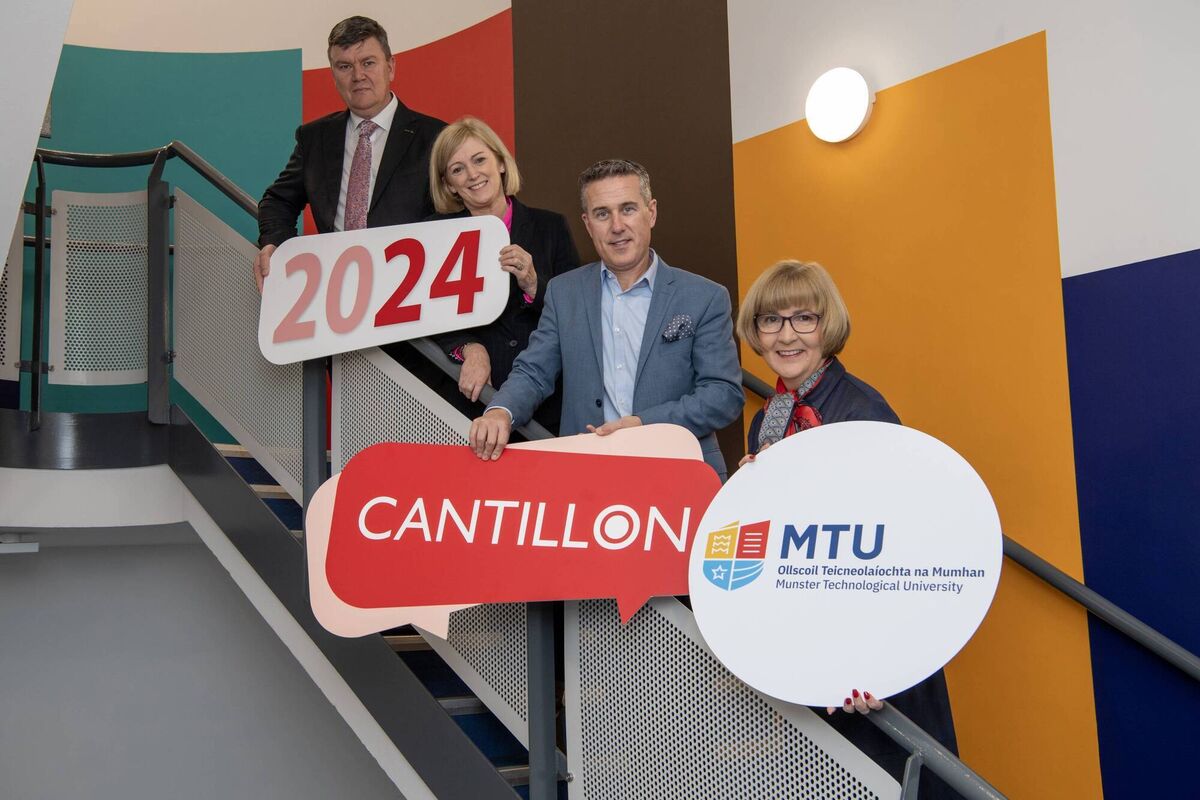
Meanwhile, Gemma Corrigan is due to join a panel of global experts at the tenth annual Cantillon 2024 conference to be hosted by Munster Technological University (MTU) on Thursday, March 7, at Ballygarry Estate Hotel, Tralee.
Founded to honour the legacy of the pioneering economist Richard Cantillon, the 2024 conference will explore how business leaders can navigate complex transformation processes as they seek to commit to a resilient and prosperous world for generations to come.
Speakers will include executives representing Kerry Group, AIB, Fexco and Mitsui, along with leaders from Irish state and educational institutions. The summit is geared towards collective problem-solving approaches through cross-industry partnerships, public-private collaborations, and knowledge-sharing platforms.
“There is a narrow window of opportunity for countries to have a positive impact on biodiversity. We are seeing a lot of investors going in the right direction. Some governments are taking positive steps, but we need to see more businesses follow suit,” said Gemma.
“With its biodiversity action plan, Ireland is an early mover. There are a lot of economic benefits that a country can reap from taking the right steps, especially in terms of a nation’s ability to attract investment.
“We are seeing huge investor appetite for funds that have a positive environmental impact. Globally, the fastest growing area of investment is into these thematic impact funds. In the UK, we recently launched a fund with the UK government, whose benefits will include generating carbon credits with other co-benefits.”
There is huge interest among global investors in funds that actively support the oceans, marine life, wetlands and kelp forests. Global investors are keen to invest in funds whose longevity is underpinned by their biodiversity impacts.
“We really have to take these actions, of course, because inaction will have catastrophic consequences for the global environment,” said Gemma. “Pharma companies are very receptive to moving towards positive impacts to improve supply chain resilience, conscious also that their customers and clients are demanding that they take these impacts into account.
“We also have a biodiversity equity strategy, which invests in best-in-class companies that provide solutions that support the restoration of biodiversity. We developed this in close collaboration with the scientists at the Natural History Museum.
"Biodiversity is an under-appreciated issue that is of huge systemic importance, and it is one of the biggest risks and opportunities that I see over the next decade as an investor. It touches nearly every sector — our economies and societies are so heavily reliant on natural capital, it’s about time we start truly valuing it,” Gemma concluded.
CONNECT WITH US TODAY



Be the first to know the latest news and updates