Southern Ireland posts largest GDP per capita in EU in 2022
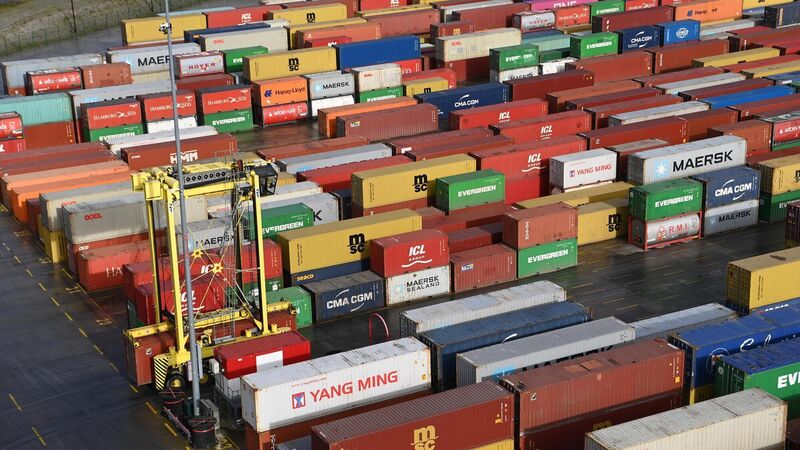
While GDP encompasses the activity of these large international firms, they bring with them massive amounts of intellectual property assets and profits that will eventually be repatriated. Picture Dan Linehan
Ireland's southern region recorded the highest GDP per capita in the European Union (EU) in 2022, helped in large part by the presence of major multinationals domiciled in the region.
New figures from the EU's statistics agency, Eurostat found that regional GDP per capita, expressed in terms of purchasing power standards for Southern Ireland was 286% in 2022, followed by Luxembourg at 257% and Eastern and Midland Ireland at 247%.
Regions in Czechia and Belgium also topped the list, with the statistics agency adding that the figures could be partly explained by the high inflow of commuting workers in the regions, as well as in Luxembourg.
For Ireland, however, Eurostat noted that figures were influenced by the large presence of multinationals, bringing the credibility of Irish GDP figures into question once again.
In total, real GDP increased in 231 out of 242 EU regions, with the Algarve in Portugal seeing the largest growth at 17%. Another Portuguese region, Madeira, came in second, posting a GDP growth rate of 14.2%, followed by Southern Ireland at 13.5%.
While it works well for other European countries, a myriad of Irish-specific factors make GDP a weak indicator of domestic economic activity. This is in large part driven by more than 1,500 multinationals which have established a base in Ireland due to its low corporation tax and access to European markets.
While GDP encompasses the activity of these large international firms, they bring with them massive amounts of intellectual property assets and profits that will eventually be repatriated.
For the South of Ireland, its regional GDP has been significantly distorted by the highly volatile pharmaceutical sector, which includes giants such Pfizer, Johnson & Johnson, Thermo Fisher, Abbvie and Eli Lilly.
Cork is also the European headquarters of tech giant, Apple, whose large portfolio of intellectual property assets has historically had a distorting impact on Irish GDP.
In the same year that Southern Ireland topped the EU's GDP list, Irish exports posted a record €202bn in the year, 40% of which came from the pharma sector. However, 2023 saw a sharp decline in exports of pharma and medical equipment, which still lag far behind their earlier stellar performance in 2022.
GDP figures have continued to cause problems in the last two years, with Finance Minister, Michael McGrath acknowledging these issues and noting that multinational production "can be extremely volatile on a quarterly basis with large swings a pattern of recent years."
"Indeed, given the outsized role the multinational sector plays in our economy, GDP is clearly not a useful measure of the living standards of domestic residents," he continued.
For a more accurate explanation of what is to come in 2024, the European Commission said last week that the Irish economy will continue to grow this year, helped by “a resilient labour market, decelerating inflation, and rising real incomes” into 2025.
“As long as the risks from war and inflation do not worsen, the outlook for Irish exports will also, in time, brighten,” the commission said.
CONNECT WITH US TODAY



Be the first to know the latest news and updates