ECB's Philip Lane sees good case for economy 'soft landing'
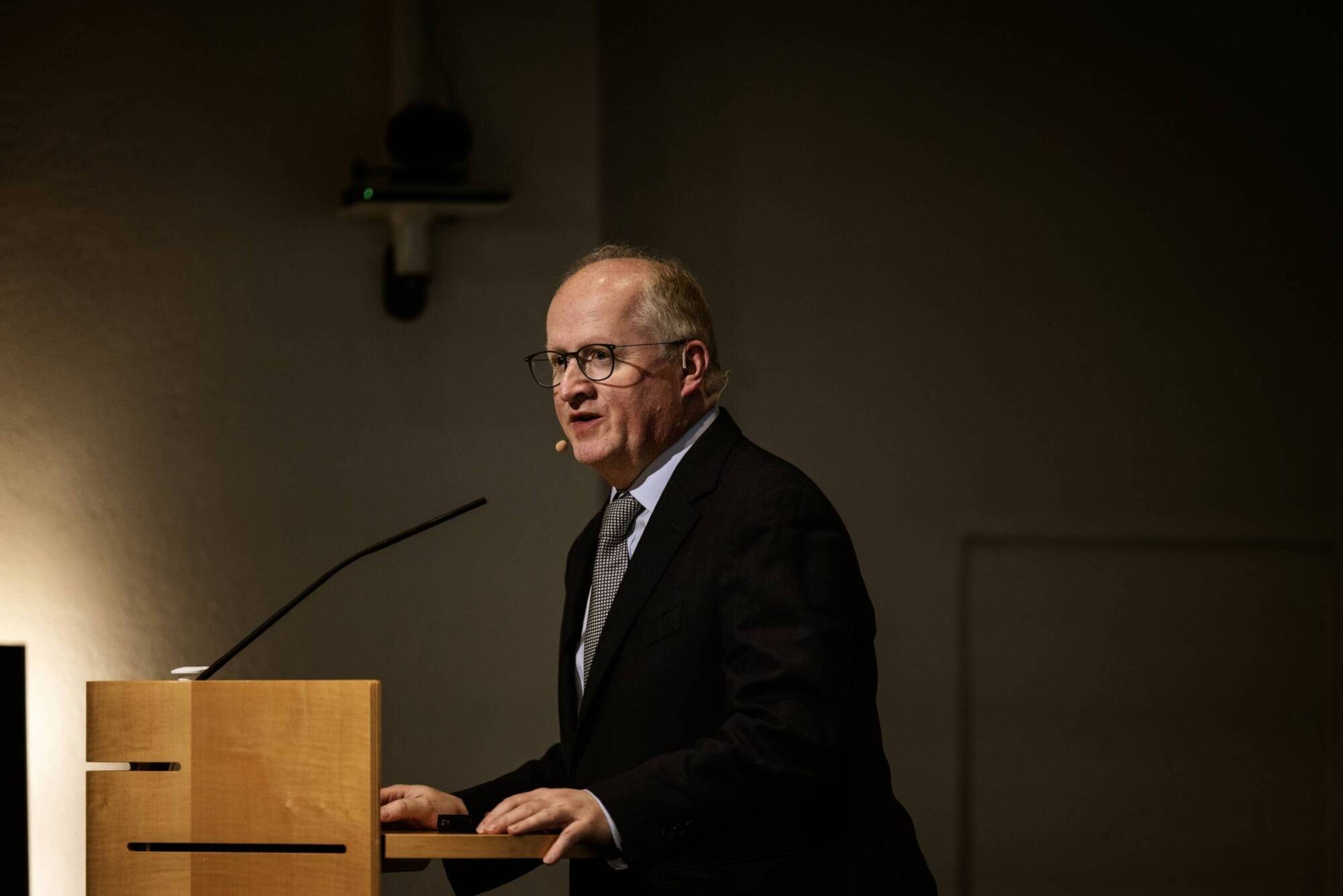
Philip Lane said 4% was "not a forever rate" and it was "not normal".
European Central Bank chief economist Philip Lane said on Thursday there was still a "good case" for the economy to avoid a recession despite a tightening credit market.
Lending in the euro zone has come to a standstill as the ECB embarked on its longest and steepest ever series of interest rate hikes in a bid to bring down high inflation. Lane said he remained confident the eurozone's economy could avoid a credit crunch as companies were not bracing for a recession.
"We remain fairly optimistic that this is not that type of episode," he told an event in Ireland. "And so the soft landing scenario, we think (there is) still a good case for it."
Inflation in the eurozone is falling fast and the economy has begun contracting, data showed this week. Combined with a collapse in credit creation, this meant the ECB had almost certainly finished raising its key rate, which is at a record high of 4%.
Commenting on market expectations for the ECB to cut that rate next year, Lane said 4% was "not a forever rate" and it was "not normal".
Speaking earlier on Thursday, ECB policymaker Klaas Knot described the current level of rates as "a good 'cruising altitude' where they can remain for some time".
Lane said signs that wage growth for new hires was slowing, as shown by the Indeed Wage Tracker, boded well for inflation to come back to the ECB's 2% target by 2025. But he warned about a new "energy shock" aggravated by war in the Middle East.
"A benign momentum dynamic (in energy inflation) reversed in the last few months," Lane said. "We have a new energy shock, oil prices have gone up quite a bit, gas prices have gone up quite a bit and now that's interacting with the war."
Separately, the Bank of England held interest rates at a 15-year peak on Thursday and said it did not expect to cut them any time soon as it fights to "squeeze out of the system" the highest inflation of the world's big rich economies.
Despite new forecasts that showed the economy skirting a recession and then flat-lining, the BoE reinforced its message that borrowing costs would stay high, even though only about half the impact of its long run of rate hikes has yet been felt.
The Monetary Policy Committee (MPC) voted 6-3 to keep its Bank Rate at 5.25% for the second meeting in a row after 14 back-to-back increases, as expected in a Reuters poll of economists.
"The MPC's latest projections indicate that monetary policy is likely to need to be restrictive for an extended period of time," the British central bank said, adding that it could still tighten again if inflationary pressures persisted.

CONNECT WITH US TODAY



Be the first to know the latest news and updates