Oliver Mangan: Financial markets forecast ECB will start to cut rates in June
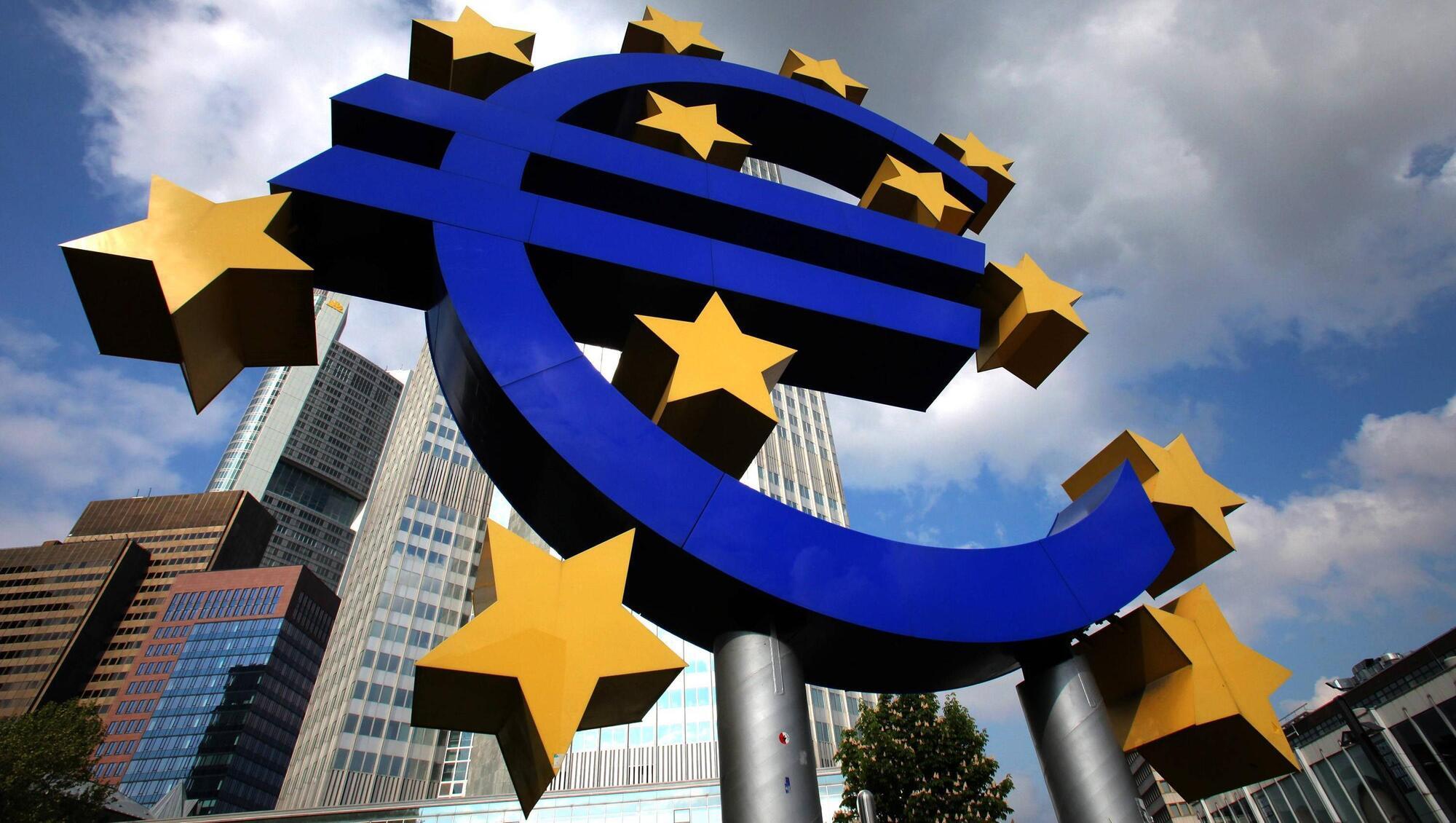
The euro sign sculpture is seen outside the European Central Bank (ECB) headquarters in Frankfurt, Germany.

The eurozone economy stagnated between autumn last year and the summer this year, with flat domestic spending and a decline in exports offset by higher inventories. However, the data since mid-year suggest the economy could now be entering recession.
Retail sales fell sharply by 1.3% in August after a fall of 0.1% in July; industrial production expanded by 0.6% in August, but only after a contraction of 1.1% in July; and monetary aggregates also continue to weaken, with money supply falling by 1.2% and credit growth to households slowing to 0.8% year-on-year in September.
Survey data also suggest the eurozone economy has weakened further since mid-year. Readings from the services purchasing managers' index, or PMI, came in below 50 in August and September, thus moving into contraction territory. The manufacturing PMI, which was already struggling, averaged a very weak 43.2 in the third quarter.
The latest ECB bank lending survey also showed that credit conditions tightened further and loan demand fell sharply in the third quarter, as higher interest rates weighed on activity. Meantime, the limited amount of survey data available for October suggests the economy continues to weaken. The eurozone PMIs fell further in October, while consumer confidence deteriorated for the third month running, from already low levels.
Overall, the eurozone economy has been coming under pressure over the past number of quarters in the face of high inflation and rising interest rates, as well as weaker global growth and increased geopolitical uncertainty. The IMF is forecasting that eurozone GDP will grow 0.9% in 2023, and by 1.5% in 2024, and the ECB is projecting the economy will expand by 0.7% this year and by 1% in 2024. However, given the recent weak trends in the data, the risks are tilted to the downside of these projections. Indeed, as already noted, the economy may well enter recession in the second half of this year, with growth also likely to be much lower than forecast in 2024.
Against the backdrop of rising recession risks and with inflation now in sharp decline, futures contracts indicate that the market is of the view that ECB rates have peaked, and will start to be lowered from around mid-2024. They see the first quarter-point cut next June, with two more cuts in the second half of 2024, and another quarter-point cut in 2025, taking rates down to 3%.
Market expectations for significant rate cuts next year seem to be out of tune with the ECB’s firm focus on maintaining a restrictive policy for as long as necessary to bring inflation down to target. In this regard, though, the ECB’s macro forecasts do not envisage a recession that would accelerate the fall in inflation back to 2%.
ECB policy will remain very much on hold in the near term and it is most unlikely to signal anytime soon that policy easing could be on the agenda next year. Indeed, ECB president Lagarde has stated that any talk of rate cuts is totally premature. However, if the economy is indeed hit by recession, then rate cuts next year would seem likely.

CONNECT WITH US TODAY



Be the first to know the latest news and updates