My Job: Bringing innovation to adult education at UCC
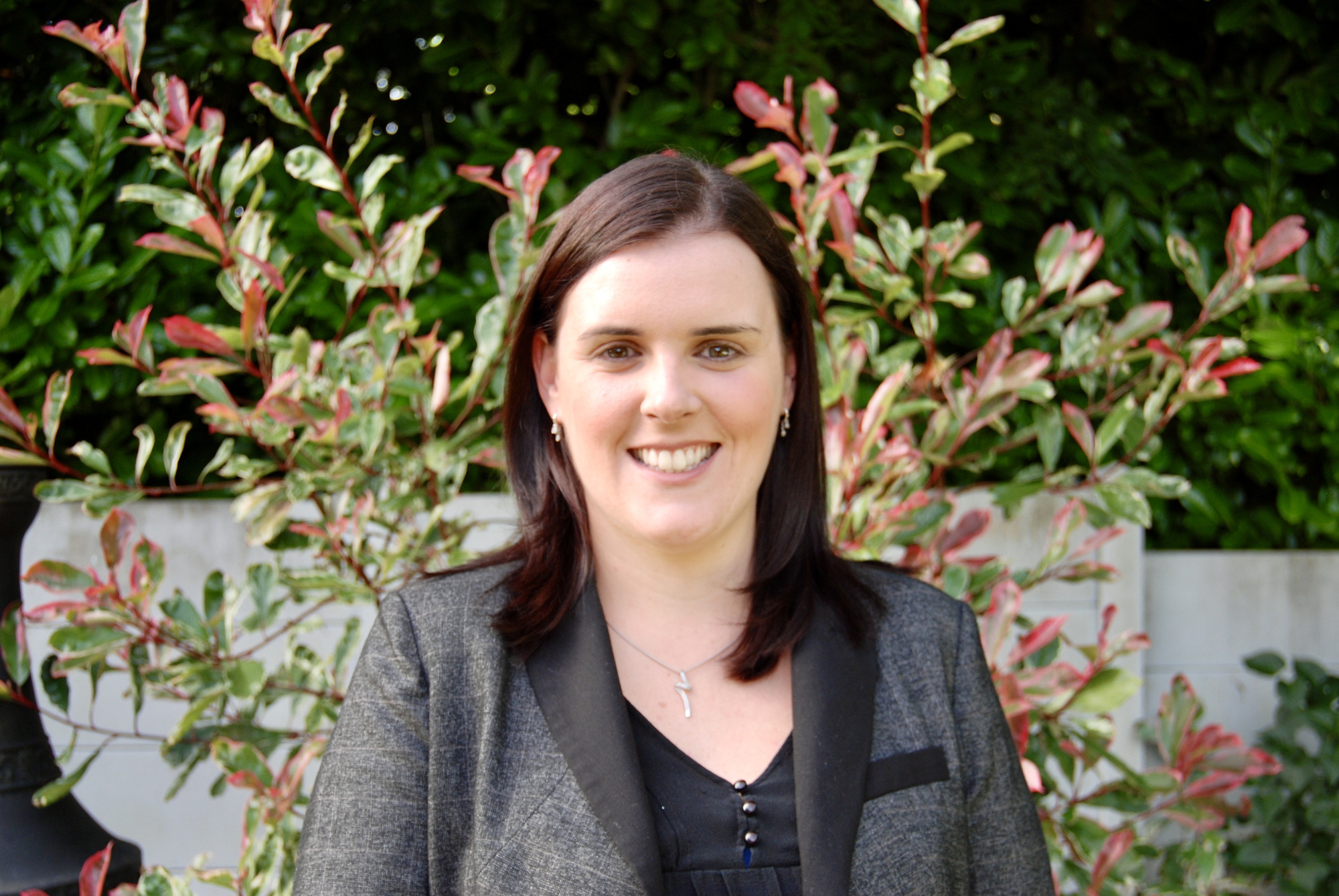
Lyndsey El Amoud, Deputy Director of Adult Continuing Education (ACE) at University College Cork. In 2022, Lyndsey was elected to the Steering Committee of European University Continuing Education Network.
When William Butler Yeats said “education is not the filling of a pail, but the lighting of a fire”, his words could well have been directed toward adult learners.
With another academic year just around the corner, Lyndsey El Amoud is already deep in preparation for another busy time around the UCC campus. “2022/23 was a challenging year for us here in ACE, and for many of our colleagues in the sector across Europe.
"The rising cost of living and the very legitimate worry people had about what their winter energy bills might look like pushed a return to education for many people to the bottom of their priority list, which is completely understandable. While some of these challenges remain this autumn, we are hopeful that our student numbers will rise and we are already seeing early indications of that.”
One of the exciting things about working in adult education is the need for ongoing innovation, she explains. “We are constantly working on new course offerings to meet the learning needs of employers and society more broadly. This year, we have a number of very exciting new courses.
"At undergraduate level, we have a Diploma in Heritage and Folklore Studies which will appeal to anyone with an interest in local history and heritage. We also have a Certificate in Mythology for those interested in Irish, Norse and Classical mythologies, an area that’s piquing many people's interest due to representations of mythology in current TV shows and films.”
At the postgraduate level, ACE offers a Postgraduate Diploma in Further, Adult and Community Education to address the need for many in this sector to achieve a postgraduate qualification in order to meet the Teaching Council requirements.
“We also have a new Masters in Food Studies and Irish Foodways, which is the first university programme to have a dedicated focus on Irish food and culinary culture. All are part-time and many are delivered through blended learning, so can be accessed by people right across the country and indeed beyond. We also have our very creative short course offering, which includes a variety of new courses every term across everything from bee-keeping to memoir writing, and DNA to AI,” she adds.
ACE has a number of courses that attract a strong intake year-on-year, with stand-out courses including the Certificate and Higher Diploma in Safety, Health and Welfare Work, which are accredited by the Institute of Occupational Safety and Health (IOSH) and recognised globally.
“These courses have been running continuously since 1990. Another stalwart course is the Diploma in Social Studies, which has been part of ACE's fabric since the 1940s and continues to be popular today.” People are also very interested in how they live their lives, she explains, how they relate to other people and what positive contribution they make to their workplace or community.
“One of the areas we have seen the most growth in recent years relates to our courses in the area of Environment, Sustainability and Climate, as people are really trying to understand climate change and what they can do to contribute to the sustainability agenda.”
ACE aims to be ‘an international leader in the provision of accessible, diverse and inclusive education for all’ — a statement that effectively guides much of its output.
“We are absolutely committed to the United Nation's Education 2030 goal ‘to leave no one behind’. Our world continues to change at a very rapid pace and we are constantly faced with new challenges from the pandemic to climate change, so people need to develop resilience and adaptability to be able to cope with these challenges.”
Lyndsey’s work centres on co-designing learning opportunities with industry and community representatives, which offer adult learners across a wide range of sectors a variety of opportunities to return to higher-level education on a part-time basis in order to access opportunities for both personal and professional development.
The model of university lifelong learning developed in ACE is highly respected on the international stage and is often showcased as a best practice example of what is possible to achieve for lifelong learners within university settings.
Given how Ireland has become a multicultural society over the past 20 years, that diversity is reflected in the composition of people coming to ACE at UCC. “Yes indeed, and this rich diversity is so important to our work in ACE. We want ACE's student body to be representative of Irish society at large, and not just one particular cohort of Irish society.
"For the last academic year, 2022/23, we had students from over 50 countries around the world on our courses including more than 20 students on our Sanctuary Scholarship scheme for asylum seekers.”
In May this year, ACE at UCC was selected as the sole European case study to feature in UNESCO's ‘Institutional practices of implementing lifelong learning in higher education’ report, with just six Higher Education Institutes from around the world selected.
In 2022, Lyndsey was elected to the Steering Committee of European University Continuing Education Network, and in June this year was nominated to represent EUCEN on the VET4EU2 network — a joint platform of six European Associations active in vocational education and training.
Lyndsey is now one of 12 experts from across the continent advising the European Commission on defining and implementing policy priorities related to vocational education and training.
“Being elected to the Steering Committee by my peers was very humbling and I relish the opportunity to help direct EUCEN's work for the next few years, particularly in terms of advocating for university lifelong learning at a European policy level.”
On a personal basis, Lyndsey underlines her good fortune to work in such a productive and attractive environment: “We are very lucky to work on such a beautiful campus and are regularly reminded of this when our international colleagues come to visit and are always in such awe of the UCC grounds.
"What motivates me to get up in the morning is simply our students — being part of someone's learning journey is such a rewarding experience. For many of our students, studying in UCC was something that seemed beyond their reach and something that would never be part of their lives but with the support of ACE, they get to achieve their goals.”
To those considering a return to education this year, she gives this advice: “For many adults, thinking about returning to education can be quite daunting, they may feel that they aren't good enough or that they won't be able to manage their coursework or that they won't fit in.
"All of these doubts are normal and the team in ACE are well used to supporting students who feel this way every single year. My advice is to try not listen to those nagging doubts in your mind, be brave and just pick up the phone and talk to someone in ACE. I guarantee that you will never regret a learning opportunity, but you might just regret not taking a chance to learn.”

CONNECT WITH US TODAY



Be the first to know the latest news and updates