The Kerry man who coordinates Hollywood's greatest stunts
Dingle native Mike O'Shea is on set with the world's biggest stars working on top action films including 'Mission Impossible', Bond and Indiana Jones movies
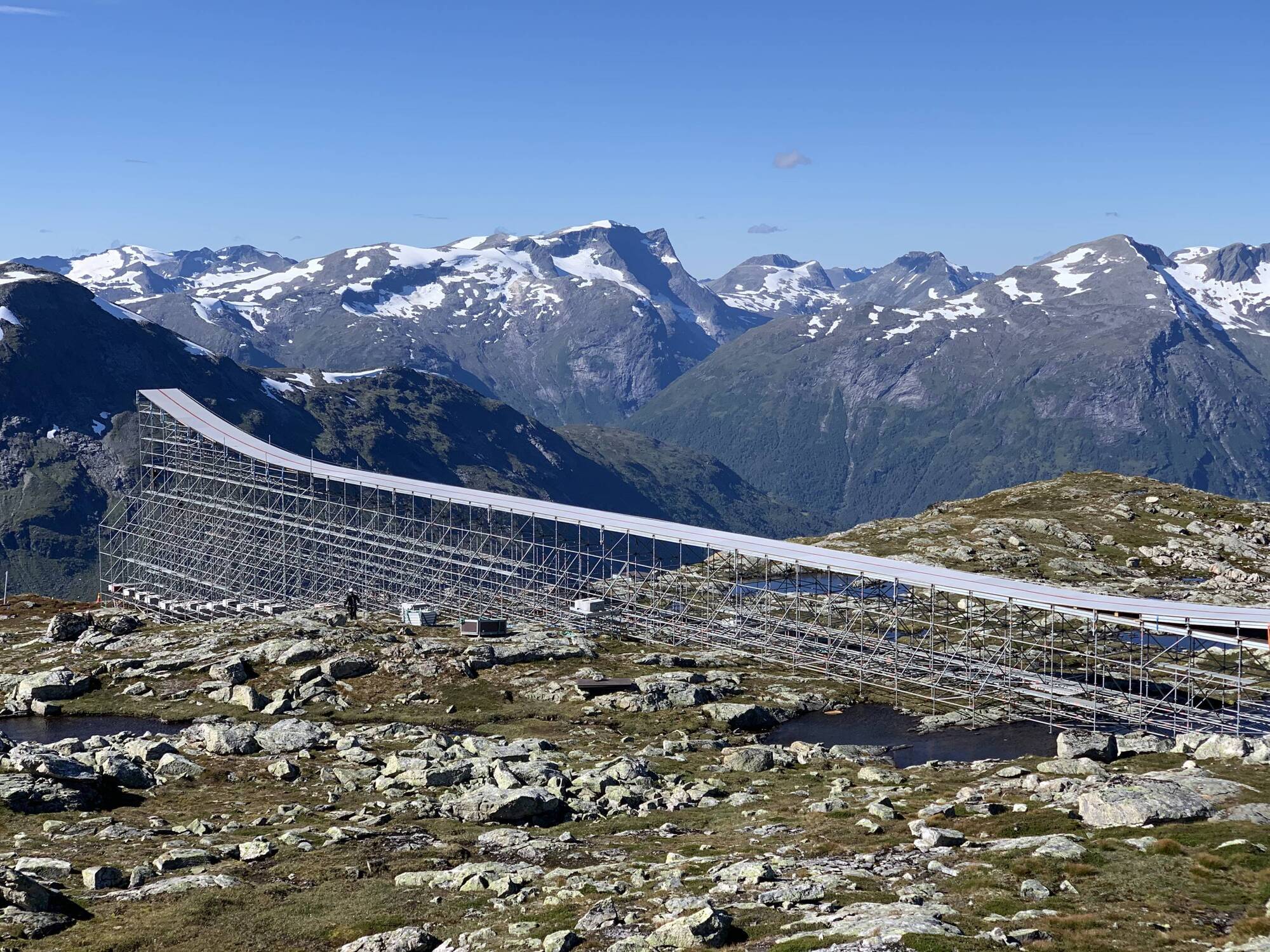
The stunt ramp constructed in Helsetkopen mountain in Norway with the assistance of Dingle man Mike O'Shea for the most recent 'Mission Impossible' film starring Tom Cruise.

The stunt ramp constructed in Helsetkopen mountain in Norway with the assistance of Dingle man Mike O'Shea for the most recent 'Mission Impossible' film starring Tom Cruise.

Asking Mike O’Shea if he’s been anywhere interesting recently is to invite a travelogue traversing much of the world. 

In his position as film stunt consultant and construction adviser, he’s spent the past two years working on the latest Mission Impossible feature film, much of which was filmed around Helsetkopen mountain in Norway. 

Dingle native Mike was fully involved in the design and construction of the enormous ramp from which Tom Cruise undertook the most challenging stunt in his career. 

Add to that, his more recent work on the Dune sequel in Jordan and Abu Dhabi, the final Indiana Jones film in Sicily, Daniel Craig’s last outing as James Bond in No Time To Die, shot in the Faroe Islands and, most recently, working with director Ridley Scott on Gladiator 2, filming in Morocco. 

Pinning him down for a specific job description is where the conversation drifts to encompass a wide range of occupations, as Mike explains: “I do a lot of different jobs, depending on where the production is and what they need done. Over my years in the business, I’ve undertaken many different jobs, which is partly why a lot of people work with me — my skill set covers a few areas.” 

Tom Cruise pictured with Mike O'Shea and 'Mission Impossible' director Christopher McQuarrie

His background in film production has been flexible, compared to the majority of people in the industry who are very specialist in a single role and title. 

“I’ve done everything from transport to expedition logistics to general construction tasks, all of which have given me a broad range of experience and enabled me perform a lot of different roles.” 

Being capable of handling more than one film production occupation has ensured the affable Kerryman more work than he can handle all over the world: “Basically what often happens is that I’ll be employed to do one job, but then I might end up doing three other jobs with it.”

While he is not short of anecdotes and yarns from a rich career in a major global industry, his recent involvement in designing and constructing the now famous ramp in Norway for the latest Mission Impossible film must be a standout. 

Jaw-dropping stunt

The jaw-dropping stunt sees the film’s star, Tom Cruise, drive a motorbike off that ramp over a 4,000-foot cliff, and then float down by parachute into a tight landing zone squeezed between over-hanging and treacherous cliff-faces. 

The original idea for the stunt had been a Cruise ambition for many years — and became a task given to Mike well in advance of when the filming began. 

“Ever since Tom was a young guy, this was the big one he’d always wanted to pull off. In effect, it was the culmination of a physical skill set from motorcycling to parachuting to base jumping that he has built up over many years. 

"When I was first contacted about it, I spent two months in Dingle at the start of covid designing the ramp and doing the concept drawings.”

Focusing initially on the design and its inherent safety elements, Mike and his team then began to incorporate the ramp’s possible texture and contours, and well as its ability to endure severe climate changes. 

“We were going to Norway, where you get severe extremes of rain, snow and wind, so it needed to be able to withstand that kind of challenge for an extended period of time.” 

They first built a test ramp in the UK, measuring 110m long — a trial construction to help them iron out any significant construction bugs. 

“We spent a lot of time running that and testing it, with Tom himself motoring down it many times to test it for exactly what he had in mind for the film sequence.” 

By the time they constructed the actual ramp in Norway, it ended up being 205m long — all of which was done at the height of the pandemic, and in the midst of its necessary safety restrictions. 

“We were based between a hotel and two cruise ships which we had entirely to ourselves. We would step off the cruise ship and jump on a helicopter to work every day — and ended up doing over 4,000 helicopter runs between builds and the actual shoot itself.” 

Extreme weather

Constructing the ramp in such a remote location became an especially arduous task, particularly due to extreme weather: “On our first day up there, we got two hours of work done, and then a massive snowstorm blew in and we had to be helicoptered off. 

"The next day up there, we got hit by another storm and we had to walk out of there most of the way before being picked up by a helicopter halfway down a cliff face. The weather was absolutely horrific. Even when we had built the ramp and as we were shooting the film, the constant snow and freezing temperatures meant we began each day salting and melting the ice on the ramp so Tom could drive his motorcycle at high speeds along it on practice runs.”

Having been part of film productions with some of the most famous Hollywood faces, Mike has no hesitation in underlining Tom Cruise’s dedication to his art. 

“To say he has a good work ethic would be a huge understatement — he is frighteningly focused on every aspect of the film and his performance. And he’s incredibly technical, needs to be involved in every detail.” 

At 61, Cruise continues to break new boundaries, always going the extra mile for a better-finished product. “He’s a consummate professional, was involved in every part of the ramp design, wanted to understand how it worked, why we were doing this and that, all aspects of it.” 

Against expectations, there was little sign of ‘star’ behaviour from the man whose films have earned billions at the box office. “I always have a good laugh with him, and he’s always up for a good slagging.

Basically, he’s a very good guy who a lot cares about the team.”

From an early age, Mike O’Shea has pushed his own boundaries, beginning with climbing the MacGillycuddy's Reeks, and subsequently volunteering with Kerry Mountain Rescue for a decade. His adventurous spirit led him to be one of the first people in Ireland to be awarded the prestigious Gold Gaisce — The President's Award. 

Throughout his life, he has climbed extensively in the European Alps, Mount Cook in New Zealand and was part of the 1993 K2 West Ridge expedition. 

In 2012, he began a series of expeditions entitled ‘The Ice Project’ — aiming to cross all of the world’s major ice caps with fellow adventurer Clare O'Leary. The pair made an unsuccessful attempt to be the first Irish team to walk to the North Pole in 2012 and repeated their efforts two years later. 

Mike also oversaw the re-erection of the steel cross at the summit of Carrauntoohil in 2014. 

At age 53, the Dingle man is a long way from retirement anytime soon. To those who would wish to emulate his adventurous lifestyle, he offers this advice: “You need to be strong, well trained and patient, but above all you need to be a planner. Planning means working smart before you set out.”

x

More in this section

The Business Hub

Newsletter

News and analysis on business, money and jobs from Munster and beyond by our expert team of business writers.

Cookie Policy Privacy Policy Brand Safety FAQ Help Contact Us Terms and Conditions

© Examiner Echo Group Limited