Eamon Quinn: ECB faces credibility test as it tries to tame inflation with interest rate hikes
Critics question the ECB's strategy as it signals it may approve further rate rises when it next meets on June 15
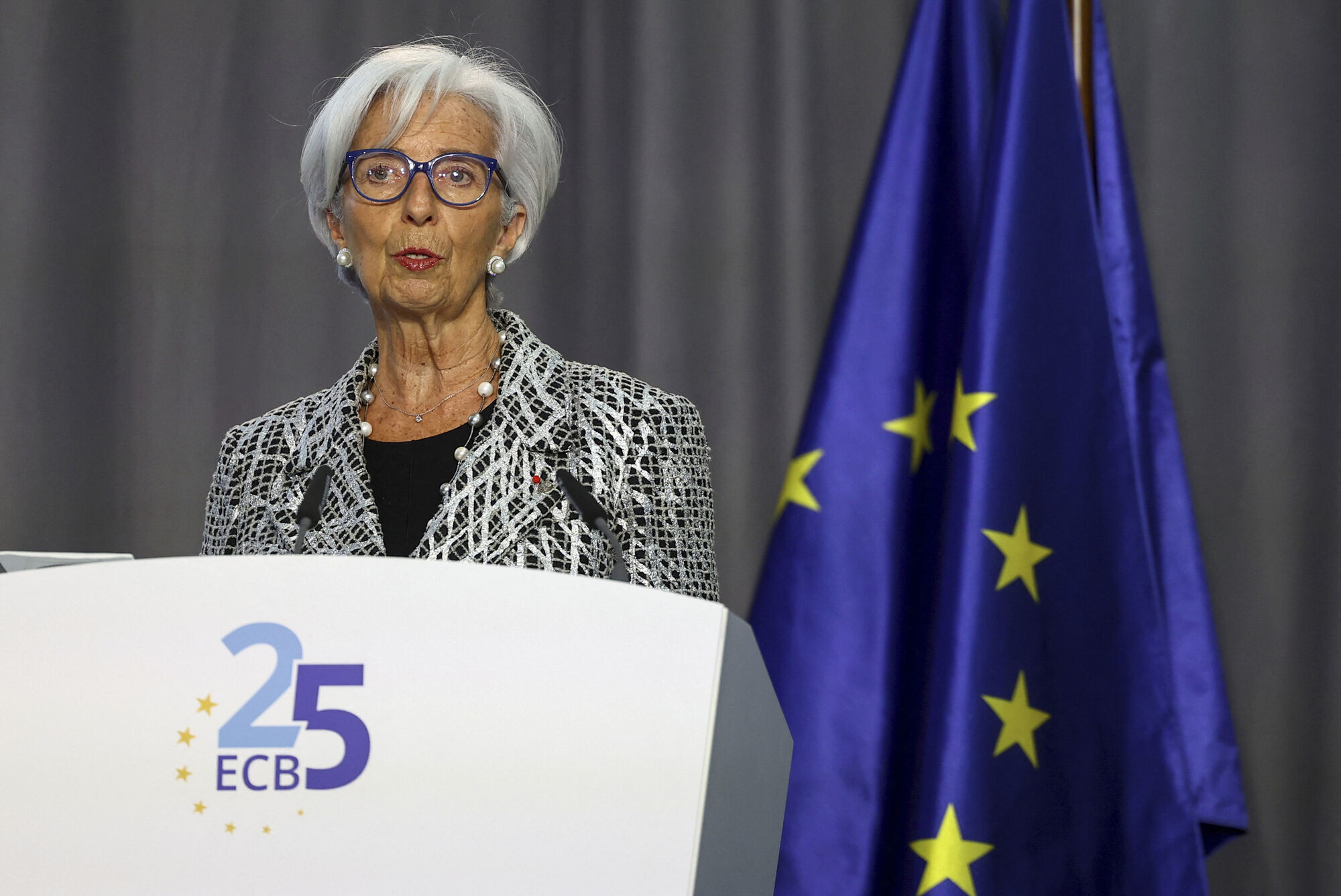
ECB president Christine Lagarde. Eamon Quinn writes that the ECB 'gets remarkably little scrutiny over the way it is going about its job fighting the current inflation crisis'. Picture: Kai Pfaffenbach/AP

ECB president Christine Lagarde. Eamon Quinn writes that the ECB 'gets remarkably little scrutiny over the way it is going about its job fighting the current inflation crisis'. Picture: Kai Pfaffenbach/AP

For an organisation that played a leading role in the mismanagement of the last debt crisis, the European Central Bank (ECB) gets remarkably little scrutiny over the way it is going about its job fighting the current inflation crisis.

The cost-of-living crisis bearing down on European households and businesses has been marked by the once unthinkable return of 1970s-style inflation, although the price shocks unleashed when Vladimir Putin, president of energy-rich Russia,  invaded food-rich exporter Ukraine were not of the ECB’s making. 

The hammer blows delivered to sickly global supply chains following the pandemic were also obviously outside its control.

However, fighting hot inflation — or its twin evil, deflation — was what the independent ECB was set up to do. Since last summer, the ECB has aggressively hiked rates, with president Christine Lagarde as recently as last week signalling more rate rises were on their way for households and businesses, when it next meets on June 15.

New crises, new tests

Critics of the tough-speaking ECB fear the hawks are back and worry the central bank is in danger of policy mistakes, should it hike interest rates to too-high levels, and keep them there for too long. They draw parallels between the recent Old Testament rhetoric and the dogma displayed when the ECB faced its first existential crisis during the debt crisis. In 2011, the central bank opted to raise interest rates, before it was forced to change course.

But new crises bring new tests and, since last July, the ECB has appeared to go back to its orthodox roots displaying a rigour or belief in its inflation targeting.

When the issue of communication comes up it is usually a reference to central banks or governments failing to bring financial markets with them: Famously, the British leadership of Liz Truss and chancellor Kwasi Kwarteng unravelled after a few weeks when her plans for inflating the economy at a time of rampant inflation failed the credibility test by financial markets.

There is little danger of the ECB failing such a test: Futures markets appear to be in lock step with the central bank in betting on rate rises, and projecting the ECB will be slower than some counterparts when the time comes to cut rates.

'Dirty little secret' of economics

But talk to senior economists and they will tell you economists and central banks can over the short term understand price pressures from, say, food and energy costs, but are at sea when plotting inflation over a longer term. Or, as a senior economist in London has put it, there is “a dirty little secret” at the heart of economics in that economists — and, by extension, central banks — understand less about inflation dynamics than most would like to admit. 

Closer to home, economist Austin Hughes says that the ECB has “miserably failed” through 15 years to keep inflation on target, and the central bank is overplaying the role of interest rates to land soaring inflation where it wants.

Observers have also noted the drifting since last summer in the inflation measure the ECB is targeting. As energy prices cooled, the key rate has become the core or underlying rate of inflation. 

In her speech in Hanover last week, Ms Lagarde mentioned the inflation word, perhaps not unreasonably, a few dozen times. But signalling more rate rises she said there was no evidence that underlying inflation had yet peaked.

“Today, to return to my analogy, the airplane is still climbing — and it will keep going until we have enough speed to glide sustainably and land at our destination,” she said. 

Critics say that such confidence in interest rates to deliver for the ECB and for millions of citizens in the eurozone are misplaced.

More in this section

The Business Hub

Newsletter

News and analysis on business, money and jobs from Munster and beyond by our expert team of business writers.

Cookie Policy Privacy Policy Brand Safety FAQ Help Contact Us Terms and Conditions

© Examiner Echo Group Limited