Cities ‘a really good place to start’ in drive to cut carbon emissions
Cities ‘a really good place to start’ in drive to cut carbon emissions

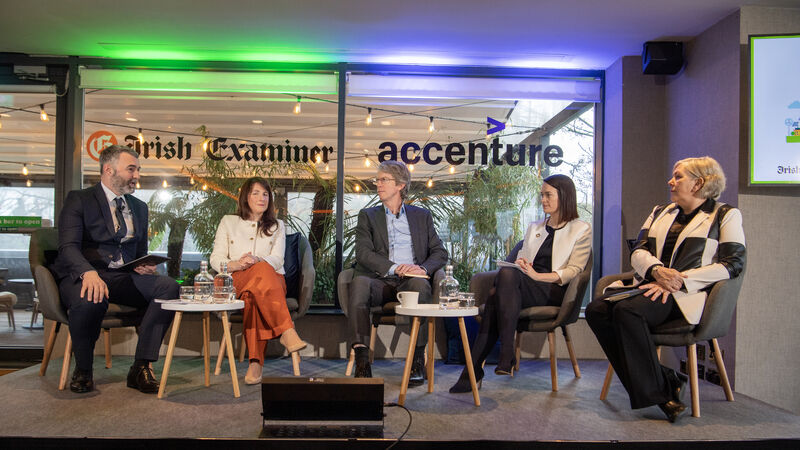
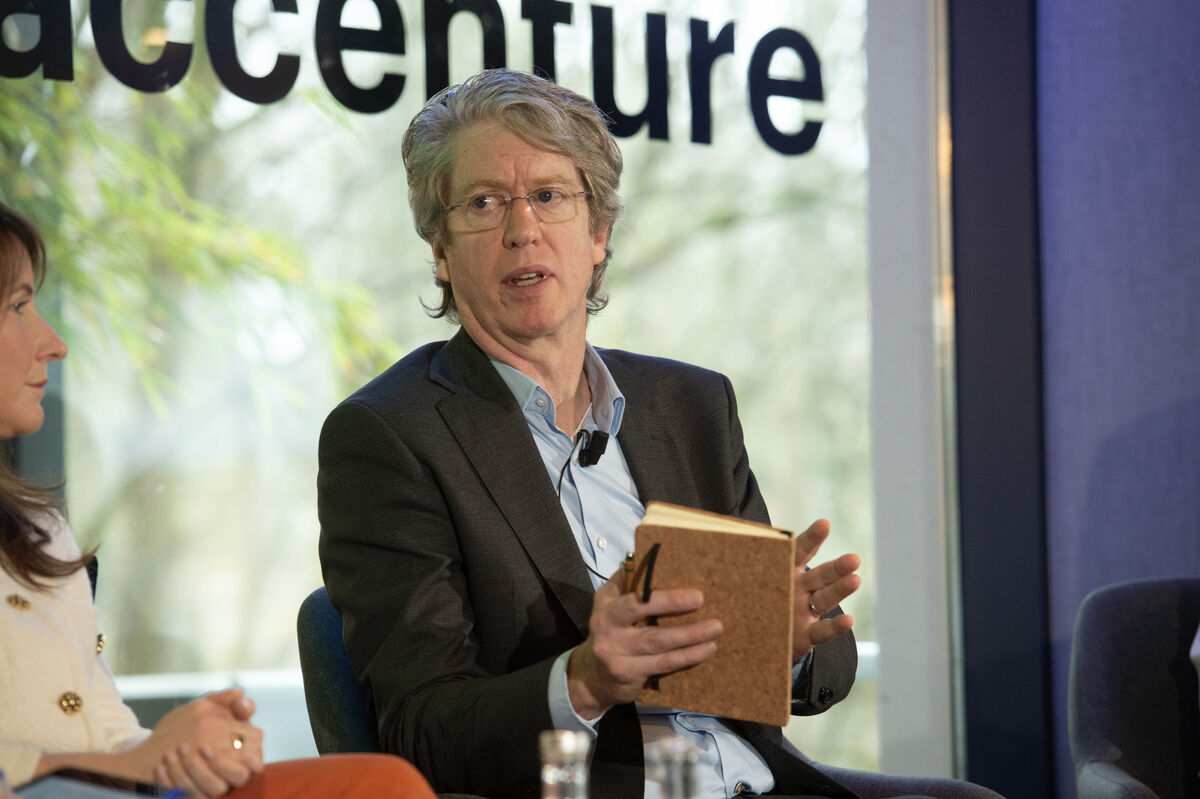
Irish Examiner Munster Business Hub Editor Alan Healy with speakers, Karen O'Regan, Accenture Ireland Managing Director, Paddy Hayes, Chief Executive; ESB, Dr Marguerite Nyhan, Associate Professor in Environmental Engineering & Future Sustainability; UCC and Ann Doherty, Chief Executive; Cork City Councilat the Irish Examiner Net Zero Carbon Cities Cork business breakfast in association with Accenture at the River Lee Hotel, Cork. Picture Dan Linehan

Considering that half the world’s population and more than three-quarters of energy emissions emanate from cities, tackling carbon reductions there “is a really good place to start”.
That was one of the key messages from the Net Zero Carbon Cities Cork, which heard from sustainability, energy, and local government experts on the challenges and opportunities facing the city as Ireland moves towards a 51% emissions-reduction target by 2030 and climate neutrality by the middle of the century.

Strategy lead at Accenture in Ireland, Karen O’Regan, told the Irish Examiner event that moving towards a sustainable city is not just about reducing emissions in Cork, but also about improving the air quality and health, and developing an equitable system where people are not left behind in the transition.

Recent research carried out as part of Cork’s inclusion in the World Economic Forum’s (WEF) Net Zero Carbon Cities initiative, spearheaded by Accenture, found that local transport contributes 31% of Cork City emissions; built environment accounts for 27% of the city’s emissions, with this percentage split across domestic and commercial building energy use (3:1); and power and energy infrastructure in the city constitute 36% of local emissions.

The research was carried out by University College Cork for the initiative. Cork is the first Irish city to be included.

Accenture brought 18 organisations including UCC, AIB, Cork City Council, ESB, Gas Networks Ireland, and wholesaler Musgrave together for the initiative, which aims to accelerate progress towards net zero emissions in cities around the world.

Ms O’Regan said that the 18 organisations had come on board without obligation, and that this kind of collaborative effort and dedication towards improving city life is going to be paramount in the coming years.

Cork people would be shocked to hear that air pollution in the city can exceed that of London on some days of the year, she said.

 Paddy Hayes, Chief Executive; ESB, speaking at the Irish Examiner at the Irish Examiner Net Zero Carbon Cities Cork business breakfast in association with Accenture at the River Lee Hotel, Cork. Picture Dan Linehan
Paddy Hayes, Chief Executive; ESB, speaking at the Irish Examiner at the Irish Examiner Net Zero Carbon Cities Cork business breakfast in association with Accenture at the River Lee Hotel, Cork. Picture Dan Linehan

However, transforming Cork will require buy-in from individuals, she and the panel of speakers concluded.

The local authority’s chief executive Ann Doherty said that cities such as Cork had to have courage when it comes to making politically difficult choices in communities.

The trade-off from some gardens in existing homes being downsized to make way for bus lanes may be a difficult choice, but the upside of pollution-free communities unencumbered by traffic gridlock and thriving biodiversity could bring communities along, she said.

The covid pandemic proved to be a learning experience of what is important to people, she said, but conversations need to be had at a local level.

UCC associate professor in environmental engineering and future sustainability, Marguerite Nyhan, said that there was a saying that the battle for sustainability will be won or lost in cities.

She also said that while there are big challenges ahead, there are also vast opportunities to invest in green infrastructure that will lead to creating better and healthier cities.

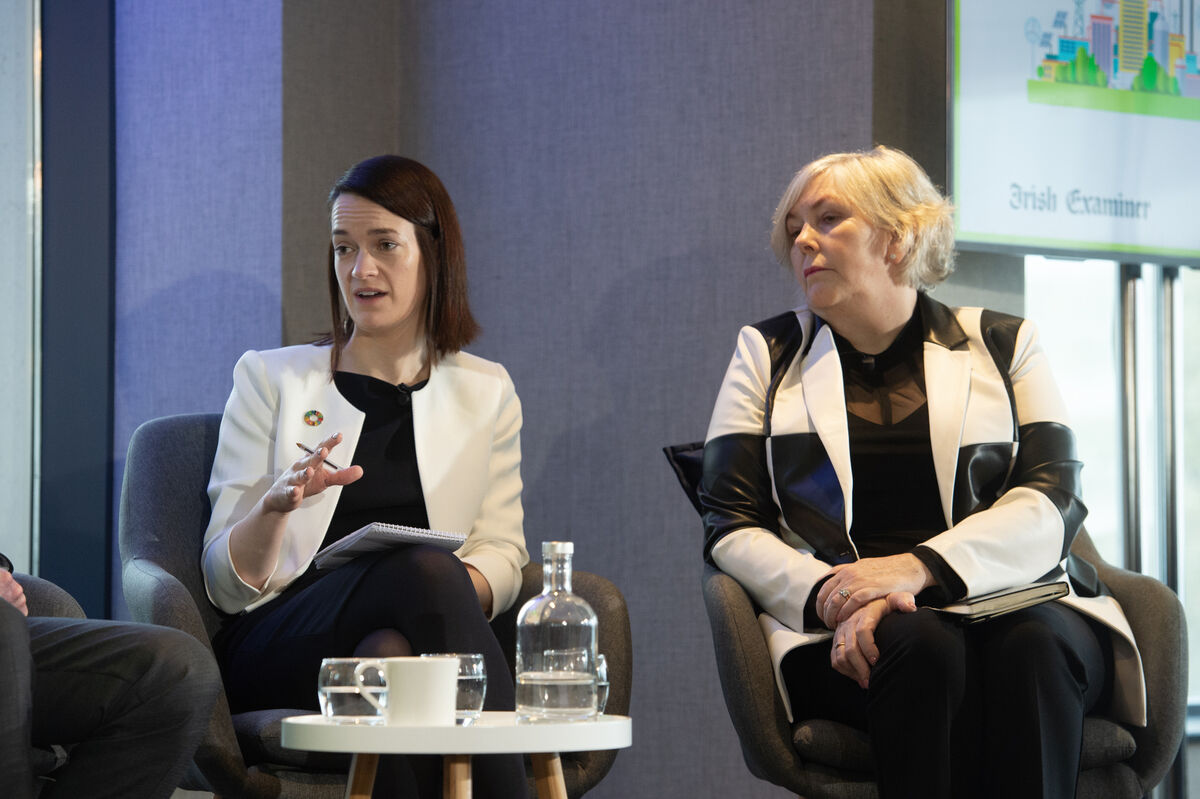
 Speakers Dr Marguerite Nyhan, Associate Professor in Environmental Engineering & Future Sustainability; UCC and Ann Doherty, CEO Cork City Council at the Irish Examiner Net Zero Carbon Cities Cork business breakfast in association with Accenture at the River Lee Hotel, Cork. Picture Dan Linehan
Speakers Dr Marguerite Nyhan, Associate Professor in Environmental Engineering & Future Sustainability; UCC and Ann Doherty, CEO Cork City Council at the Irish Examiner Net Zero Carbon Cities Cork business breakfast in association with Accenture at the River Lee Hotel, Cork. Picture Dan Linehan

There remains lots of work to be done around behavioural and societal changes, Ms Nyhan added.

Chief executive of ESB, Paddy Hayes, told the event that Cork is primed to be one of the country’s most strategic places for the coming offshore and green-hydrogen revolutions.

His organisation is “absolutely determined” to get out of the coal-fired power station at Moneypoint in Co Clare by 2025, he said.

While there has been a “lot of work” on the east coast when it comes to offshore wind, there has not yet been as much off the south and west, where Cork will play a major role, he said.

The opportunities lie not just in fixed offshore infrastructure but also in floating facilities, he added.

Large-scale energy storage will also need to come into the picture, with green hydrogen a “frontrunner” when it comes to renewable energy in the future, according to Mr Hayes.

While many countries have been out in front for years on renewable energy infrastructure, there are advantages to only scaling up now, he said.

The technology has moved on rapidly even from six or seven years ago, he said, meaning Ireland can be at the forefront of the advances rather than relying on older models.

According to the WEF, cities “are the frontline in tackling climate change”.

Cities house more than half of the people in the world and account for in excess of two-thirds of global emissions, yet they cover only 3% of the planet’s land surface, it said.

It has been projected that by 2050, over two-thirds of the world’s population will live in cities, and changes need to happen now to reduce emissions and deliver resilient and equitable urban ecosystems, according to the WEF.

More in this section

The Business Hub

Newsletter

News and analysis on business, money and jobs from Munster and beyond by our expert team of business writers.

Cookie Policy Privacy Policy Brand Safety FAQ Help Contact Us Terms and Conditions

© Examiner Echo Group Limited