IMI: Challenging times — but don’t underestimate our capacity for resilience

Irish business leaders are more resilient than you might think, writes Dr Simon Boucher
The past few years have been difficult for businesses and workers.
The past few years have been difficult for businesses and workers.

Emerging from over two years of Covid-19 related disruption, the phrase ‘out of the frying pan and into the fire’ comes to mind when taking stock of our situation.

Spiralling inflation, war in Ukraine, and the domino effect of that crisis on energy prices and cost of living, all set against a backdrop of WEF warnings that the global economy can expect ‘constant volatility and multiple surprises’ over the coming years.

As we jump from one crisis to another, one could certainly be forgiven for having a rather bleak outlook.

And yet, we might be more prepared to face these new challenges than one might think. Don’t underestimate our resilience, at least if the findings coming out of our second-annual Organisational Resilience Survey are anything to go by.

This summer, my colleagues and I at the Irish Management Institute (IMI), in conjunction with Cork University Business School, conducted a comprehensive study on the responses of 254 Irish business leaders and senior managers to the Covid-19 pandemic.

While the research focused specifically on organisational resilience related to the pandemic, the learnings are fully applicable within a wider context. The resilience, agility and adaptability we displayed throughout Covid will stand to us when navigating fresh challenges beyond the pandemic.

Organisational resilience

So what do we mean by organisational resilience? We zeroed in on some key factors: Firstly, an organisation’s capacity to adapt and respond to crisis, specifically relating to how they balanced long-term and short-term issues, cost-reduction measures, staffing considerations and treatment of employees, etc.

Secondly, how well an organisation communicated internally and externally during the crisis. Third, how the crisis affected trust levels between employees and management as compared to pre-pandemic levels. Fourth, how the practice of leadership evolved within organisations. And finally, how equipped organisation are for the future, specifically in their ability to handle future challenges.

Diving into some key numbers, 85% of leaders felt their organisation responded ‘well’ or ‘very well’ to the pandemic (down 1% from last year), while just 4% felt their organisation responded ‘badly’ or ‘very badly’. Overall, a positive picture emerges, but with room for further improvement (68% of leaders felt their organisation balanced short-term and long-term issues ‘well’ or ‘very well.’)

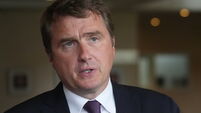
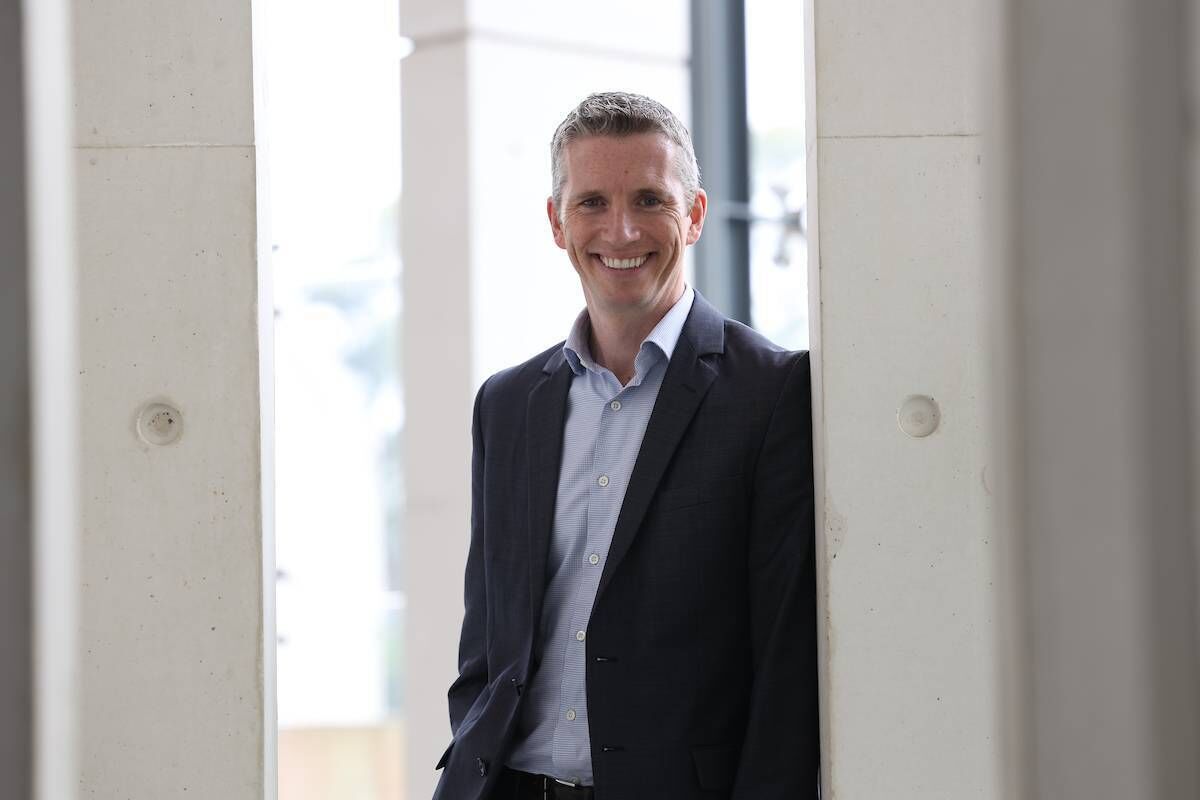
Simon Boucher: Three quarters of business leaders are hopeful about their organisation's future.

One respondent told us: "Investment in staff, especially training, bears fruit over the longer term…and was a contributory factor in how well we were able to adapt to the challenges presented by Covid."

Leaders were also questioned about levels of trust between senior managers and staff, both at the time of the survey and before the pandemic.

Some 78% of leaders felt there were high levels of trust between senior managers and staff, up 3% compared to before the pandemic. Overall, our research found that high-trust organisations responded well to the crisis, improved leadership and treated staff well, although it’s worth noting increases in trust were greater in the private sector (up 4%) than the public sector (up 3%).

Some 75% of leaders claimed to be hopeful about their organisation’s future (down 11% from last year), while 76% felt they had built up some level of positive resilience within their organisation since the beginning of the pandemic, and the same percentage felt the practice of leadership had improved over the past 2 years.

One respondent emphasised: "While the future is highly unpredictable, being prepared and having a clear focus of what needs to be achieved in a short span of time is key."

These figures are in line with trends we’ve observed beyond this survey, such as increases in worker and organisational agility resulting from the pandemic. Because agile organisations require an environment of trust that doesn’t lend itself well to traditional hierarchies, we’re seeing flatter organisations with less need for traditional management practices — but an increased need for true leadership skills.

With that, comes a shift away from the traditional management problem of command and control, and towards the leadership challenge of freedom and trust — and how to create an environment which empowers employees to do their best work.

Leaders and managers who remain reactive rather than proactive cannot support and empower an evolving workforce. In order to adapt to oncoming challenges, leaders must be equipped with new skills — to build trust, to get the most out of their teams, and to allow employees, who expect more meaning, choice, growth and autonomy at work, to self-direct and prosper.

But it’s not enough to order employees to be resilient. Leaders must create an environment which fosters resiliency and stops overlooking structural issues. Building teams that can weather the uncertainty and change we face requires the creation of systems for support and dialogue.

Creativity encouraged

While 92% of leaders say that creativity is encouraged in their organisation, only 21% say experimenting and learning are ‘constantly’ or ‘actively encouraged.’ Likewise only 37% of leaders feel their staff are fully engaged.

Resilience is key to survival when faced with a crisis, but greater employee engagement will be key to thriving in a changing and often disrupted world.

While a number of takeaways emerge from our study — such as improvements in leadership practices and trust levels, with further opportunities for increased staff engagement and creative/experimental workplace practices — the big takeaway might be our capacity to adapt and bounce back is far greater than we thought. That resilience, both at an organisational and personal level, will enable us to dig down deep and not only survive but prosper when faced with fresh crises, both as business leaders and human beings. The next big question is how do we build upon that resilience.

Dr Simon Boucher is chief executive of the Irish Management Institute (IMI). The findings presented in this article are based on a cross-sector survey conducted by the Irish Management Institute and Cork University Business School, University College Cork. The survey examined the views of Irish business leaders relating to their organisations’ resilience before and during the Covid-19 pandemic.

More in this section

The Business Hub

Newsletter

News and analysis on business, money and jobs from Munster and beyond by our expert team of business writers.

Cookie Policy Privacy Policy Brand Safety FAQ Help Contact Us Terms and Conditions

© Examiner Echo Group Limited