ECB chief economist to propose official case for half-point rate hike
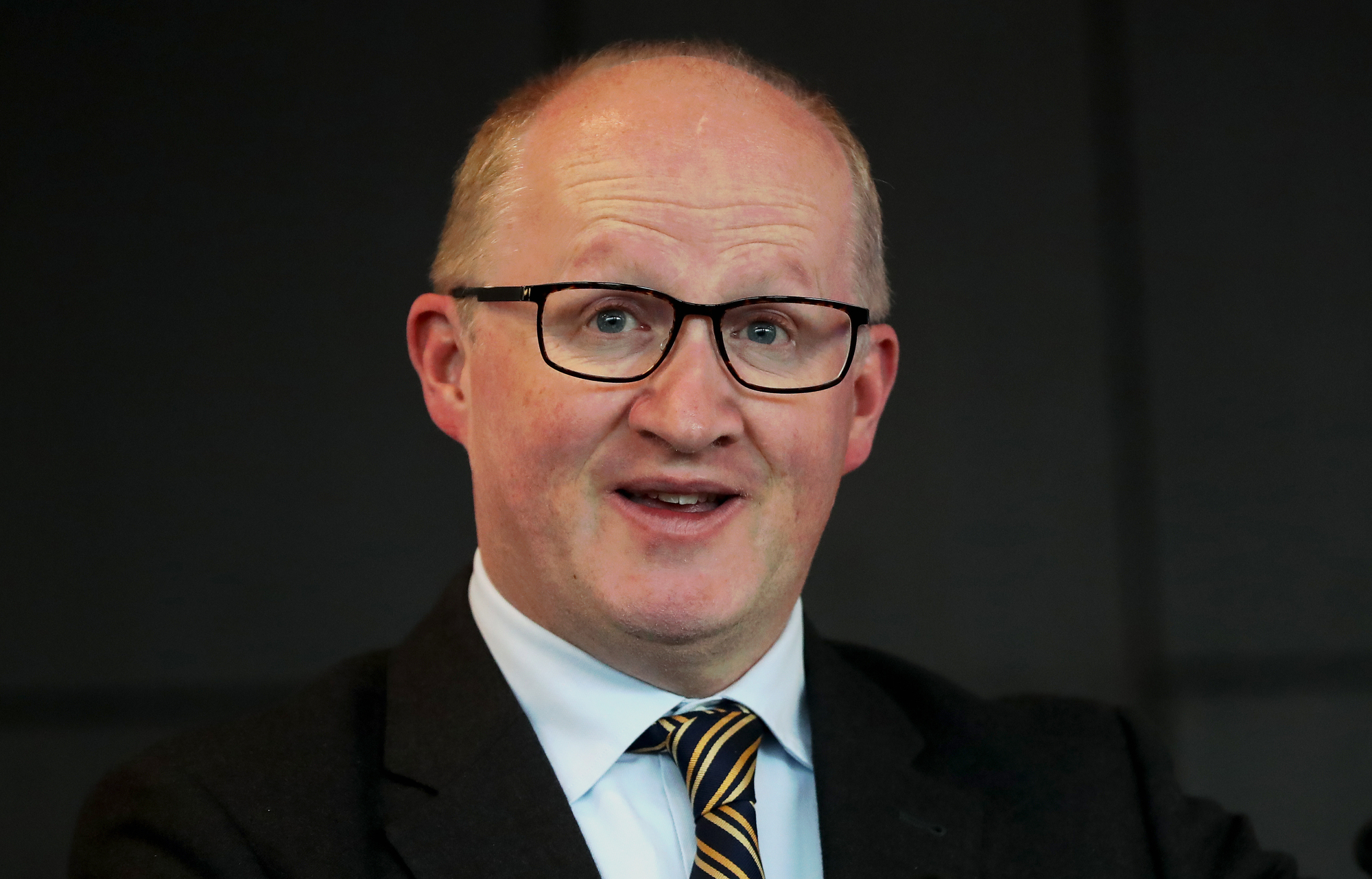
ECB chief economist Philip Lane
The European Central Bank may consider raising interest rates on Thursday by double the quarter-point it outlined just last month because of the worsening inflation backdrop, according to people familiar with the situation.
Such a move would mark a sharp deviation from guidance that the majority of governing council members have stuck to since it was laid out at the June 9 policy meeting and would bring the ECB more in line with the global drive for outsized hikes.
The euro rose as much as 1.1% against the dollar to $1.025, less than a week after falling below parity for the first time in two decades.
Irish mortgage adviser Michael Dowling said two ECB rate hikes over the summer leading to a half a point increase in mortgage rates would add €80 a month, or €960 for the full year, to the cost of Irish households servicing a mortgage.
Any increase of 1% in mortgage rates would add almost €2,000 in a full year for a €300,000 mortgage loan, Mr Dowling has said.
Some 460,000 home loan borrowers on variable and tracker rates could be the first to be hit but all 740,000 residential mortgage borrowers in the Republic would in time pay more, as borrowers on short-term fixed mortgage rates revert to higher borrowing costs.
As officials lift rates this week for the first time in more than a decade, it’s unclear whether there’ll be sufficient support for a 50 basis-point increase, the sources stressed.
Chief economist Philip Lane, the former Central Bank of Ireland governor, will make the official policy proposal at the meeting.
But president Christine Lagarde left space to go beyond 25 basis points, or a quarter point rise, in a June 28 speech, days before data showed eurozone inflation surged more than expected to a new all-time high of 8.6% — more than four times the 2% target.
"There are clearly conditions in which gradualism would not be appropriate," she had said.
“If, for example, we were to see higher inflation threatening to de-anchor inflation expectations, or signs of a more permanent loss of economic potential that limits resource availability, we would need to withdraw accommodation more promptly to stamp out the risk of a self-fulfilling spiral,” she had said.
The majority of economists predict the ECB will hike by 25 basis points this week, with just four of 53 in a Bloomberg survey predicting a half-point increase.
“We do not rule out a 50 basis point rate hike at this week’s meeting,” Matthew Ryan, head of market strategy at Ebury, said before the latest deliberations were reported.
ECB governing council members who have publicly floated a bigger move this month include Austria’s Robert Holzmann, Latvia’s Martins Kazaks and Lithuania’s Gediminas Simkus.
Surging inflation, the euro’s drop below parity with the dollar, and an impression that policy makers are behind the curve are just some reasons for a big increase on Thursday.
Among arguments against are the ECB’s commitment to a quarter-point hike, the market’s acceptance of that, a precarious growth outlook, and Italian political turmoil.
“It’s true that they’ve communicated something else,” Martin Weder, an economist at Zuercher Kantonalbank in Zurich said earlier this week, adding that he has been persuaded to make one of the only forecasts for a half point.
“The signs are clearly pointing to a normalisation of interest rates — and the ECB hasn’t even begun,” the economist had said.
CONNECT WITH US TODAY



Be the first to know the latest news and updates