Inflation and war stoke recession fears for financial markets
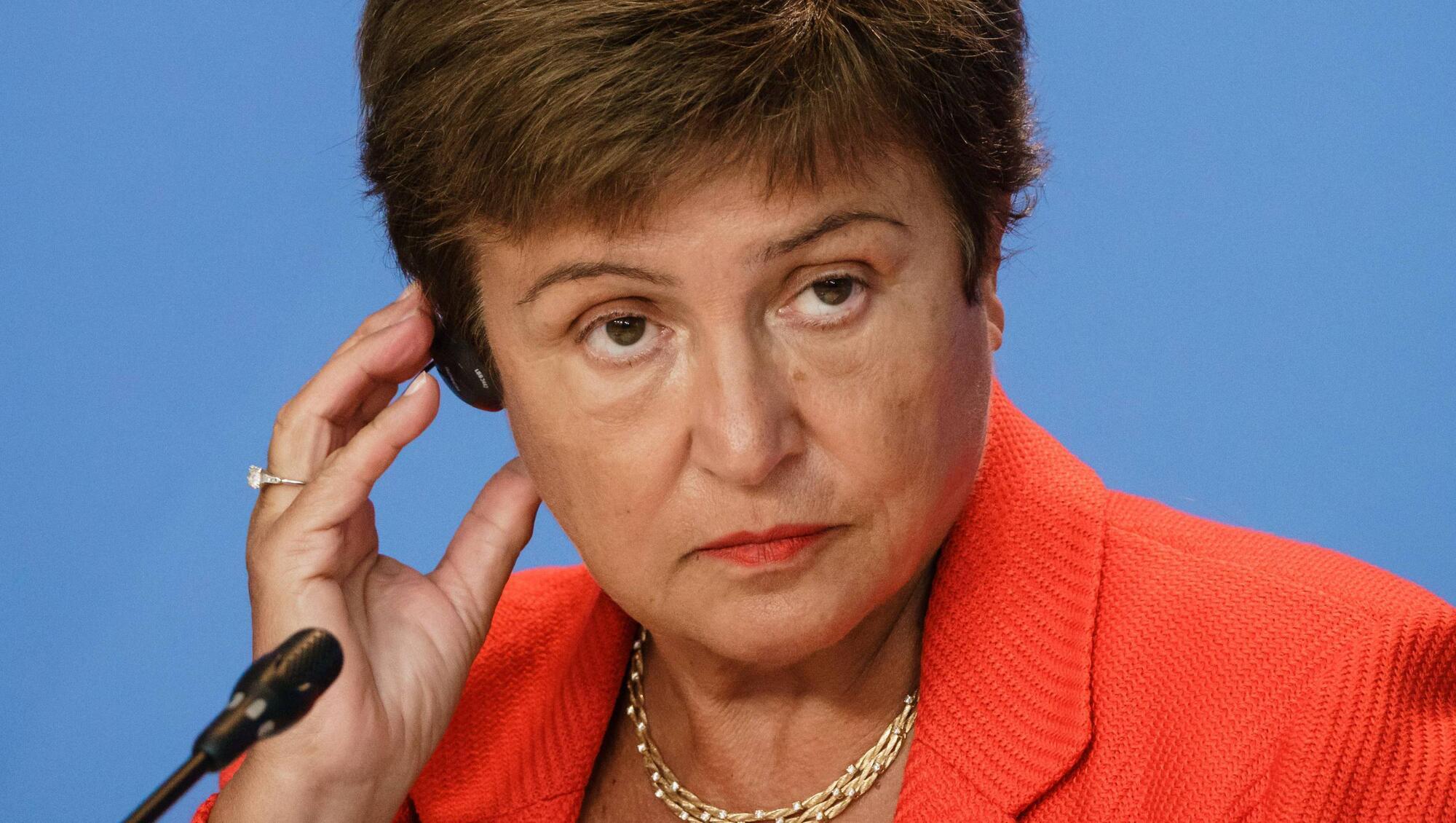
IMF managing director Kristalina Georgieva: 'We are facing a crisis on top of a crisis'.
The fastest-rising inflation in decades and the resulting rush by central banks to raise interest rates are stoking recession fears in financial markets — worries that are being compounded by the impact of aggressive coronavirus lockdowns in China and the war in Ukraine.
In the last week alone, the US and UK logged inflation accelerating the most since the early 1980s and the central banks of Canada and New Zealand provided a model for the US Federal Reserve and others by hiking rates for the first time in 22 years.

Bank of America reported fund managers were the most bearish they had ever been about the outlook for growth and JP Morgan Chase boosted its reserves to insulate itself against an economic deterioration.
Meantime, Sri Lanka and Pakistan fell deeper into crises as the United Nations warned of a “perfect storm” for developing countries as commodity prices surge, the World Trade Organization cut its outlook for commerce, and searches for “recession” on Google spiked.
Against such a backdrop, policymakers head to Washington this week for meetings of the IMF and World Bank.
The IMF is already saying the war means it will downgrade its forecasts for 143 economies this year — accounting for 86% of global GDP.
But there are also reasons to think resilience, albeit with a touch of stagflation rather than global recession, may be the order of the day, at least for rich nations.
Thanks to pandemic-era stimulus, households in developed markets still have 11% to 14% of income in savings, according to a JP Morgan Chase analysis sent to clients last week.
Leverage is at multi-decade lows and income is advancing at an annual rate of about 7% amid tightening labour markets, catalysts for a potential rebound in the second half of the year.
In the US, reports last week on retail sales and consumer sentiment offered hope all consumers aren’t pulling back despite price shocks.
“I see more reasons for the global economy to slow than for it to re-accelerate,” said Stephen Jen, who runs Eurizon SLJ Capital, a hedge fund and advisory firm in London.
Still, that robustness is going to be tested.
The fastest inflation in decades around the world is already starting to turn off many consumers, especially those witnessing higher food and fuel bills.
About 84% of Americans plan to cut back on spending because of higher prices, according to a Harris poll.
Central bankers are also pushing up interest rates with the Fed now more likely than not to boost its benchmark by a half-point next month for the first time since May 2000 and start reducing its portfolio of bonds.
Fed chairman Jerome Powell is expected to address the outlook in an appearance on Thursday.
One danger is that policymakers flip from reacting too late to rising inflation to tightening too much as their economies weaken or if inflation turns out to be driven by supply chain woes that monetary policy can’t address.
The fund managers surveyed by Bank of America saw an 83% risk of a policy error.
“The reason we’re looking at much slower growth is that central banks need to respond by tightening policy from its currently very easy state such that financial conditions will tighten and that will restrain demand,” said Karen Dynan, senior fellow at the Peterson Institute for International Economics.