The challenges facing Ireland's bars and restaurants are far from over

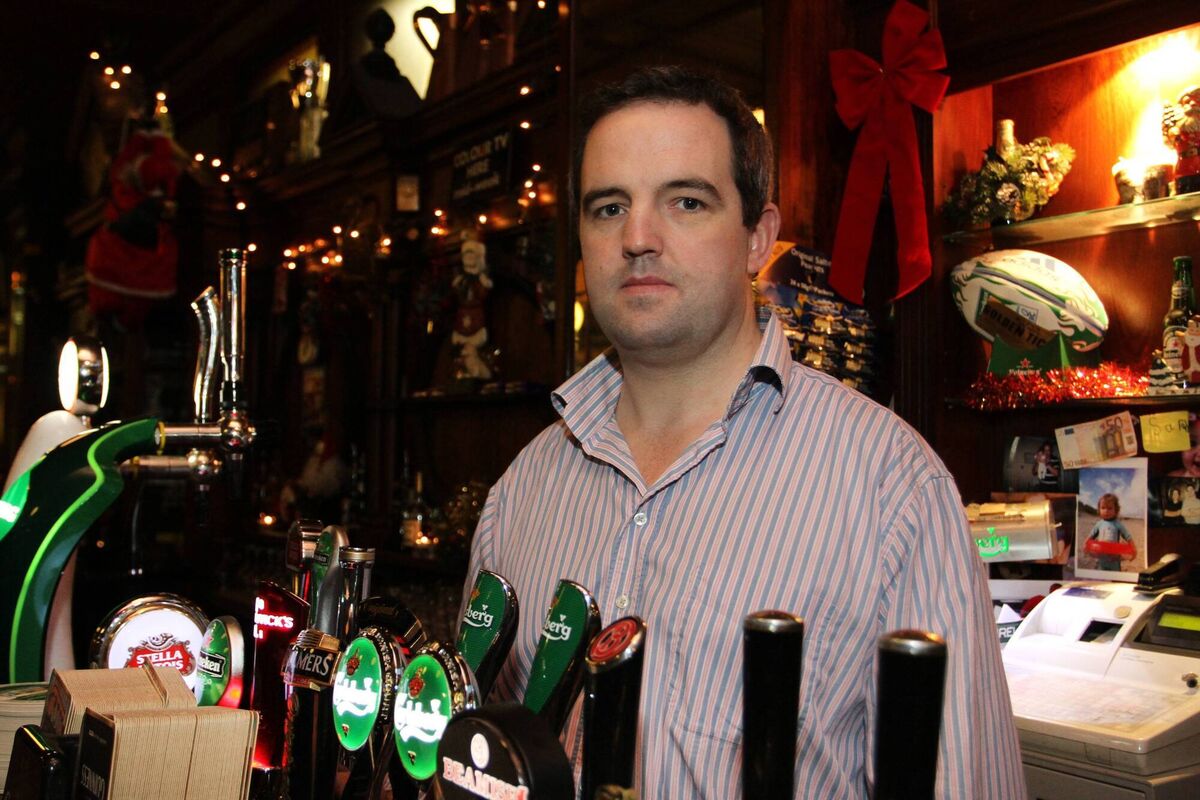
The Swan Bar on Aungier Street was shuttered during the pandemic lockdowns; owner and operator of The Swan Bar Ronan Lynch said 'it’s crunch time now for all hospitality'. Photo: Eamonn Farrell/RollingNews.ie
Ronan Lynch, owner and operator of Dublin's iconic Swan Bar on Aungier Street, is well used to being around doctors and other healthcare professionals as his pub is a popular haunt for Royal College of Surgeon students (RCSI) and alums.
However, over the last two years he has seen little of his usual punters as they were combating the spread of Covid-19 and, like others in his sector, he had to shutter The Swan due to government pandemic restrictions.
Now, those restrictions have come to an end and the business supports, such as the employment wage subsidy scheme (EWSS), that were introduced as a result of them are being wound up.
However, hospitality has been left battered by the impact of the pandemic, as it was one of the most severely impacted sectors by the restrictive measures.
Although hospitality businesses have been granted a one-month extension of the EWSS, which will end in April for everyone else, the sector will not return to a similar normal that existed pre-pandemic.
“It’s crunch time now for all hospitality,” said My Lynch.
“Whether it’s bank stuff or tax warehousing or visas or just the general cost of being closed for that period of time, it’s a very, very difficult time for everybody trying to recuperate and make up for that lost time,” he added.
Although the government have ended Covid-19 restrictions, Mr Lynch has stated that most people have not fully returned to offices which means that for most of the week pubs like his are doing little business.
Plus, with inflation yet to hit its estimated peak of 8.5% in the summer months, people are minding their money.
“It’s very hard for businesses to prosper in that environment,” said Mr Lynch.
Staffing has also become a huge issue for Mr Lynch as with reduced footfall into his pub he has had to reduce staffing hours. Finding staff that will work those hours has been a challenge.
“We’ve obviously had a huge staff shortage and we’re trying to maintain higher standards as well and I suppose there is a skill shortage in the business,” said Mr Lynch.
Some additional supports have been made available to other areas of the economy that were hit hard by the pandemic.
Childcare providers for children in early education for example will be able to avail of a Transition Fund which was introduced by Minister for Children Roderic O’Gorman last week.
This fund will act as a buffer for these workers who have relied on the EWSS.
When asked if such a fund would be made available to hospitality workers, the department of finance did not respond, however, it did say it is monitoring public health closely but does not plan to reintroduce supports and is on track to exit current support schemes such as the EWSS.
The Banking and Payments Federation Ireland (BPFI) recently stated that the recovery of the accommodation and food services sector will be strongly affected because the wages of 70% of its staff were supported by the EWSS.
"The accommodation and food services sector, in particular, is pinpointed as facing significant challenges with activity in the sector at the end of 2021 down by around 15% in terms of value and 20% in terms of volume compared to the first quarter of 2020, a performance which now looks set to be further exacerbated as cost inflation continues to rise and with State supports due to run out in a matter of weeks," the banking representative firm said in its latest SME market monitor report.
The BPFI said that nearly €7.7bn had been injected into businesses due to EWSS by the end of March; accommodation and food services businesses accounted for almost €2bn of this.
In addition, 95,000 firms tapped the tax debt warehousing scheme for €3.1bn in liabilities.
“With a record number of people in employment, full-year data for 2021 shows the Irish economy grew by 13.5%.
"However, as our SME Monitor clearly demonstrates, this recovery is not consistent across the board and many sectors, particularly businesses in the food and accommodation services sector, face a difficult road to recovery as we emerge from the pandemic," said Brian Hayes, chief executive at BPFI.
The economy faces living with higher price levels for some time, said Mr Hayes.
CONNECT WITH US TODAY



Be the first to know the latest news and updates