EU: Inflation pressures to persist in Ireland and rise faster than most of Europe
Inflation pressures have taken on a huge significance because central banks will likely act to increase rates should inflation persist.
Inflation pressures will persist in Ireland for a number of months and will rise faster this year than many other places across Europe, according to the latest country-by-country scorecard from the European Commission.
In its Winter 2022 outlook, the EU projects an average Irish rate of inflation of 4.6% this year, which is higher than the 3.5% rate it forecasts for the eurozone as a whole.
It is also higher than the 3.9% rate it sees for the whole of the EU this year.
The EU forecasts use average rates and point to strong price pressures rising sharply through the early summer months before they ease back somewhat in the second part of the year.
Irish consumer price inflation in December raced to 5.5%, the highest for around two decades, as global price pressures from energy price hikes but also from domestically-driven rental housing costs took hold.
Some economists see Irish consumer price inflation peaking this summer at around 7%.
For its forecasts, the Commission uses so-called harmonised figures which make comparisons easier between consumer price baskets used by various statistical offices across Europe.
In its commentary on Ireland, the EU said that high inflation will persist here in the early part of the year, "while some changes in taxation, such as minimum alcohol pricing" will also bring upward pressure to overall prices.
Ireland's average inflation rate of 4.6% this year will fall to 2.5% in 2023, according to its forecasts.
"The forecast for [EU] inflation has been considerably revised upwards compared to the autumn forecast," the Commission said:
Inflation pressures have taken on a huge significance because central banks will likely act to increase rates should inflation persist.
Central banks like the Bank of England and the US Federal Reserve have either already acted or signalled that they will hike interest rates to ensure that inflation doesn't become embedded in their economies.
From an Irish perspective, the ECB last increased interest rates over a decade ago and has since instituted negative lending rates to banks to keep the costs paid by households and businesses for credit across the eurozone at low levels.
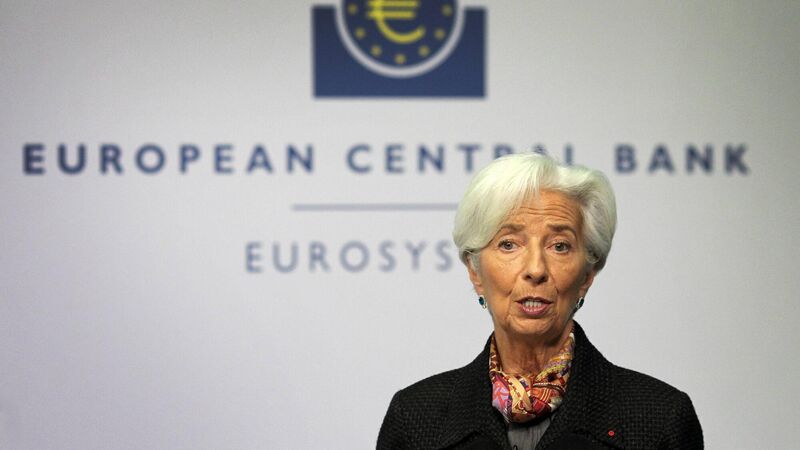
However, in an apparent U-turn last week, president Christine Lagarde failed to rule out for the first time that the ECB wouldn't hike its rates this year.
That would have a knock on effect in heralding costlier mortgages and business loans here.
Nonetheless, the EU still sees the Irish economy growing rapidly this year and in 2023.
It pared its GDP growth estimate for Ireland to 13.7% for 2021, and sees the economy expanding by 5.5% this year and by 4.5% in 2023.
The forecasts compare with the 4% and 2.7% growth rates it projects for the eurozone as a whole, in 2022 and 2023.


CONNECT WITH US TODAY



Be the first to know the latest news and updates