Eamon Quinn: Irish banking hubris, not Sean FitzPatrick, caused the crash
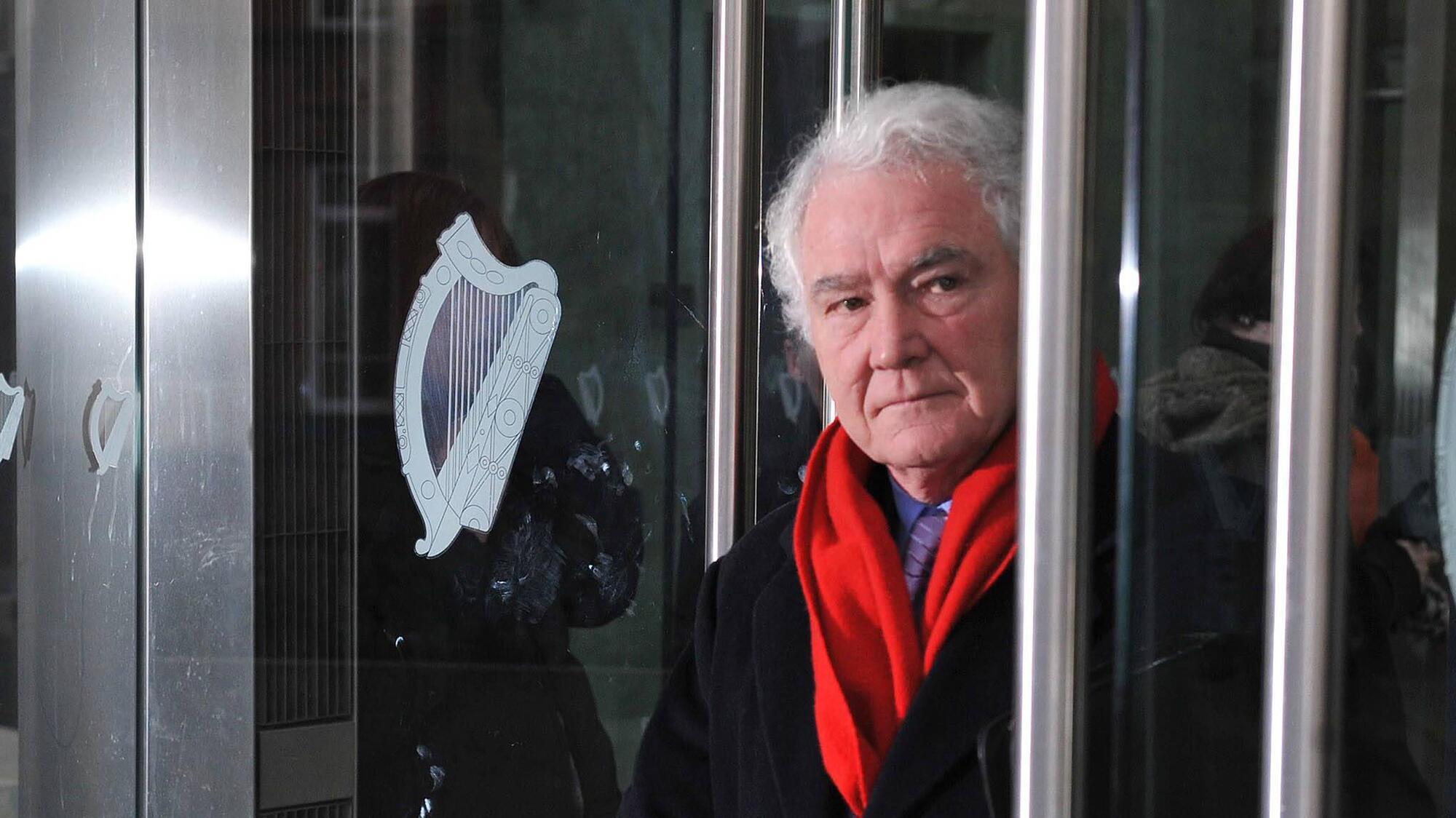
Sean FitzPatrick leaving court in January 2013 after the date for his trial and that of two other Anglo executives was set for the following year. File picture

At the start of a marathon trial, Judge Martin Nolan expressed his concerns that the Anglo Irish bankers should get a fair hearing.
It was April 2014 and the first of several trials of prominent Anglo and other bankers was about to get underway. Judge Nolan went on to refer to Anglo as "probably the most famous, and some would say infamous, bank in this country".
He subsequently instructed jurors they must leave at the courtroom door any prejudices they held against bankers for the country's debt "calamity”.
The comments reflected widespread concerns that what was to be the first in a series of trials to involve Anglo managers and its former chairman Seán FitzPatrick, and bankers from other lenders linked to Anglo, would end in a mistrial. The authorities feared the trial could even spark public protests outside the Central Criminal Court.
A separate courtroom had been put aside to accommodate the crowds to watch by video the course of the trial.
Then something interesting happened. The crowds gathering each morning quickly dwindled and there were no mass protests outside the court.
Mr FitzPatrick was acquitted of all charges that he knew, as chairman of Anglo, of the scheme by the bank to provide loans to 10 developers to buy Anglo shares to help to unwind a huge shareholding built up by businessman Seán Quinn in the bank.
Outside the court that afternoon, as the media huddled to hear Mr FitzPatrick, passersby watched on. A couple mumbled something in his direction but many moved on without even a heckle.
The 2014 trial had pivoted on the legality of loans that Anglo provided in a fruitless struggle to stabilise the bank’s share price.
Already, five years on from the nationalisation of Anglo in 2009 and the subsequent bailout of Ireland by the troika, many people had learned that there was more than Anglo and Mr FitzPatrick involved in the banking disaster.
The international poster boy of Ireland’s banking crash was also acquitted in a subsequent trial, in 2017, that he knew of the hiding of bank loans from auditors.
But in an interview, as he prepared to step down as chief executive in 2003, Mr FitzPatrick said he wanted to step down from running the bank on a day-to-day basis and talked of his contribution to building Anglo.
His comments made to this reporter touched on the hubris of Irish bankers.
“This is going to sound very arrogant but I don’t mean it that way. Who is going to replace Alex Ferguson? And I do believe there are better managers around than Alex Ferguson. The board has got to be brave,” he said.
The billions involved in Ireland’s humiliating bailout in 2010 and the austerity and mass unemployment that it entailed tell a story of the outsized contribution that Anglo and Mr FitzPatrick and other leading bosses at the bank, including David Drumm, who had taken over as chief executive, played in the bailout.
Anglo was nationalised in January 2009, and was subsequently merged with another dead bank, Irish Nationwide, and renamed as the Irish Bank Resolution Corporation, and liquidated in 2013.
Ireland’s citizens were left with the bill. The bill controversially entailed every household having to pay off the debts held by private bank bond investors in Anglo.
The numbers tell some of the story.
There is no doubt that Anglo played a huge role in the disaster but it was only one of a number of banks that included AIB and Bank of Ireland that engaged in lending to commercial property developers involving sums that to this day remains incredible.
However, many former bank chiefs across all the bailed-out lenders have never given full accounts of their lending practices. In a short 36 month period from 2003, their balance sheets ballooned by lending to a small group of developers.
Excluding Anglo, all the major banks at the time, including AIB, Bank of Ireland, and Irish Life & Permanent, needed huge bailouts to keep their doors open, at huge cost to Irish citizens. These and other lenders gobbled up the rest of the €34bn in bank bailouts between them. Anglo, nonetheless, will be forever linked to the crash.
But there were other bankers whose hubris was responsible for the crash.
CONNECT WITH US TODAY



Be the first to know the latest news and updates