Brian Keegan: Northern Ireland needs to start taking business seriously
The North is particularly well suited as a distribution centre for UK goods being sold online to European consumers, and vice versa
Brian Keegan: Northern Ireland needs to start taking business seriously

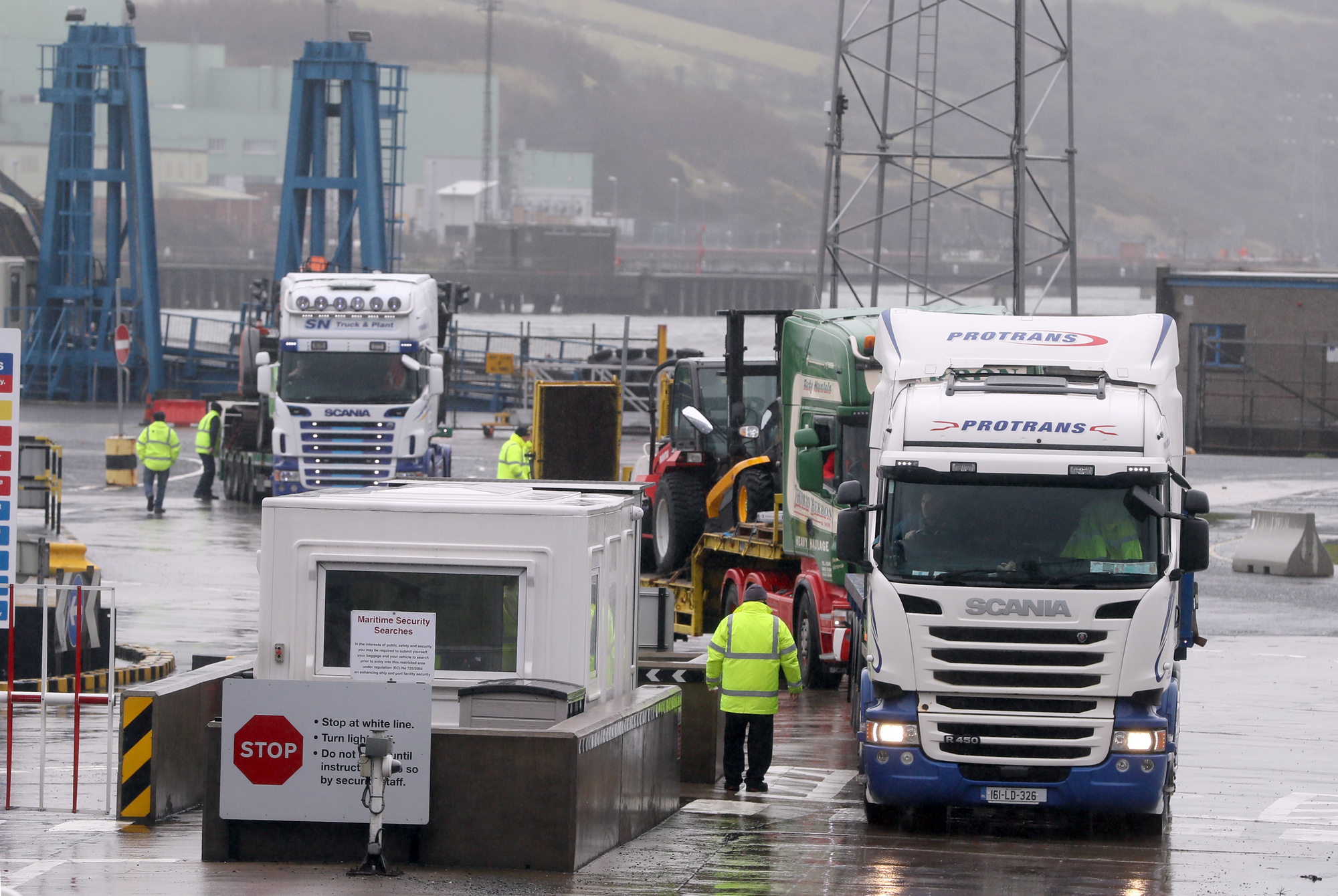
Trucks leaving Larne Port: There are real difficulties for traders being created by the clumsy handling and checking arrangements in operation between Britain and Northern Ireland.

The Northern Ireland Protocol became something of a stone in the political shoe for participants at the G7 meeting this month.

Judging by some of the news reports, discussions on the pandemic and climate change took second place to tensions over the operation of the Northern Ireland Protocol.

While all this was happening, the Northern Ireland executive was on the verge of shutting itself down with the resignation of successive DUP leaders.Ā 

Not that this is anything new. For the bulk of the Brexit negotiation process, which ultimately led to the formulation of the Protocol, the Northern Ireland Assembly was suspended.

This lack of attention to the bigger picture from local political leaders has also resulted in the operation of the Northern Ireland Protocol being viewed largely from the perspective of consumption, rather than from the perspective of production or opportunity.

The North, with both the consent of the British government and the EU to avoid having a land border on this island, is a special trading zone for goods.Ā 

Northern Ireland is both part of the EU customs and VAT union for goods, and part of the UK trade area.

Economic success is not determined by the consumption of sausages, but such are the issues now dominating the political dialogue.Ā 

Undoubtedly, there are real difficulties for traders being created by the clumsy handling and checking arrangements in operation between Britain and Northern Ireland.

Northern Ireland's position of privilege in EU market

Yet, by emphasising the difficulties with the importation of goods into the North, the point is being missed that goods made in Northern Ireland can freely circulate the EU market while also having free access to the British market. That is a unique position of privilege for the North.

That privilege is particularly useful for businesses trading in goods which would otherwise attract high tariffs.Ā 

At present, there are few better places in Europe to establish food-processing plants serving the UK market than Northern Ireland.

The North is also particularly well suited as a distribution centre for UK goods being sold online to European consumers, and vice versa.

The former Stormont economy minister Diane Dodds prioritised ā€œunfettered accessā€ for trade between Northern Ireland and the rest of the UK.

In the current political dialogue, ā€œunfettered accessā€ is a one-way street, apparently limited to viewing the North as a consumer rather than as a distributor or supplier.Ā 

There are many regions both in Europe and, for that matter, in the UK that might cheerfully accept the privileged VAT and customs position of Northern Ireland for the sake of surrendering some of the administrative convenience that goes with it.

Smart businesses are already recognising the opportunities. There are 6,000 more companies registered in Northern Ireland than there was in 2016, the year of the Brexit vote.

There are historical parallels for the North’s position of having a foot in both camps.Ā 

One of the authors of Hong Kong’s economic success was Sir John Cowperthwaite who was its financial secretary in the 1960s while it was still under British rule.

Cowperthwaite went so far as to insist that economic data relating to Hong Kong should not be published, for fear that well-meaning but interfering businesses and officials alike would create havoc with interventionist initiatives.Ā 

The market, and common sense, would ultimately sort everything out.

It is now time for the Northern politicians to take a leaf out of Cowperthwaite’s book and allow businesses to maximise the opportunities which they are already spotting.

  • Dr Brian Keegan is director of public policy at Chartered Accountants Ireland

x

More in this section

The Business Hub

Newsletter

News and analysis on business, money and jobs from Munster and beyond by our expert team of business writers.

Cookie Policy Privacy Policy Brand Safety FAQ Help Contact Us Terms and Conditions

Ā© Examiner Echo Group Limited