John O'Brennan: Why the EU's €750bn Covid recovery fund needs guarding from abuse
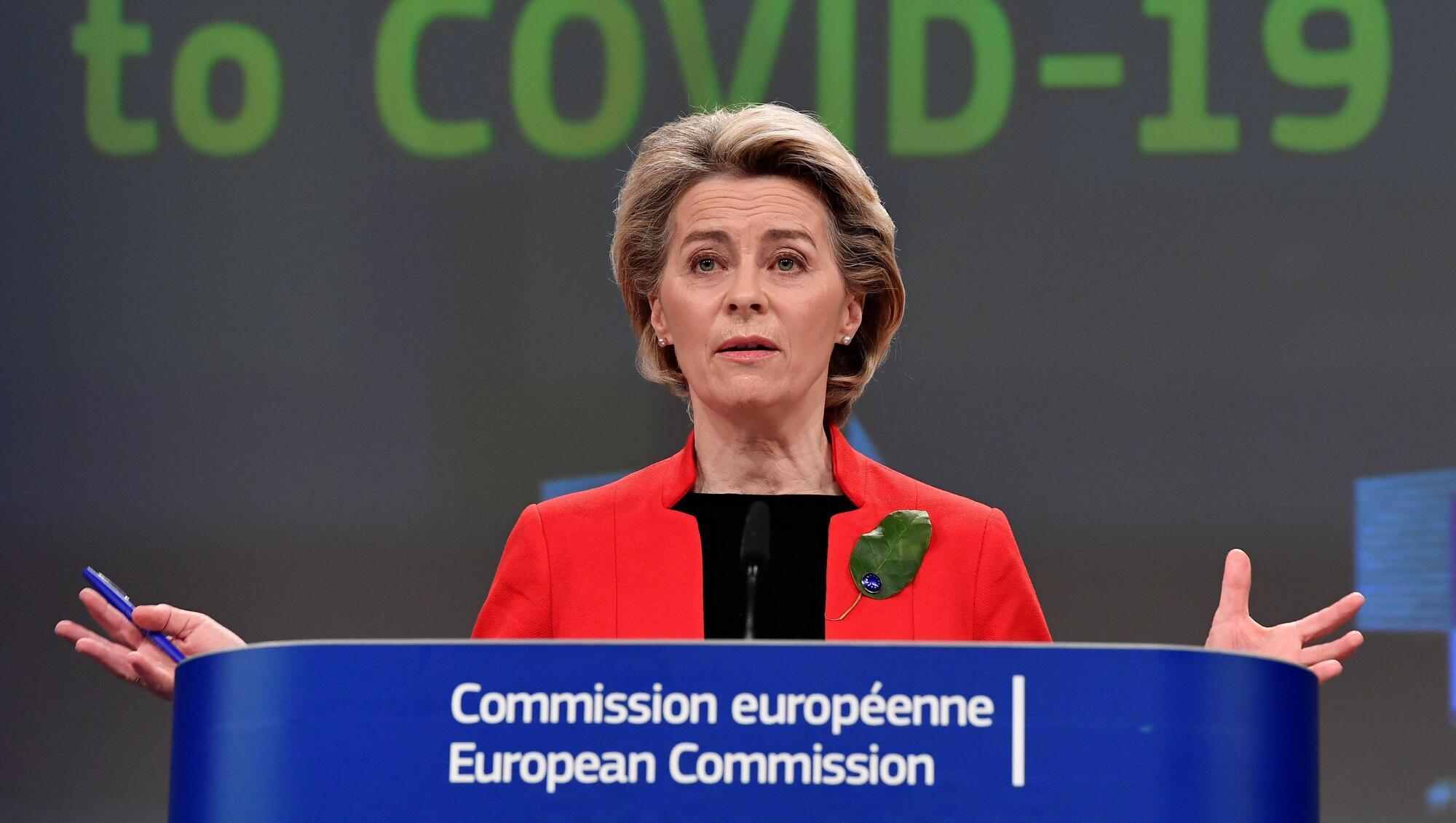
Pictured is European Commission president Ursula von der Leyen. The criteria which govern what member states will receive from the Covid recovery fund are complex.
As the Covid crises eases and the economic fallout from a year of protracted lockdowns looms large, EU governments are finalising their national recovery and resilience plans linked to the €750bn Next Generation or Covid-19 recovery fund.
The fund was finally agreed by member states along with the €1.1trn EU budget for the next seven years.
The Next Generation or Covid fund is an historic step for the EU because it allows the European Commission to borrow money on capital markets and distribute it in the form of grants and low-interest loans.
The rules stipulate that 37% of the money must be spent supporting projects on climate change and at least 20% on digitalisation of the economy.
The fund gives the commission considerable oversight over national spending plans. The commission’s role includes signing off member state plans and allocating money. The first dispersals are expected by the end of the summer.
The criteria which govern what member states will receive from the fund are complex. They include assessments of per capita income levels in 2019 relative to the EU average, with poorer states receiving more.
Southern, central and eastern EU member states will benefit the most from the plan: As a wealthier member state, Ireland will receive only €900m, while Poland is set to receive €58bn.
One of the big issues governing this spending will be how forcefully the commission links individual member state funding to the operation of the rule of law within their jurisdictions.
Last autumn, Hungary and Poland threatened to block the approval of both the EU budget and the Covid fund because of a clause which would have explicitly made access to funds dependent on compliance with the rule of law.
A messy compromise which was brokered by the German presidency avoided a breakdown in the negotiations but led to a significant dilution of the strength of the proposed EU conditionality. There is significant potential here for abuse of EU funding. Under Viktor Orban’s leadership since 2010, Hungary has retreated significantly from European democracy.
Just as worryingly, Hungary and Poland have both sought to defy recent judgments of the Court of Justice of the EU, the CJEU, the preeminent legal authority within the EU.
While the European Commission insists that “breaches of the rule of law cannot be tolerated”, critics accuse the Commission of continuously failing in its Treaty-mandated role to act as the "Guardian of the EU Treaties".
Will the Next Generation fund be protected from such abuses? A regulation adopted in December linking budgetary dispersal to the rule of law is perceived to lack sufficient teeth because it has been defined very narrowly.
Moreover, Hungary and Poland launched a legal action before the CJEU to annul the conditionality mechanism. The EU made a significant leap in economic integration when agreeing on the Next Generation fund last year. The test now is whether the EU’s economic boldness is matched with a firm commitment to the rule of law.
- John O’Brennan holds the Jean Monnet Chair in European Integration at Maynooth University and is the director of the Maynooth Centre for European and Eurasian Studies

CONNECT WITH US TODAY



Be the first to know the latest news and updates