John Whelan: Getting ready for a rapid Irish upturn once the vaccines are in arms
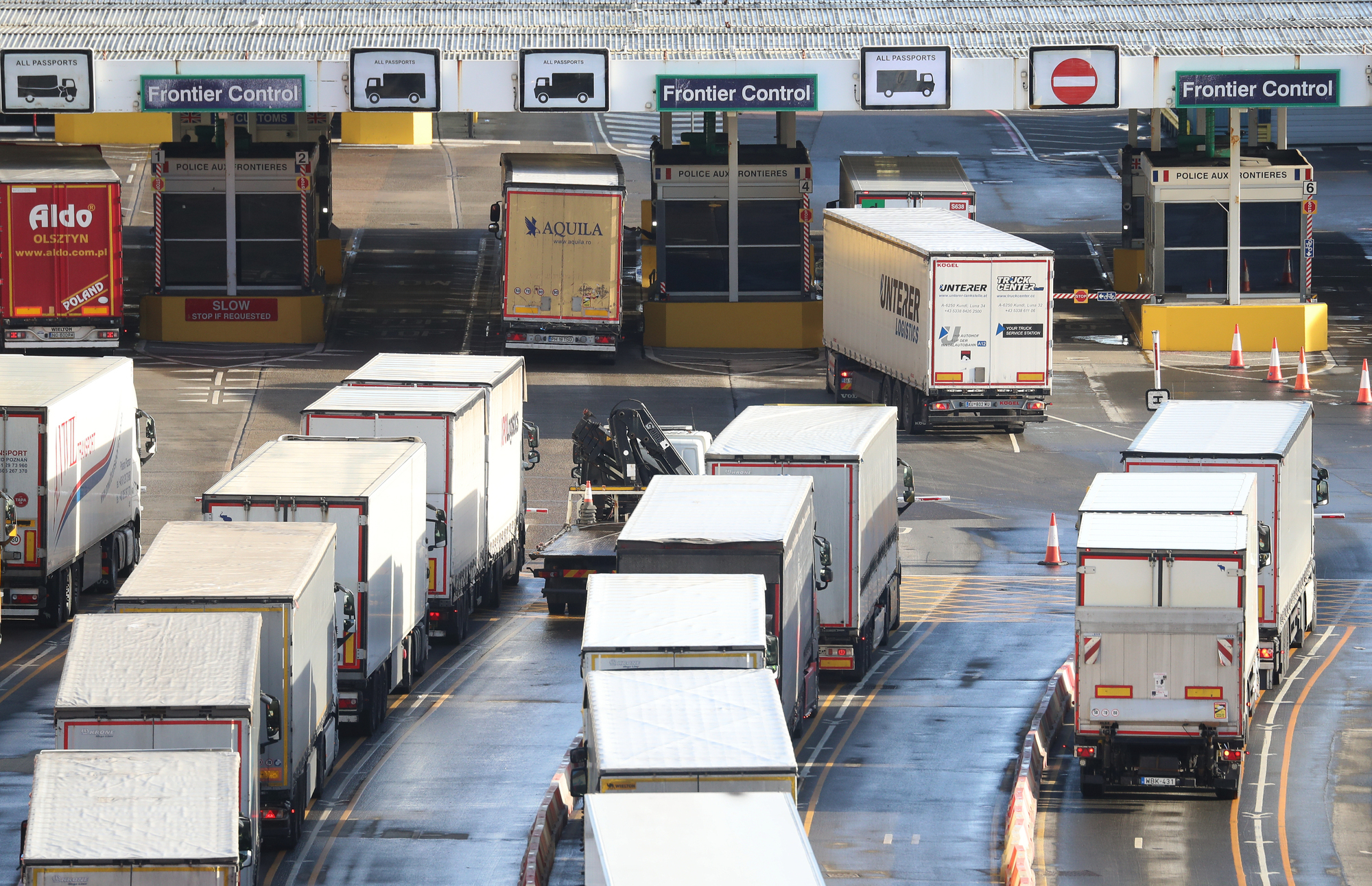
Lorries queue for the frontier control area at the Port of Dover in Kent, England; many Irish exporters to Europe are now shipping from the ports of Cork, Dublin, and Rosslare direct to the continent.

A flurry of trade figures has signalled that the world economy is springing back from the effects of the pandemic much faster than anticipated.
Leading the charge was the US Congress approving the $1.9 trillion (€1.6tn) stimulus which will see a direct deposit of $1,400 (€1,171) payment landing in Americans’ bank accounts starting this week.
This is the third stimulus since last spring, bringing the total pandemic relief to $5.5tn (€4.6tn), one of the largest rescue packages in history.
The Organisation for Economic Cooperation and Development (OECD) saw this as a gamechanger not just for the US but also the global economy, forecasting a sharp surge in global GDP growth this year as a result of the significant roll-out of the vaccine in many countries and the US stimulus.
However, access to vaccines continues to be problematic in Ireland, as it is in many other countries, and the OECD cautions that faster and more effective vaccination deployment across the world is critical.
It points to the need for the EU to both accelerate its vaccination campaign and do more to stimulate the European economy, urging the creation of "more jabs, more jobs".
Christine Lagarde, president of the ECB, while broadly indicating an economic improvement in the second half of the year across the EU, last week called on the various governments to step up their responses.
She argues that the burden cannot lie solely on the shoulders of the central bank.
And there is also the problem that although the EU agreed to an unprecedented level of fiscal stimulus last year, the roll-out has been painfully slow, with stimulus funds only due to be disbursed from this summer onward.
Ireland’s initial allocation from Brussels is €853m, with an estimated €70m more due in later years.
To access funding, Ireland must develop a National Recovery and Resilience Plan for approval by the EU.
The plan will set out the reforms and investments to be supported by the facility and is due to be submitted to the European Commission.
Last month Expenditure Minister Michael Mc Grath said he was seeking views on the development of the National Recovery and Resilience Plan that will enable Ireland to access funding under the EU’s Recovery and Resilience Facility.
Having avoided the potential devastation of a no-deal fall-out, the British market after Brexit remains a worry for Ireland’s exporters who saw their largest market in Europe contract in January.
UK exports to the EU plummeted in the month representing the biggest hit to their economy since the start of the pandemic.
Earlier this month at the launch of the UK budget, chancellor of the exchequer Rishi Sunak pledged tens of billions more for further emergency support measures for workers and businesses.
Britain is seeking to stimulate its economy and enable businesses to gain from the fast roll-out of the vaccine in the coming months.
It has had one of the worst health tolls from Covid in the world and the hit to its economy last year was one of the largest in Europe.
However, the new lockdown has taken a further toll.
In the latest quarterly report into the health of the UK economy, the Bank of England predicts GDP will grow 5% this year — which is down from the growth forecast in November of 7.25%.
The growth would still be a significant bounce back for the British economy this year and in 2022.
For Irish exporters, it could mean they recoup lost sales to the British market since the onset of the Covid crisis.
Any recovery in Irish exports to Britain would also be helped by the surge in support for sterling.
Gains for the UK currency against the euro will improve Irish export competitiveness, despite the additional Brexit-related shipping and administrative costs.
Brexit has also helped focus the minds of Irish exporters.
In finding better ways to get their goods to the expanding mainland European market, they are seeking ways to get around having to sue the so-called landbridge to channel ports, which currently means that most Irish goods exports to the continent are trucked down Welsh and English motorways.
Since January, the problems of the landbridge in getting Irish goods to European markets has been in part tackled.
Irish ports report a 50% fall in volumes shipping to British ports.
But in stark contrast, there has been a large increase in direct shipments to French ports for access to the European markets, with 36 sailings a week from the ports of Cork, Dublin, and Rosslare direct to the continent. There were only 12 such sailings a year ago.
There are other positive signs.
China rebounded earlier and faster than the rest of the world after the success of its response to the outbreak of Covid 19.
It was the only major economy to grow last year, largely due to its massive dominance in manufacturing for world markets, including personal protective equipment.
The size of the surge was unexpected, with trade data for January and February showing exports were up more than 60% over the same two months last year.
Imports were also up strongly, and Irish exporters benefited too.
Exports by Irish companies to China rose 22% to €10.6bn last year, with indications that the trade spat with the US is playing out in Ireland’s favour.
There is strong evidence that continued growth in Ireland’s exports to the Asian market can be expected this year and next.
Remarkably, China will become a larger market than the UK for Irish businesses.
CONNECT WITH US TODAY



Be the first to know the latest news and updates