Central Bank reports suspected criminal activity over tracker mortgages
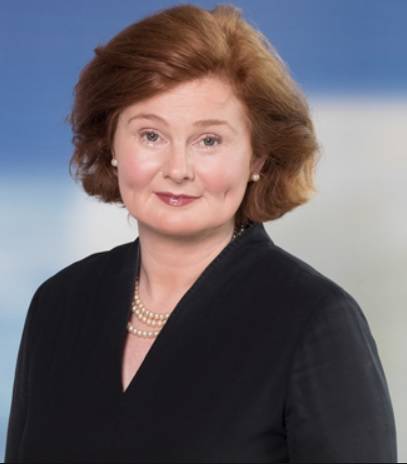
Derville Rowland, the Central Bank's director general for financial conduct.
The Central Bank reported suspected criminal activity to An Garda Síochána arising from its investigation into the tracker mortgage scandal, its director-general of financial conduct has revealed.
Derville Rowland at the Central Bank told the Oireachtas Finance Committee that the regulator has by law obligations to report suspected criminal offences to An Garda Síochána and other agencies where it has “suspicions of criminal offences”. Answering questions by Fianna Fáil TD Jim O’Callaghan and Sinn Féin finance spokesperson Pearse Doherty, Ms Rowland said the Central Bank had made reports to the Garda on suspected activity arising from its tracker mortgage investigation and had “liaised very closely” with Garda throughout the investigation.
At the same committee, Central Bank officials were also quizzed about the future of Ulster Bank in the Republic and into payment breaks offered by lenders to customers during the Covid-19 crisis. Earlier, Finance Minister Donohoe had met with the chief executive of Ulster Bank in the Republic, Jane Howard and other senior executives at the bank.
The revelation last month that Ulster Bank’s parent, the NatWest Group had put the future of the bank in the Republic up for review raised fears about the lender’s 3,000 staff and 88 branches, and had added to fears about the already limited competition for mortgage and SME lending, with AIB and Bank of Ireland dominating banking services in the State.
It was subsequently reported that Cerberus, the US vulture fund, which has in the past bought non-performing loans from Ulster Bank as well as from the State agency Nama, was interested in buying Ulster's €20.5bn loan book.
Minister Donohoe said staff and customers should be kept fully informed at all stages about the review of Ulster Bank, adding that the Government had “no formal role” over Ulster Bank.
In a statement, NatWest, which is 62%-owned by the British government, said the Finance Minister was “a key stakeholder” in its Ulster Bank review. “Our priority is to continue to remain focussed on supporting our colleagues in serving our customers in these difficult times,” its spokesperson said.
However, the head of the Financial Services Union has called on Ulster Bank in the Republic to provide more information about the review that has put the third-largest lender’s future in doubt.
FSU secretary-general John O’Connell said it was “extraordinary” that the bank was giving little away even though the review “may involve huge job losses, branch closures, and without any preparation”.
Quizzed about Ulster Bank at the Oireachtas Finance Committee, Central Bank governor Gabriel Makhlouf said the same protections for consumers applied “irrespective” of the nature of the entity holding the loans. “What matters are that rules apply equally,” the governor said.
On payment breaks, Mr Makhlouf said he expected banks to treat customers “sympathetically” during the Covid-19 crisis and to abide by the Central Bank codes. The regulator was also engaging with debt advisers, including Mabs, he said.
Lenders had 54,000 payment breaks in place in early October, of which 21,322 were mortgage breaks, he said. Governor Makhlouf said the effects on the economy of the new Level 5 restrictions on the economy were “one of the most unknown unknowns”.
He said that the six weeks of the new restrictions will have an effect on economic activity this year, but the Central Bank was nonetheless expecting a gradual recovery to get underway in the following two years. “I do not see personally a choice between the economy and health,” Mr Makhlouf said. “We should focus on getting the pandemic under a much as control as we can, so we can reopen the economy”, adding that consumer choices may change during the restrictions.


CONNECT WITH US TODAY



Be the first to know the latest news and updates