The '10-minute' concept that could revolutionise regional towns like Tralee
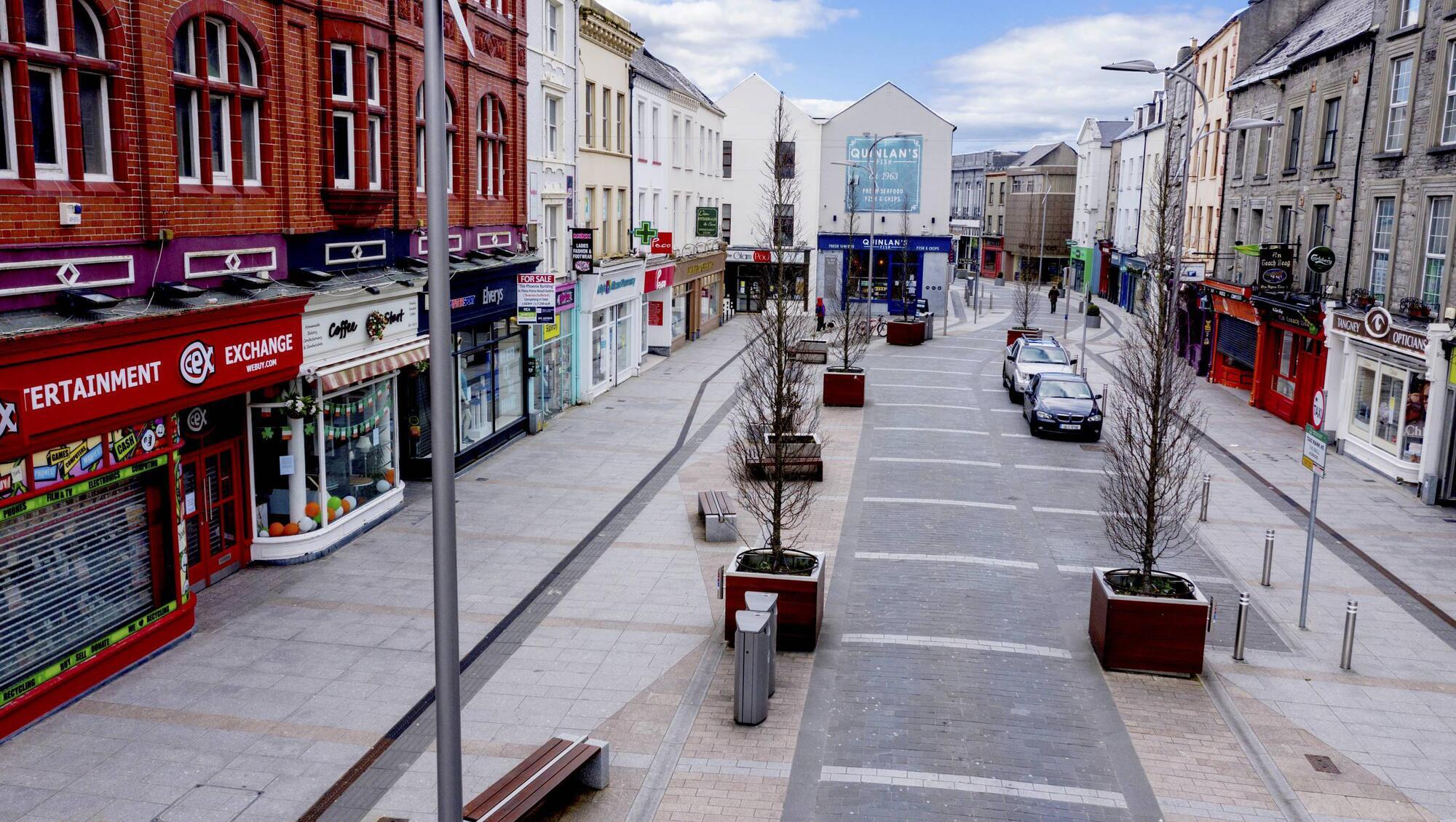
A new report has found that 76% of people rely on cars or vans to access work or education in Tralee, while as little as 12% walk, 2% cycle and 5% use bus transport. Picture: Domnick Walsh.
A ‘10 Minute Town’ concept is being considered for Tralee after a report identified crucial areas for improvement in the town.
A report commissioned by the Southern Regional Assembly focused on three key regional towns - Carlow, Ennis and Tralee to form part of an action plan to improve overall access for people living in these towns.
The 10 Minute Town Concept seeks to have all community facilities and services accessible within a 10-minute walk or cycle from homes or are accessible by public transport services connecting people to larger scaled settlements. The report highlights the disconnect between developments in the towns and access to public services and amenities, which it says, “has led to poor connectivity between these residential areas and community facilities”.
Ken Tobin, CE Tralee Chamber of Commerce, said improvements - like those identified in the report - are needed in Tralee.
“Tralee has been earmarked for a 30% population increase and if we act now, develop a Strategic Growth Plan for the town and follow key recommendations in this report, we will meet these targets, be able to attract new jobs and make Tralee a more sustainable place to live,” he added.
Meanwhile, the report also found that 76% of people rely on cars or vans to access work or education in Tralee, with as little as 12% walking, 2% cycling and 5% currently using bus transport.
It recommends specific changes to improve the use of bus, bicycle and walking access to the town.
“The report is critical of the infrequent level of public transport into and around the town and recommends an increase in services in order to support people to move to public transport,” added Mr Tobin.
“Last August we once again highlighted the need for investment into a modern urban public bus system to best serve the people of Tralee.
“We wrote to the head of the National Transport Agency (NTA) to address what has become an untenable situation.
“Right now, there are many parts of our community, in particular the infirm, elderly, disabled and parents with buggies who find it difficult to access public transport.
“Of particular concern is that there are locations in Tralee excluded from accessing public transport routes nearby”.
The report also identifies some key measures that will ensure the Tralee-Fenit Greenway will provide “greater benefit” to the people who live in Tralee and there have been calls from cycling organisations in the area to provide formal pedestrian/cycling facilities for residents and visitors to safely access services nearby.
“In these times it's vital that we give people as many options as possible to access the town; in particular it’s of concern to us that students attending IT Tralee don’t really have an option to cycle safely from the college campus to the town centre nor are there sufficient secure bicycle parking locations in the town centre, which is why we have previously raised these matters with the NTA,” continued Mr Tobin.
“These plans were highlighted back in 2013 in the Smarter Travel plan for Tralee, and really since then progress just hasn’t been made quick enough.
“At this stage, it's beyond overdue to have an integrated cycle network in Tralee along with a town centre network of bicycle parking bays.” Tralee Chamber’s submission on the County Development Plan also raised this point where it identified a need for “further investment in cycling infrastructure and improvement of the public realm to support pedestrians, that interconnects and compliments the greenway infrastructure around the town.”.
In 2013, Kerry County Council commissioned a Transport Strategy report entitled ‘Smarter Travel, Smarter Tralee’.
It highlighted the need for a modern ‘expanded bus network’ that would integrate with ‘Park & Ride’ as well as bicycle facilities.
There has been little advancement since and Mr Tobin says it has been “discouraging for everyone in Tralee” to see this.
“Over the past number of months Kerry County Council, Tralee Chamber of Commerce and the wider stakeholders in Tralee have taken significant steps to ensure the safety in public spaces for people utilising Tralee’s public realm,” he said.
“Many of these measures included providing more accessible spaces for cyclists and pedestrians to access the town core.
“As we move through the pandemic crisis it will be critical that investment and efforts are committed to increasing the public and sustainable transport offering for Tralee.
“Along with a modern sustainable public bus service for all citizens, another key element of our public transport offering in Tralee is the inherent need for safe urban cycleways for all.
“We would also strongly support the trialling of a bike loan scheme for the growing, but geographically isolated, student population in Tralee.
“We have come to accept that a Public Bike Scheme for now is the reserve of the city regions in Ireland, however successful models of Bicycle Loan Schemes are already being operated for 3rd Level Students in technical colleges and universities in the UK.
“We would advocate for the NTA’s support for a pilot version of the same model being introduced to IT Tralee, with investment in the parking infrastructure and bicycles for the college to be sustainably sourced from within the region.” The ‘10 Minute Town’ report was undertaken by ARUP - one of the largest engineering consulting firms in Ireland - after it was commissioned by the Southern Regional Assembly (SRA) and will form part of the Regional Action Plan for Interreg Europe MATCH-UP project.
The key objective is to map and identify infrastructural requirements to support 10-minute towns within the region.
The concept is about creating connected communities, understanding how neighbourhoods work and map out a more compact and permeable urban form that can provide high quality and safe links to public transport, shops, services and green spaces in communities - all of which will reduce the need to travel and consequently reduce carbon emissions.

CONNECT WITH US TODAY



Be the first to know the latest news and updates