Google owner's $205bn spending target fuels AI cost fears
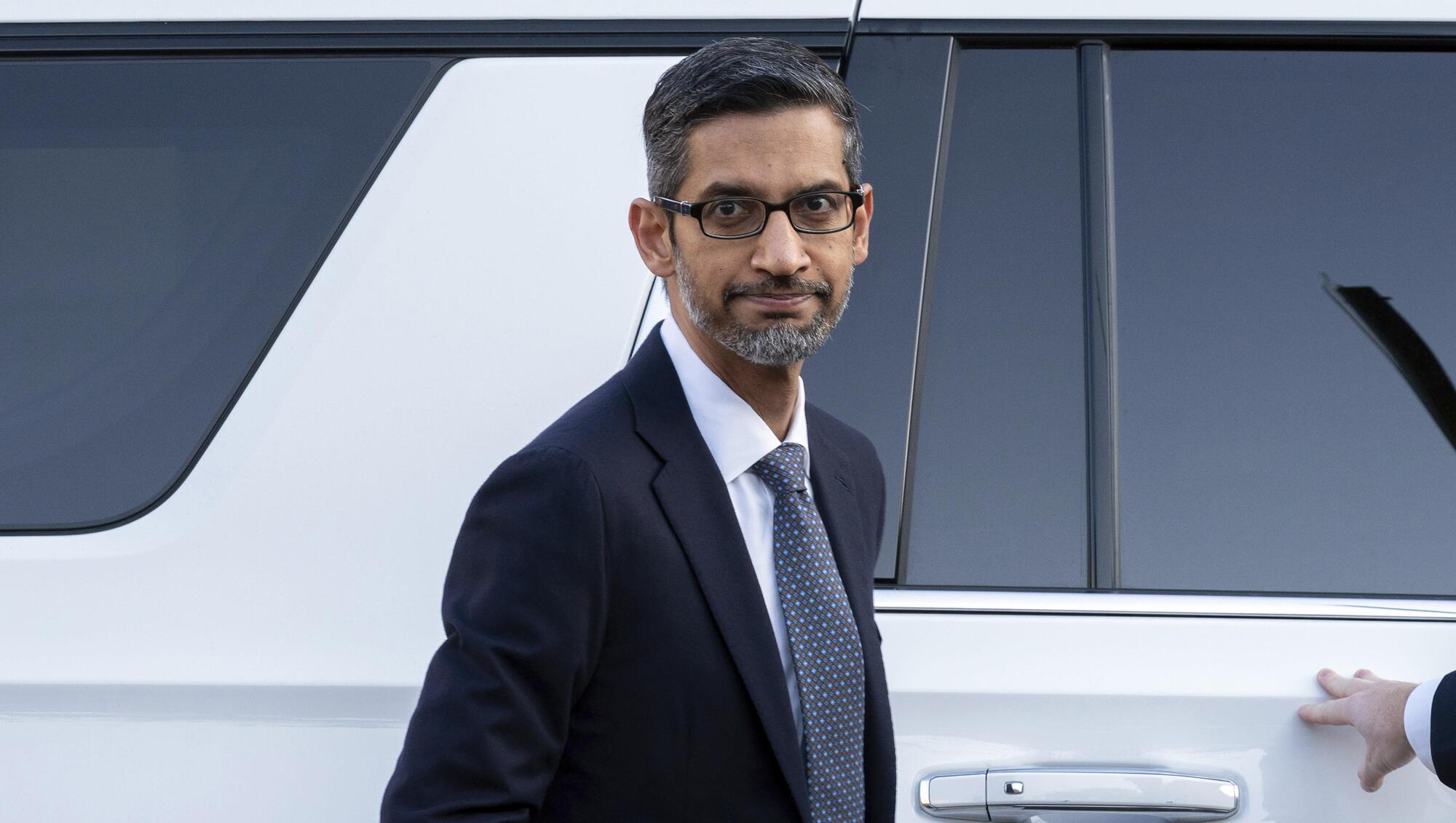
Cloud demand was “powered by strong demand for AI infrastructure and AI solutions,” CEO Sundar Pichai said on the call with analysts.
Alphabet raised its capital spending forecast to as much as $205bn (€179bn) this year, reigniting concerns about a lack of fiscal discipline in the race to dominate AI.
The Google parent company boosted its projected capital expenditures for the year to a range of $195bn to $205bn, up from a previous forecast of $190bn. Shares fell as much as 5% in late trading on the guidance. It was a reminder that the full cost of Silicon Valley’s AI rivalry is still largely unknown.
Alphabet was the first of the big tech companies to report quarterly results. Meta, Microsoft and Amazon follow next week. Altogether, the four companies telegraphed in April that they’d be spending as much as $725bn (€634bn) this year on their AI ambitions. If Alphabet is any indication, that sum will be larger by the end of next week. That’s even while the returns on those investments remain unclear.
Alphabet’s bigger spending plan “does not sit well,” Investing.com senior analyst Thomas Monteiro said. “Add to that an increasing rates environment and a continuous supply-demand crunch in AI infrastructure, and the notion that the company would fund itself with cash flows forever might be starting to fade.”
The company said the higher guidance reflects its efforts to accelerate an expansion of AI computing capacity and book more revenue from cloud-computing clients.
It stands to intensify investor scrutiny of AI investments. Wall Street has been looking for more convincing evidence that Alphabet’s massive bet on the technology, and those of its chief rivals, are generating new growth rather than weighing on profits.
Alphabet’s second-quarter results demonstrated some progress in that respect. Cloud revenue totalled $24.8bn for the period ending on June 30, up 82% from a year earlier and above the $22.5bn that analysts had expected. The company’s cloud backlog, a measure of contracted work that hasn’t yet been recorded as revenue, grew to $514bn, up from roughly $460bn a quarter earlier.
Cloud demand was “powered by strong demand for AI infrastructure and AI solutions,” CEO Sundar Pichai said on the call with analysts.
Google Cloud has emerged as one of the clearest tests of whether Alphabet’s AI spending can deliver financial returns. Though it still trails behind Amazon Web Services and Microsoft Azure, the unit has become one of Alphabet’s fastest-growing businesses, fueled by demand from AI startups and enterprise customers seeking the infrastructure needed to develop and deploy AI applications.
The cloud sales beat is at least a clear sign that the company’s investments are “converting into fast-growing, profitable revenue, with contracted deals coming online the moment capacity is built,” Monteiro said.
Google said the majority of its cloud backlog involves typical contracts with “a broad mix of customers” and that it expects to recognise more than half of it as revenue over the next 24 months.
Search advertising generated $63.27bn in sales, falling slightly below estimates. The unit remains the backbone of Google’s advertising business and has so far weathered competition from AI chatbots. The longer-term question for investors is whether its AI model Gemini can help Google defend its position in search as the way people interact with information changes.
Monthly active users of Google’s Gemini AI system totalled 950m, above estimates but below first-quarter totals.
Google has continued to expand the Gemini family, introducing new models such as Gemini 3.6 Flash designed to improve efficiency and support enterprise AI applications. Yet delays to Gemini 3.5 Pro have raised questions about how Google plans to position the model across consumer products and developer tools, including in AI coding, where rivals Anthropic and OpenAI have gained traction with developers.
At the same time, Pichai sought to shift attention to Gemini 4, saying on the call that he was encouraged by its progress and describing it as a much larger, next-generation frontier model that Google is prioritising in training.
With the launch of Gemini 4, Google will begin releasing models at a faster clip, issuing new ones “almost at a monthly cadence,” Pichai said. That would bring Google into parity with rivals Anthropic and OpenAI, which both churn out regular updates.
The video platform YouTube reported $11.1bn in revenue, beating analysts’ estimates. The unit remains one of Alphabet’s strongest businesses, as YouTube expands its reach across connected TVs, creator-led programming and new AI-powered tools for viewers and creators.
- Bloomberg.
CONNECT WITH US TODAY



Be the first to know the latest news and updates