Former car wash employee loses WRC case after admitting to using AI to prepare complaint
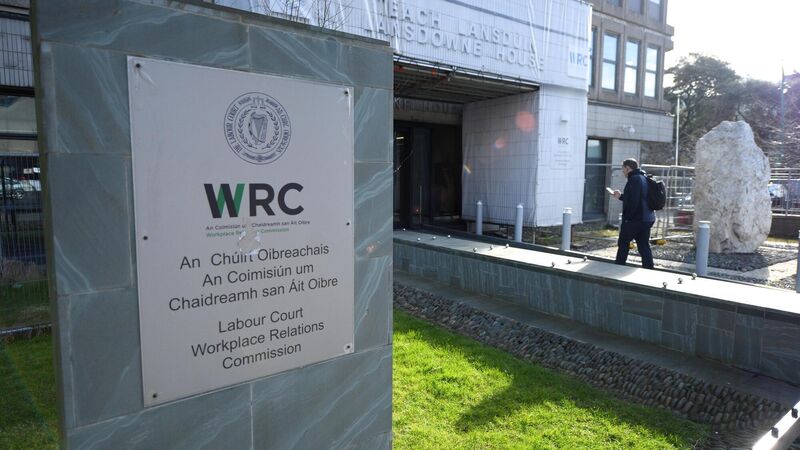
WRC adjudicator said that while assistance in preparing complaints is not improper, a complainant remains responsible for the accuracy of allegations made on his behalf.
A former car wash employee lost a Workplace Relations Commission (WRC) case after admitting his complaint was prepared using AI.
Imrich Ferko referred a complaint about his former employer, Beyond Reach Limited, trading as Car Wash Crew to the WRC under the Terms of Employment (Information) Act 1994.
The complainant alleged that he did not receive written terms of employment when he first began working for Beyond Reach Limited in July 2024, and that he was only provided with a written contract one year later, in July 2025.
He later ended his employment with Beyond Reach Limited later that month, on July 25, 2025. On the same date, he referred his complaint to the WRC.
Disputing Mr Ferko's claims, the respondent denied the complaint and maintained that Mr Ferko was provided with written terms and conditions of employment within days of starting in July 2024 as part of the induction process, but that Mr Ferko did not sign or return this document.
However, WRC Adjudication Officer Christina Ryan said that during the hearing, Mr Ferko accepted that his complaint form had been prepared by his sister on his behalf and that the narrative contained within the form had been generated using AI.
"[Mr Ferko] stated that he was not fully familiar with all aspects of the contents submitted in his name and was not in a position to clearly articulate the precise legal nature of the complaint," Ms Ryan said.
Ms Ryan said the matter turned on conflicting oral evidence, and that after considering the totality of the evidence, she preferred that of the respondent, Beyond Reach Limited.
"The respondent’s evidence regarding its induction procedures and the provision of written contracts to new employees was clear, consistent and credible," Ms Ryan said.
"The account provided was coherent and aligned with ordinary employment practices. By contrast, the complainant accepted that the complaint submitted to the WRC had been prepared by his sister and generated using artificial intelligence, and that he had not fully reviewed or verified the contents prior to submission."
The adjudicator added that as a consequence, Mr Ferko was unable to clearly explain aspects of the complaint that was advanced in his own name.
Ms Ryan said that while assistance in preparing complaints is not improper, a complainant remains responsible for the accuracy of allegations made on his behalf.
"In the circumstances, this materially reduced the weight that could be attached to the Complainant’s evidence," the adjudicator concluded.


CONNECT WITH US TODAY



Be the first to know the latest news and updates