Netflix investors cheer decision to drop fight for Warner Bros
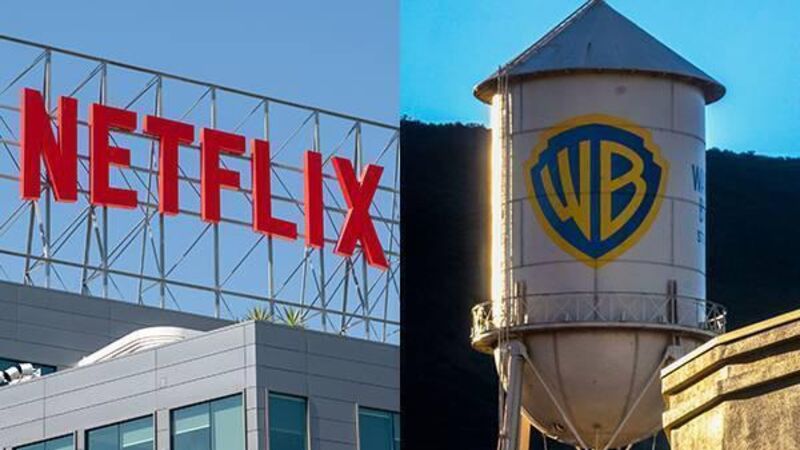
Netflix dropped the acquisition after Warner Bros.’ board announced a new $111bn (€94.1bn) takeover offer from Paramount Skydance had eclipsed the streaming giant's bid.
Shares of the streaming industry leader Netflix rose as much as 13% in extended trading late onThursday after the company announced it was dropping out of the fight to buy Warner Bros Discovery.
The decision prompted a sigh of relief from investors, who worried Netflix, a company that rewrote the rules of movies and TV, would end up overpaying billions of dollars to become another me-too Hollywood studio — even if that studio owned coveted film and TV franchises like and .
The Netflix announcement came shortly after Warner Bros’ board announced a new $111bn (€94.1bn) takeover offer from Paramount Skydance had eclipsed the Hollywood giant’s previous deal to sell its studio and streaming business to Netflix for about $82.7bn.
“We’ve always been disciplined, and at the price required to match Paramount Skydance’s latest offer, the deal is no longer financially attractive,” co-chief executives Ted Sarandos and Greg Peters said in a statement. “So we are declining to match the Paramount Skydance bid.”
Netflix shareholders never liked the Warner Bros deal. The stock lost about 40% of its value in the five months after the company’s interest in Warner Bros first became public. Investors, already worried about future growth prospects at Netflix, thought the company was messing with the business model that had made it so successful, and taking on more than $50bn in new debt to do it.
As recently as October, co-CEO Peters was telling attendees at Bloomberg’s Screentime conference that investors should be sceptical of big media mergers, which don’t have a great track record.
“We come from a deep heritage of being builders rather than buyers,” Peters told attendees.
That made Netflix’s decision to bid for Warner Bros. all the more surprising. The stock has been a perennial winner for investors, logging just six down years since its initial public offering in 2002. It closed Thursday at $84.59.
Because Paramount topped its existing offer, Netflix will receive a $2.8bn break-up fee, enough to make quite a few new movies and TV shows. The company said it would resume share repurchases.
Netflix could also invest more in sports rights and licensing agreements like one it did recently for Sony Group’s films, analysts at MoffettNathanson Research said.
Los Gatos, California-based Netflix plans to spend about $20bn for its programming budget this year. With more than 325 million subscribers and a market value of $357bn, the company dwarfs its Hollywood competition, especially the struggling Paramount and Warner Bros.
Netflix was founded in 1997 by Silicon Valley veterans Reed Hastings and Marc Randolph as a mail-order DVD rental business. Two years later, they introduced a monthly subscription that allowed consumers unlimited rentals for a flat monthly fee.
The company went public in May 2002, trading at just a few cents a share after adjustment for splits, and turned its first profit in 2003.
A turning point came in 2007, when Netflix launched its streaming service, called Watch Now, introducing a catalogue of more than 1,000 films and popular TV shows. The company had 5.7 million subscribers at the time. The service was offered at no additional cost to its DVD-by-mail customers.
The company’s efforts to build a Netflix player that customers could use to stream movies and shows to their TV sets led to the creation of Roku Inc, the set-top box company.
As a threat to the old ways of doing business in Hollywood, Netflix had numerous dust-ups with studios. In 2010, the company agreed to hold off renting DVDs of new-release movies for four weeks after they went on sale in stores in a settlement with Warner Bros. Similar deals followed with Universal Pictures and 20th Century Fox.
Eventually, the company reached licensing agreements with the studios, which were eager to generate revenue from the burgeoning streaming business. The company would make whole seasons of shows available for streaming, spurring consumers to watch for hours on end and leading observers to label it binge-watching.
One of Netflix’s biggest missteps came in 2011, when the company announced it would separate its mail-order and streaming operations into separate subscriptions, effectively raising prices by 60% and angering customers. A month later management reversed course.
That same year, Netflix branched into original programming with , a political thriller featuring Kevin Spacey.
In later years, Hollywood studios began to question their decision to license their best movies and TV shows to Netflix. Walt Disney famously cut its ties to Netflix in 2017, announcing in August of that year it would launch the Disney+ service. But Netflix still dominates the streaming charts, including some programming licensed from Paramount.

CONNECT WITH US TODAY



Be the first to know the latest news and updates