My Job: Driving commercial solar with AI, flexibility, and financial gains
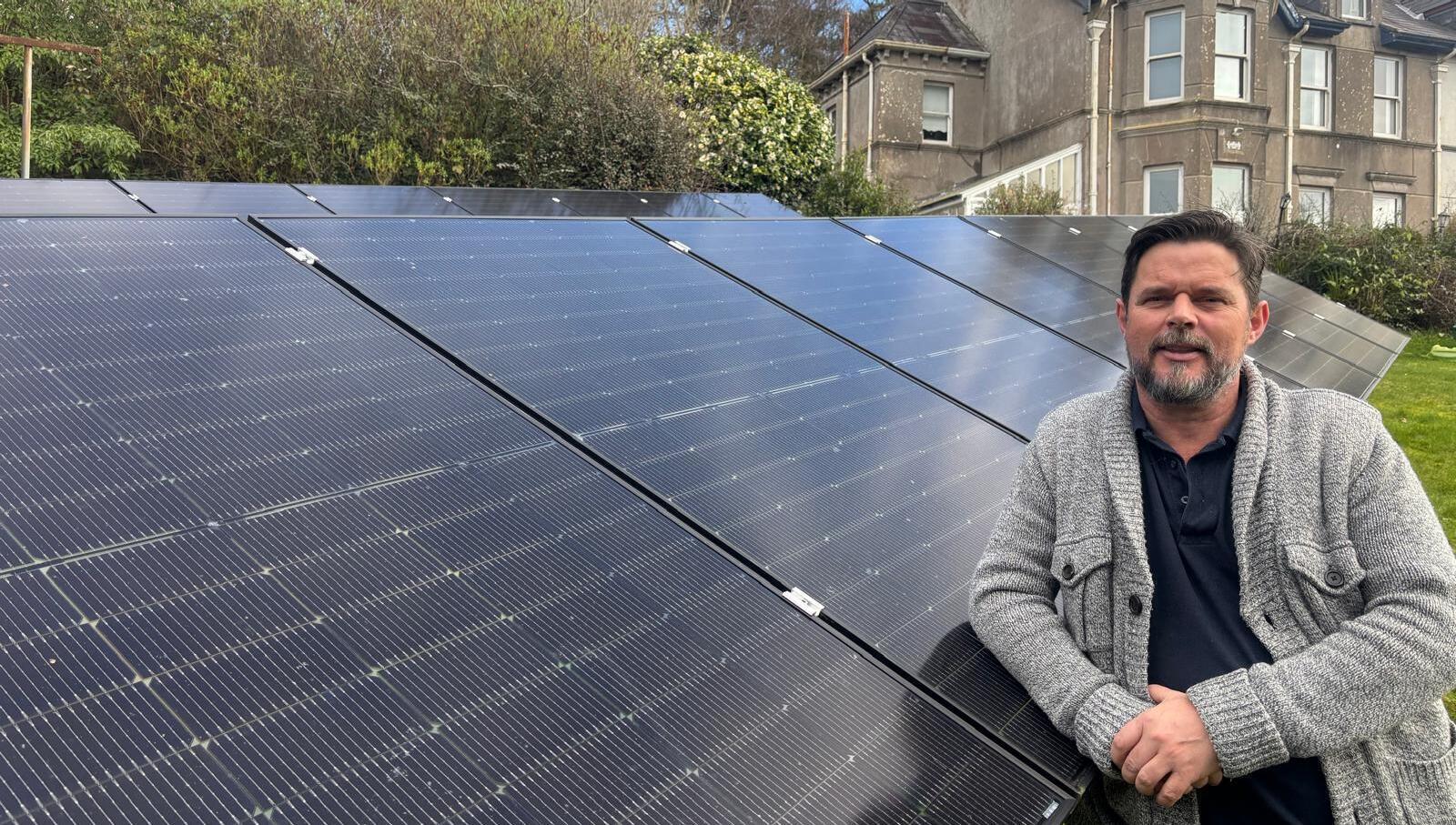
Martin Desmond, Managing Director of Wizer Energy.
Through the SEAI domestic grant scheme, up to 36,500 solar PV systems were fitted in 2025 making it the busiest sector for Wizer Energy.
“Estimates suggest we now have approximately 7% penetration of the domestic stock, while the commercial uptake is still between 1 to 2%,” Martin Desmond explains. “The thinking in the industry is that the domestic market will decline over the next few years and that the commercial arena will pick up pace at the same time.”
While the public has become more aware in recent times of the need for greater sustainability and energy efficiency, these wider considerations are still the secondary drivers in the uptake of solar. “The reality is that financial benefits are the main factor motivating people to invest in solar. More and more people are asking the question - why rent your power at the rates provided by suppliers, when you can buy it for the rest of your life fixing a cost per kWh, which is a fraction of the suppliers’ rates?”
An electrical contractor since 2000 and electrical engineer since 2012, Desmond has experienced all sectors of the industry over the past 25 years from domestic through to commercial. The growing PV sector led him to develop a Solar PV installation company in 2015, in addition to electrical heating systems for homes and business along with electric vehicle (EV) charge points.
“While the expectation is that more companies will come to view solar and battery systems as essential business infrastructure, I don’t believe we have reached that point yet. The commercial sector, in particular, has significant ground to cover. Continued market evolution and improved accessibility are crucial to overcoming key barriers like high upfront costs and the challenges of installing systems on leased properties.”
Businesses are rethinking energy use, and moving beyond standalone solar installs towards smarter systems that actively manage when and how power is used. “Deep battery storage is a key enabler of this forward-thinking approach, allowing businesses to shift load and capitalise on energy price differences throughout the day. The latest developments in solar technology see the inverters coming with Artificial Intelligence which will focus efforts to avoid the higher tariffs while capitalising on the lower tariffs available each day. It’s like having your own personal energy trader working away while you are asleep,” he says. While energy independence may be unattainable for many businesses, energy flexibility is a practical and achievable step in that direction. “Solar and battery solutions provide this flexibility for businesses that choose to adopt them today.” Irish policy strongly supports increased solar adoption, reflected in the Government’s recent reluctance to reduce the SEAI domestic solar grant - unlike in previous years.
“Commercial grant schemes further demonstrate that policy is aligning with long-term ambitions for the sector. Planning rules have been adapted around solar, helping to streamline the process for many in both domestic and commercial areas. Compared with ten years ago, the misconceptions of the suitability for use of solar in Ireland are now fading away with the proliferation of solar to the extent where everyone knows someone who has it and probably raves about it too.”
When the PV installation business was first established in 2015, it was challenging time getting the firm up and running due to a lack of public awareness and government support, he recalls. “This was the greatest challenge initially, simply because of the lack of historical data in the country.” From 2015 to 2018, he remembers driving all over the country every week just to consult with people who might have been interested in exploring solar as an option.
“There was no grant system or even a framework in our electrical regulations for its implementation, so it was difficult to try to voice its benefits without any obvious support from either government or the regulators. Nevertheless, the prospect of effectively eliminating their electricity bills has given users a sense of breaking free from utility companies - an unprecedented level of independence that has driven adoption among both early adopters and newer converts.” The company website abounds with client testimonials – an older, but effective, form of advertising that continues to pay dividends for Wizer Energy.
“Testimonials are crucial to us. Word of mouth in a country as small as Ireland is a very powerful tool.” Referral work constitutes a large proportion of the company’s domestic work, and, as people share their solar results and the savings in energy costs with family or neighbours, they too want to make those savings. “The reality here is that there is no way to fake a good client experience, the only way it can be achieved is to make the experience genuinely pleasant for each and every client. Our overarching ambition is to deliver what the homeowner actually needs executed so professionally that satisfied clients effectively become an extension of our sales team.”
In a market where some competitors rely on imported labour or low-cost equipment and techniques, Wizer’s guiding principle has always been to deliver the most robust electrical systems possible, he says. “This ensures clients enjoy a reliable, long-lasting experience. While balancing competitiveness with industry standards is necessary, it is never at the expense of quality. As an electrical engineer, contractor, and lifelong electrician, I place the durability and standard of our work above all else.”
In a period of significant social change in the way people work and live resulting from innovations in energy at home and office, Martin Desmond looks to a future of even greater change in the years ahead. “There is an energy revolution taking place just now with the proliferation of electrical self- sustainability through solar PV and batteries, as well as the electrification of both the heating and transport sectors. The evolution has shown us that the entire home energy usage across the three pillars of electricity, heat and transport is increasingly being considered holistically.”
The emergence of bi-directional EV chargers allowing the car battery to power the home as well as the home power the car is one clear demonstration of this. “We have also recently launched the domestic automatic changeover feature, which seamlessly allows homeowners to power their homes using solar and battery systems during grid outages and power cuts. By automating what was once a manual process, this innovation shows that the future offers reliable energy security for those willing to invest.”

CONNECT WITH US TODAY



Be the first to know the latest news and updates