Central Bank disqualifies former RSA Insurance Ireland chief for 13 years
The 'material understatement' of RSA Insurance Ireland's (RSAII) liabilities ultimately contributed to RSAII requiring a significant capital injection from its parent company
Central Bank disqualifies former RSA Insurance Ireland chief for 13 years

'For certain large loss claims Mr Smith, while chief executive officer, oversaw a process whereby claims handlers were prevented or delayed from recording their recommended estimates on RSAII’s database,” the Central Bank said.

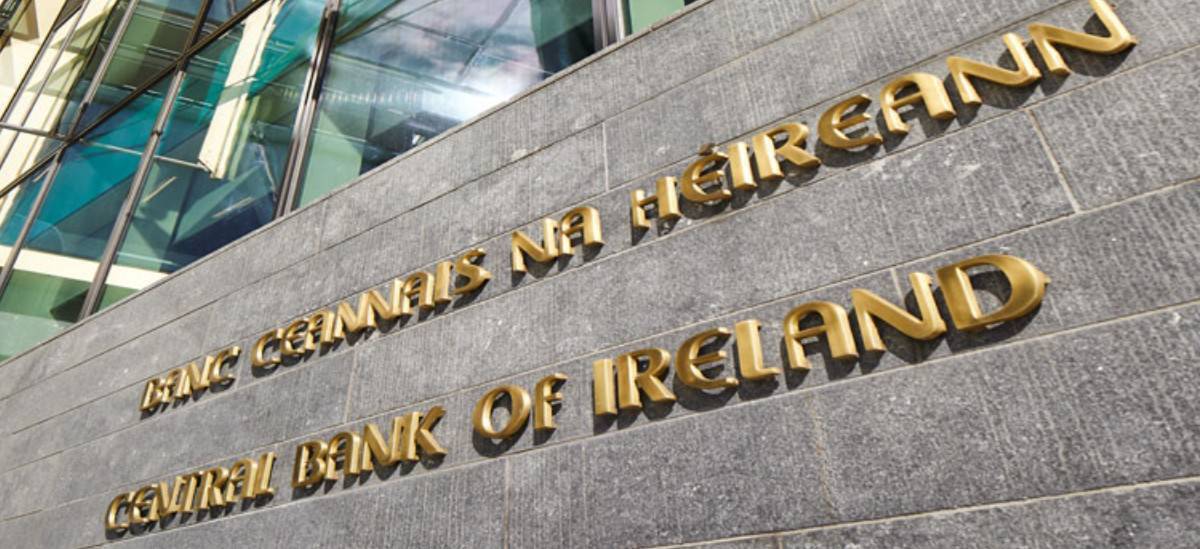
A former chief executive of RSA Insurance Ireland (RSAII) has been disqualified from being in management of a regulated financial service provider for 13 years by the Central Bank of Ireland after he admitted participation in a breach of financial services law by the company.

Philip Smith served as chief executive of RSAII between 2009 and 2013 and during his tenure he is reported to have failed to maintain proper technical reserves in accordance with regulations which posed a significant risk of loss to policyholders.

The company’s under-reserving of large loss claims at the time resulted in a "material understatement" of RSAII’s liabilities and ultimately contributed to RSAII requiring a significant capital injection from its parent company.

A large loss claim, due to the severity or the extent of the insured event, represents a significant liability for insurance undertakings.

According to the Central Bank, procedures within RSAII required large loss claim reserve estimates to be assessed by claims handlers and the recommended claim reserve estimate to be recorded on RSAII’s claims database.

Philip Smith served as chief executive of RSAII between 2009 and 2013 and during his tenure he is reported to have failed to maintain proper technical reserves in accordance with regulations which posed a significant risk of loss to policyholders. File picture: Fennells

“Instead for certain large loss claims Mr Smith, while chief executive officer, oversaw a process whereby claims handlers were prevented or delayed from recording their recommended estimates on RSAII’s database,” the Central Bank said.

“As a result of the claims estimates on the database being understated, the technical reserves did not reflect the firm’s estimated liability for certain large loss claims creating a risk that RSAII might not have been in a position to pay claims made by and against its policyholders.” 

The under-reserving of these large loss claims “contributed” to RSAII requiring a significant capital injection from RSA Insurance Group PLC in 2013. This includes an increase in RASII’s reserves to take account of 17 large loss claims that were subject to the under-reserving process 

“While RSAII’s failure to maintain technical reserves posed a significant risk of loss to policyholders, the investigation did not find evidence of any actual loss,” the Central Bank said.

Penalty

The Central Bank said the period of Mr Smith’s disqualification reflects the "seriousness of the breach” he participated in.

He was initially fined €120,000 as well, however, the fines imposed by the Central Bank have limits and it is prevented from imposing a fine that would likely render a person bankrupt.

“As part of the settlement process, Mr Smith submitted sworn information detailing his financial circumstances. Following a thorough analysis of this information, the Central Bank determined that Mr Smith’s financial circumstances are such that the Central Bank cannot impose a monetary penalty,” it said.

Central Bank investigation

During its investigation, the agency found that from 2009 Mr Smith became “increasingly involved in approving changes to claim reserve estimates for certain large loss claims”.

At Mr Smith’s direction, the Central Bank said much of the under-reserving process operated through in-person meetings and hard copy records only.

“At these meetings, despite being made aware of the reserve estimate recommended by a claim handler, Mr Smith frequently did not approve the recommended amounts,” it said.

“As a result, over an extended period, the claim reserve estimates recorded for certain large loss claims were significantly lower than the recommended claim reserve estimates.

“Further, several large loss claims remained at an initial standard reserve estimate despite Mr Smith being aware that the potential liability far exceeded this amount.” 

Mr Smith’s participation in this practice “contravened” RSAII’s standard approach to large loss claim reserve estimation and “circumvented RSAII’s policies for claims estimation”.

The Central Bank said the period of Mr Smith’s disqualification reflects the 'seriousness of the breach' he participated in.

Giving an example of the issue, the Central Bank said a claim relating to a serious motor accident had a recommended reserve claim estimate of €2.7m.

“However, the claim was recorded on the database with a reserve estimate of just €20,001 with the result that RSAII’s potential liability appeared 'on paper' to be far less than it was.” 

The Central Bank said this under-reserving also contributed to the artificial inflation of the firm’s reported profits.

As chief executive and an executive director of RSAII, the Central Bank said Mr Smith “bore ultimate responsibility for driving a culture of good governance and regulatory compliance” but he “materially failed to discharge that responsibility”.

Instead, he oversaw an undocumented process which circumvented controls and put policyholders at risk. 

The investigation into Mr Smith began in 2014 in parallel with the investigation into RSAII and certain other persons.

In December 2018, the Central Bank reprimanded and imposed a fine of €3.5m on RSAII. This related to four breaches of financial services law, including the failure to establish and maintain technical reserves in accordance.

Per the settlement concluded with RSAII in 2018, the under-reserving of these large loss claims amounted to €29.3m.

Separately, a five-year prohibition was imposed on RSAII’s former chief and signing actuary.

x

More in this section

The Business Hub

Newsletter

News and analysis on business, money and jobs from Munster and beyond by our expert team of business writers.

Cookie Policy Privacy Policy Brand Safety FAQ Help Contact Us Terms and Conditions

© Examiner Echo Group Limited