How Trump’s Intel deal could impact Ireland’s €30bn Leixlip semiconductor investment
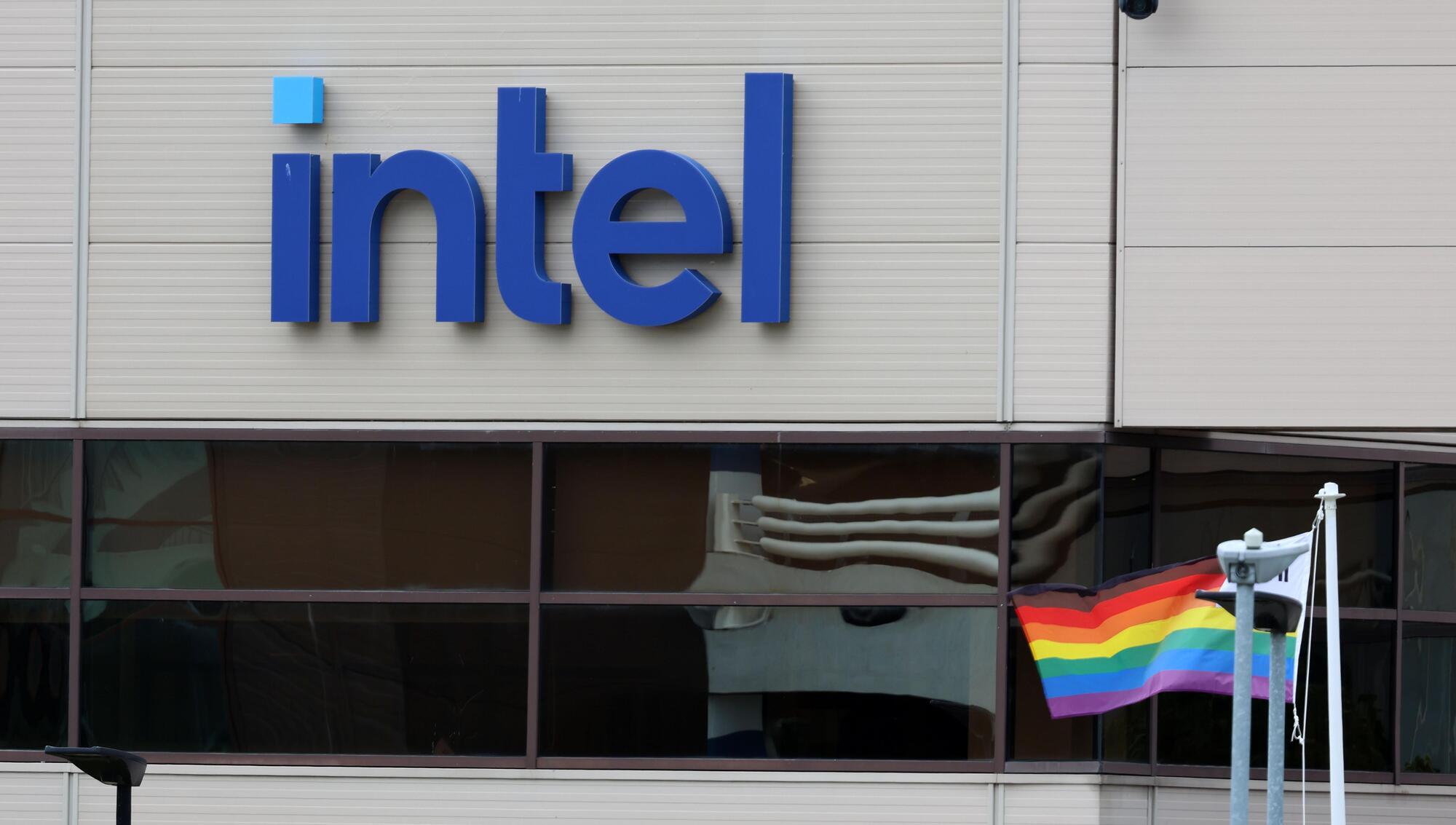
The Intel plant in Collinstown Industrial Park, Leixlip, Co. Kildare. Picture Colin Keegan, Collins Dublin.
The US Government's plan to take a 10% stake in Intel poses big questions for the future of the embattled chipmaker and its global operations.
Having largely missed out on the recent boom in chips to power AI, the California-based giant is struggling to catch up with rivals Nvidia and Taiwan Semiconductor Manufacturing Company (TSMC), which have both benefited from the soaring demand for generative AI.

Intel's operational lapses are reflected in its latest earnings, with its most recent quarterly profit from the end of June of €3.5bn lagging significantly behind Nvidia's €26.7bn and TSMC's €17.6bn.
The White House's potential deal aims to help Intel strengthen its US operations, serving as another means for President Donald Trump to fulfil his promise to grow domestic business and bring US companies home.
The significant investment, which the Trump administration is also justifying on national security grounds, will likely carry a list of terms and conditions, if similar previous deals are anything to go by.
Last year, the US government took an ownership stake in US Steel as part of a merger agreement with Japan-based Nippon Steel, enabling the controversial takeover while maintaining veto power over certain investment decisions in the interest of national security. These included strategic decisions such as plant closures, import levels and technology transfers - powers that would help the government protect US jobs and safeguard domestic production.
At the outset, it seems a similar deal between the White House and struggling chipmaker Intel could have significant ramifications for Ireland, where its Leixlip hub serves as the key gateway to the European market. But should its Leixlip operations, Intel's second-largest base after the US, employing almost 5,000 people, really be worried about this potential new partnership?
Since 1989, Intel has invested more than €30bn in its Irish operations, the majority of which has been injected in the last few years. In 2023, the chipmaker opened its €17bn Fab 34 facility, the largest construction project ever undertaken in Ireland, according to Intel, doubling the chipmaker's manufacturing space at its Leixlip hub.
In June last year, asset management firm Apollo Global committed €10bn to Intel for a 49% stake in the Fab 34 facility, which allowed the chipmaker to retain majority ownership while gaining access to additional funding for future expansions.
The Leixlip campus is also poised to produce the majority of its Intel 4 technology, which includes the company’s extreme ultraviolet (EUV) chips, the most advanced semiconductor manufacturing technology on the market. According to Intel, EUVs play a “critical role” in driving the company towards its goals of delivering five nodes in four years and regaining leadership in process technology by 2025.
Intel's Irish base also seems to have escaped the worst of global restructuring measures brought in by CEO Lip-Bu Tan to cut its workforce by 20%, with the expected job losses from its current round of layoffs far less than what would be considered proportionate.
Intel's European operations are extremely intertwined, and the Leixlip facility is the epicentre. The Fab 34 facility in Leixlip is also part of what the company calls a “first-of-its-kind end-to-end leading-edge semiconductor manufacturing value chain in Europe,” with the site being combined with a wafer fabrication facility in Germany and an assembly and test facility in Poland.
The company is also nicely positioned to benefit from the EU's goal to increase its global share of chip production to 20% by 2030 as the bloc seeks to enhance competitiveness on the back of the eye-opening Draghi report published last year.
The EU is ready to give away billions to enable domestic semiconductor and chip manufacturing. If Intel moves its operations back to the US, it risks losing out on significant gains that it cannot afford to miss.
While a government stake may help its financial woes, Intel's biggest problem is its lack of paying customers, a problem that President Trump could actually help fix by putting pressure on other US companies with large European operations to switch to Intel for their manufacturing needs.
The US wants Intel to be a leader in chipmaking. For that to happen, Intel also needs to lead in Europe, for which a European hub is critical to prepare for a growing semiconductor market with ample money to spend.
If it plays its cards right, Intel can simultaneously increase its customer base and benefit from the EU's push to strengthen its semiconductor industry. This will require a skilled workforce and a state-of-the-art manufacturing facility with a strong gateway to Europe.
As much as Ireland needs Intel, Intel needs Ireland.