Eli Lilly shares drop after weight-loss 'wonder drug' disappoints
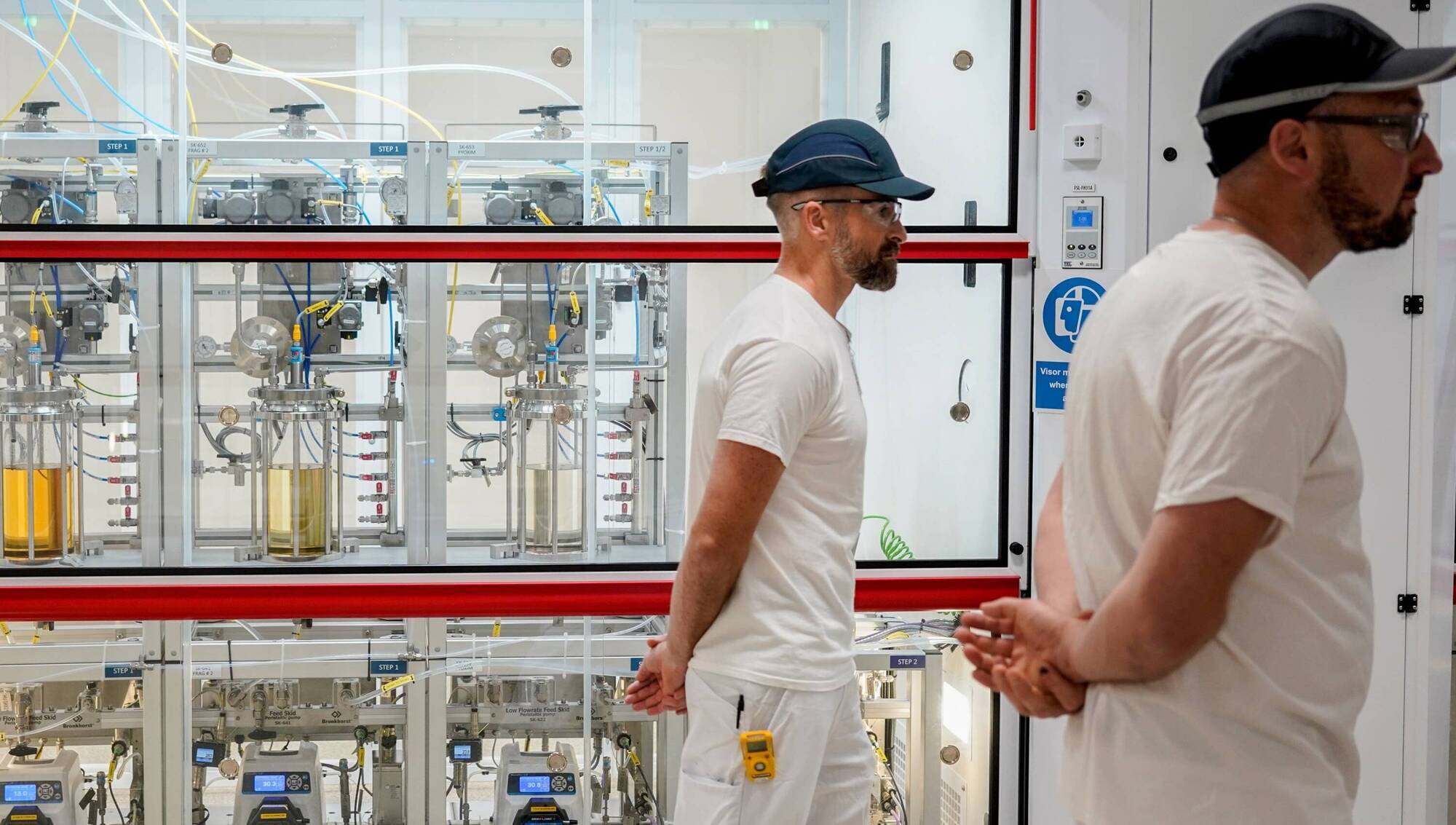
The Eli Lilly manufacturing plant in Kinsale. Investors say pills are a vital part of reaching more patients in the market that’s expected to grow to $95bn (€82.2bn) by 2030. File photo: Paulo Nunes dos Santos/Bloomberg
Eli Lilly shares fell as disappointing data on its new weight-loss pill overshadowed strong growth from the company’s current obesity medicine, which helped drive it to raise its yearly profit and sales outlook.
Lilly’s results from an obesity pill study, a drug key to unlocking billions of dollars of growth, didn’t perform as well as Wall Street expected. It resulted in lower weight loss and higher rates of nausea and vomiting, side-effects associated with so-called GLP-1 drugs. The data was a boon for rival Novo Nordisk.

“There was hope that this would be a wonder drug,” BMO analyst Evan Seigerman said of Lilly’s pill. “What this shows to me is that it’s still a good drug, but it’s bound by the limitations of being a GLP-1.”
Novo rose as much as 14.3% in Copenhagen, the most in almost four months.
Drugmakers are in a hotly contested race to dominate the market for obesity medications. Lilly had moved into pole position against Novo thanks to Zepbound, its powerful injectable drug, but Lilly’s sky-high valuation is tied in part to eventually turning its weight-loss pill into a blockbuster.
Eli Lilly has major operations in Ireland with facilities in Kinsale, Little Island and Limerick.
Investors say pills are a vital part of reaching more patients in the market that’s expected to grow to $95bn (€82.2bn) by 2030. But the science has proved to be a challenge. Pfizer and AstraZeneca are among a handful of companies that have faced setbacks as they race to develop potent pills of their own.
In Lilly’s pill study, patients on the highest dose shed roughly 11% of their body weight, or 25 pounds, the company said. In late-stage trials, patients on Novo’s injectable Wegovy lost about 15% of their weight over a 68-week period.
The most common side-effects were nausea, vomiting and diarrhoea, which occurred at rates similar to existing GLP-1 drugs, Lilly said in a statement detailing the results. Notably, the medication didn’t cause liver issues, a concern with other weight-loss pills in development. About 10% of patients dropped out of the study due to side-effects.
Lilly’s data raises doubts over whether the pill, called orforglipron, can meet Wall Street’s estimates of $12bn (€10.4bn) in annual sales by 2030, Bloomberg Intelligence analysts John Murphy and Christos Nikoletopoulos wrote.
The company plans to submit the findings from the 18-month study involving more than 3,100 adults to regulatory agencies for approval by the end of the year. Detailed results will be presented at a medical conference in September.
If approved, Lilly’s once-daily pill would likely hit pharmacy shelves next year. Orforglipron is easier to manufacture than its current injectable Zepbound and is expected to be a cheaper option for patients.
Novo has filed an oral version of its weight-loss blockbuster Wegovy for US approval, but it’s more complicated to produce than Lilly’s and will likely have more dosing restrictions, such as when patients can eat and drink.
For investors, it has been a further example of Novo slipping behind after its next-generation obesity drug, CagriSema, also fell short of expectations in clinical trials.
But Lilly’s result offered Novo a welcome narrative shift on the same day that Maziar Mike Doustdar takes over as CEO from Lars Fruergaard Jorgensen.
On Thursday, Lilly also increased its sales projections for the year and now expects revenue between $60 billion and $62 billion, up from a range of $58 billion to $61 billion.
The company said in a statement it expects 2025 profit to reach $21.75 to $23 a share, up from $20.78 to $22.28.
Lilly’s second-quarter sales were $15.6 billion, beating analysts’ average estimates of $14.7 billion.
Zepbound surpassed expectations, while the diabetes medicine Mounjaro beat the Street’s view.
Adjusted profits were $6.29 per share, which outpaced analysts’ $5.57 per share expectation.