Blarney Brewing Co launches with €1m investment and pints 50c cheaper than rivals

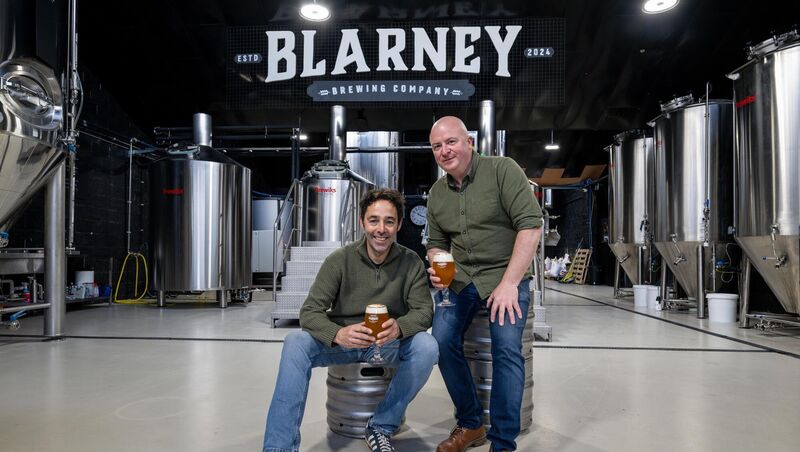
Pat Falvey and Duncan Blair, founders of Blarney Brewery, aim to make their mark in brewing in Ireland. Picture:Chani Anderson
The makers of a new beer launching in Ireland later this month plan to sell pints of lager up to 50c cheaper in pubs.
Blarney Brewing Co is entering the market with three new beers as it looks to make a mark in the pub and off-trade markets. Founder Pat Falvey has invested more than €1m in the project so far, and the new Hydro Lager, Hydro Lite, and Muskerry IPA beers will be rolled out in eight premises in Cork city and Blarney initially. "Our products will be priced between 30 and 50 cents cheaper per pint than a macro beer. It's important for us that we have a value-based offering," said Mr Falvey.
"We will implement price freezes annually. A big issue in the trade at the moment is every couple of weeks, there's price increases from some of the larger operators. Everyone's sick of going to the bar and every time they go for a pint, it's 10c or 20c more expensive than their last visit."
Mr Falvey said the new brewery aims to compete with 'macro' producers like Heineken and Diageo and his existing brewery on Cork's Commons Road has a capacity to produce 2,400 cans per hour, with a tank capacity of 40,000 litres.
After months of preparation, things are quickly coming to a head for the fledgling Blarney Brewing Company.
Last week, the latest brewery to come on stream saw its first pour of its Muskerry IPA, one of three beers the company is launching on to the Irish market.
A milestone moment for founder Mr Falvey, who has invested €1m in the project to date. Blarney Brewing Co is launching with three products to begin, as it looks to make a mark in the pub and off-trade markets. The brewery premises situated on Commons Road in Cork city can produce 2,400 cans of beer hourly. The company has plans to scale up production and has already purchased a site on Inniscarra Lake to develop a larger zero-carbon brewery.
Exciting times for Mr Falvey, whose entry into the drinks industry is a complete change of direction, after 20 years working in the property scene. He started his own estate agency in recessionary times back in 2009. The property market didn't quite drive Mr Falvey to drink, but 18 months ago he "just wanted to change".
"I'm always fairly entrepreneurial, I have one or two other businesses that I operate, but I just wanted something away from property.
“I was sitting in the Castle Hotel in Blarney one day with my wife, having a pint in the lobby, wondering has anyone every considered setting up a brewery or distillery in a world-renowned tourist destination like Blarney? I thought it has to be an opportunity.
“That was November 2023, and by January 2024, I bought the equipment of a brewery in liquidation. It was originally a brewery which was used by BrewDog, which had been bought by an Irish brewery who unfortunately went into liquidation. A lot of the equipment has been been used for Blarney Brewing Co but the brewhouse was something that was going to burn up the planet. So we invested in a new brewhouse from Brux in Slovenia and in a boost heating system, meaning the energy consumption we use on site is approximately a quarter of that consumed by an equivalent brewery.”
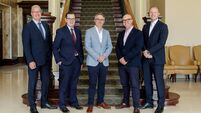
Since the new year, the Blarney Brewing Co story has continued at pace. Duncan Blair, who formerly ran the acclaimed Blair’s Inn, in Cloghroe near Blarney, has joined as co-founder, and will focus on business development. Declan Nixon from Donegal, well known in Irish craft brewing circles, has been taken on an as a consultant, while Ronan Russell, formerly of Black’s Brewery in Kinsale, has been recruited as head brewer.
So far, so great. But it’s a tough trade that Blarney Brewing Co is breaking into. Beer is Ireland's favourite alcoholic tipple of choice, injecting €1.7bn in added value into the Irish economy annually, according to Ibec, but the Irish brewing scene is dominated by the big players and dotted with the empties of small producers who have come and gone. Between 2018 and 2023, 16 players left the market but 20 joined. there are still more than 70 independent breweries operating in Ireland.
Helen McGrath is a senior lecturer and marketing expert at UCC's Cork University Business School, whose work includes research into the artisan food and drink sector. “The craft industry has shifted quite a lot over time,” she said. “They have a lot of external pressures. One of the biggest problems I have found in all my research is distribution. It can be hard to break into the distribution network which means some small brewers are driving around the country trying to deliver kegs and cans here, there and everywhere driving costs up and margins down. Without distribution, your business model is tough, really tough." Bord Bia's Craft Beer Report 2023 showed 80% of microbreweries were themselves distributing to the on trade.
There are other obstacles too, from the multinational giants. “The big breweries came in with bigger budgets and ready distribution. The big brewers also came out with some pretty decent ‘craft’ beers of their own. All of those things combined have made life quite difficult for the craft brewer. They have faced a lot of hurdles in recent years. It'll be interesting to see what the next chapter brings for them."
A feature of some new entrants to the brewing industry – including Blarney - is ‘sessionable’ beers. High alcohol by volume (ABV) beers that once dominated are less common, with lower alcohol offerings from 3.5% to 4.5% prevalent. The under 30 age group is also regarded as more moderate in their drinking habits than previous generations; lower alcohol and ‘zero’ beers are viewed as a key part of this market.
While the industry has transitioned in the last 15 years, others have went back to the future for opportunity. In 2018, Irish Distillers bought Eight Degrees Brewing in Mitchelstown, North Cork in a “multimillion euro deal”. Five years later, founders Scott Baigent and Cam Wallace repurchased the brewery.
Meanwhile Shane Long, one of the pioneers of Irish craft brewing, started the Franciscan Well on Cork’s North Mall 27 years ago, selling the brand to Molson Coors in 2012. Molson Coors has since moved Franciscan Well production to Cork’s docklands, while Mr Long is back where it all began, with a brewery called Original 7 operating out of the original microbrewery on North Mall, which he runs with manager Steve Guiney and head brewer Paidi Scully.
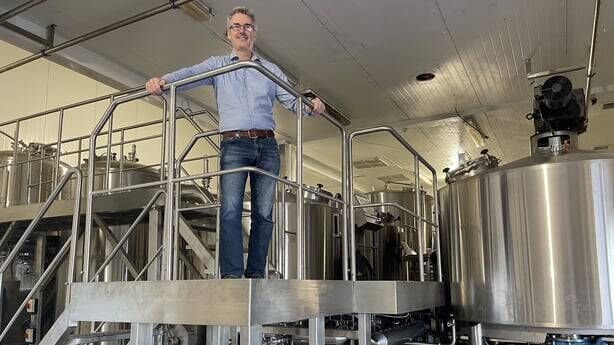
Original 7 is enjoying success – producing around 70 kegs per week, available in bars across Cork City and surrounds, and operating close to full capacity - but production costs are much higher than the heyday of craft breweries.
“I’ve never seen the market tougher, in 27 years. Unless you've deep pockets and a fantastic route to market, be careful because it’s a great way of losing money,” said Mr Long.
“Anyone getting into it now, the costs are incredible. My energy bill (for North Mall) was €8,700 for January. It was €5,600 last month. That’s not sustainable."
As well as operating Original 7, and providing consultancy services to emerging brewers, Mr Long is also a founder of Changing Times, a new €2m brewery which opened in Glasnevin in Dublin in October, backed by renowned Cork publican Benny McCabe of Crane Lane and Rising Sons fame, and 15 high-profile pubs in Dublin.
They include The Palace, The Long Hall, The Swan, Doheny & Nesbitts,The Ferryman, Devitts, Darkey Kellys, The Bankers, Arthur Maynes in Donnybrook, Sheehans, Lemon & Duke, The Bridge 1859, The Blackrock, The Bank, and McSorleys. Patrick Rigney of Leitrim's Drumshambo Gunpower Irish Gin invested in January, and is now chair of Changing Times.
Changing Times’ initial plan was to service 50 kegs a week. “We're already at 200 kegs a week," said Mr Long. “To be turning a profit after this short time is unheard of in the industry.
“The difference is that all these bars have skin in the game – they are all invested. And these are some of the best bars in Dublin, the very top of the food chain.”
The beers that Changing Times produce – just like the new beers being produced by Blarney Brewing Co – are less for craft palates, and firmly aimed at mass market and mainstream tastes.
There is a waiting list to get Changing Times on tap in bars. Just three months after launch, Changing Times introduced a stout, Clockwork Velvet, at the end of January. According to Mr Long, it is taking up 30% of the stout trade in some of the invested Dublin pubs. Not bad when a global boom has made Guinness a hipster phenomenon.
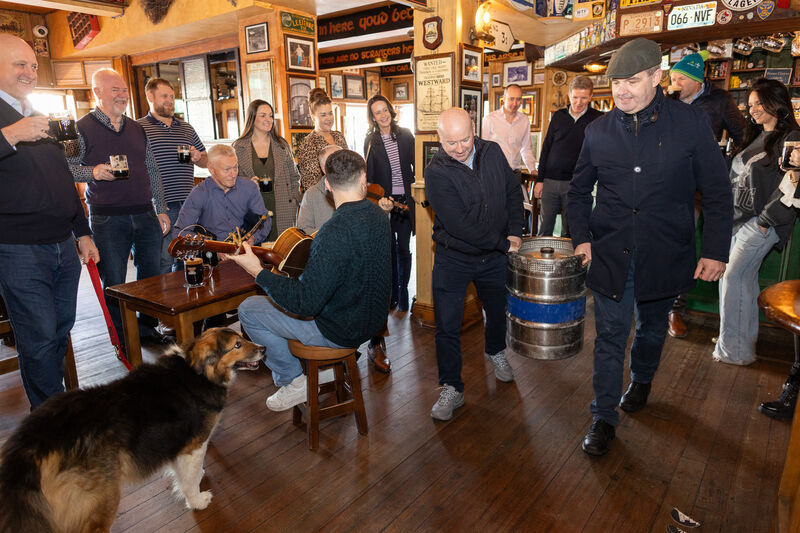
For their part, the big guns of the drinks industry aren’t complaining about the proliferation of breweries. Why split hairs when the world is splitting G’s?
"We welcome the competition from the independent brewing sector, which fosters innovation and excellence across the Irish market,” said a Guinness spokesperson. “Overall for Diageo in Ireland, net sales grew 5% which is driven by the continued growth of Guinness.”
Meanwhile Heineken Ireland marketing manager of stouts, Jim Geraghty, said Beamish and Murphy's stouts “have experienced encouraging growth over the past number of years, reflecting the increasing popularity of the stout category as a whole. Both brands have successfully carved out a distinct presence, thanks to our dedicated team and loyal customers.”
Back on the Commons Road, there are plenty of obstacles to climb yet for Pat Falvey and the team, but he is determined to overcome them. A son of the renowned adventurer and Mount Everest conqueror Pat Falvey Snr, its in the genes to overcome immovable obstacles.
And he’s taking a leaf from the giants of the sector too.
“When I looked at the industry as a whole, I could see very clearly that all of the macro players were investing heavily into sustainability. What the industry didn't really need was just another craft brewery to produce some good beer. The big thing going forward is that sustainability element.”
He has invested in the brewhouse on Commons Road, but the next step will be developing the strategic site adjacent to Inniscarra Lake. “We are aiming to submit for planning permission on that site by the end of the year. This will allow us to develop a circular water management system. In beer production, the two biggest consumables and costs are energy and water and by being able to take those off-grid, it not only means that you improve profitability, but it also means it's good for the planet."


CONNECT WITH US TODAY



Be the first to know the latest news and updates